Author: T3d-1978

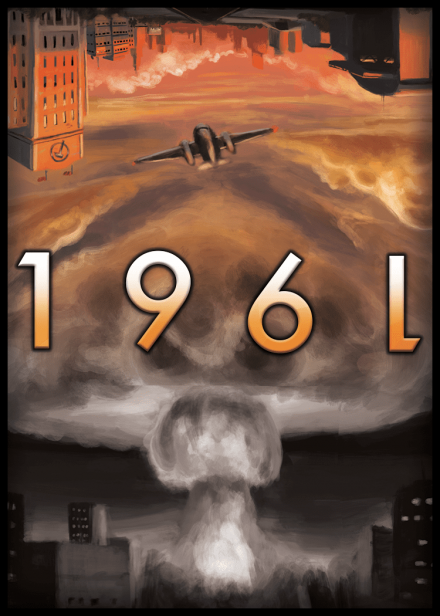
Dawn of the Zeds

The postcards in every local drug store read, “Welcome to Fabulous Farmingdale!”, an ad campaign that was the brainchild of Mayor Hernandez (who coincidentally employed his wife’s public relations firm to market their community). But right now, things are far from fabulous in Farmingdale and, for once, everyone isn’t blaming the Mayor. Some kind of virus or poison is turning ordinary people into vicious, zombie-like killers. It is not clear how the disease spreads (though it seems that physical contact is certainly one way), but it is obvious what the illness does to its victims.

These undead, nicknamed “Zeds” from the local newscasts as the acronym for “Zombie Epidemic Disease,” are now converging on your corner of the world around Farmingdale. As best you can tell, you have been left to your own devices to stop them while the National Guard organizes a relief column, but that could take days, perhaps weeks, for them to fight their way to you and until then, what can you do?

With little choice between survival and a gruesome (un)death, you realize that you must coordinate the defense of the town of Farmingdale and its surrounding villages. You must lead the good citizens and emerging heroes of these communities to halt the Zeds’ advances by (re)killing them, attempt to coordinate the discovery of a cure to this vile scourge, and preserve as much of the area and as many of its inhabitants as possible. There’s no time to lose…

Game Mechanics:

  • Campaign / Battle Card Driven
  • Cooperative Game
  • Dice Rolling
  • Solo / Solitaire Game

Game Specifications:

  • 1 – 5 Players
  • 90 – 120 Minutes
  • Difficulty Weight 3.80

Cooper Island

In the age of exploration the players arrive at a new home far away from their homeland. They try to settle the big island and each player tries to explore one part of it by placing landscape tiles. Landscape tiles grant resources and those are used to erect buildings with special abilities. Barriers on the island have to be removed in order to explore the island even further. Players build valuable statues and supply ships get them the supplies from the old world they need to be a successful settler on Cooper Island.

The special thing about Cooper Island is the way the players mark their victory points. They sail with ships around the island to show their progress. On their way around the island they find smaller islands inshore that grant valuable benefits. After five rounds, a game of Cooper Island ends and the player who developed the best and went on furthest with their ships will win.

Game Mechanics:

  • Tile Placement
  • Worker Placement

Game Specifications:

  • 1 – 4 Players
  • 60 – 120 Minutes
  • Difficulty Weight 4.16

The Colonists

The Colonists

The Colonists

In The Colonists, a.k.a. Die Kolonisten, each player is a mayor of a village and must develop their environment to gain room for new farmers, craftsmen, and citizens. The main goal of the game is full employment, so players must create new jobs, educate the people, and build new houses to increase their population. But resources are limited, and their storage leads to problems that players must deal with, while also not forgetting to upgrade their buildings. Players select actions by moving their mayor on a central board.

The Colonists is designed in different levels and scenarios, and even includes something akin to a tutorial, with the playing time varying between 30 minutes (for beginners) and 180 minutes (experts).

Game Mechanics:

  • Area Movement
  • Civilization
  • Hand Management
  • Open Drafting
  • Tile Placement
  • Worker Placement

Game Specifications:

  • 1 – 4 Players
  • 30 – 300 Minutes
  • Difficulty Weight 4.08

Clash of Cultures: Monumental Edition

Clash of Cultures: Monumental Edition brings back the classic game of exploration, expansion, and development with the Clash of Cultures base game and the Civilizations and Aztecs expansions in one box! Grow your civilization, advance your culture and tech, and leave your mark by building wonders, with this edition of the game including fully-sculpted miniatures of the Seven Wonders.

In Clash of Cultures, each player leads a civilization from a single settlement to a mighty empire. Players must explore their surroundings, build large cities, research advances and conquer those who stand in the way. The game features a modular board for players to explore, 48 distinct advances, seven mighty wonders, and loads of miniatures and cards. The winner will create a culture that will be remembered and admired for millennia.

Game Mechanics:

  • City Building
  • Hand Management
  • Modular Board
  • Tech Trees / Tech Tracks
  • Trading
  • Variable Player Powers

Game Specifications:

  • 2 – 4 Players
  • 180 – 240 Minutes
  • Difficulty Weight 3.72

Circadians: Chaos Order

The initial quakes were only minor tremors, but as the land began to unravel, so did our sense of security. We watched the cliffs of Hytazch fall into the sea. Mighty trees of old, swallowed up by the caverns below. As the waters rose, a great roar was heard across the plains. This was no cry of disbelief or heartache, but of jubilance. Songs began to fill the air as our once peaceful hosts, now readied themselves for war. Suddenly on the horizon, what appeared as huge bolts of energy shoot out into the depths of space, before disappearing again. Despite the inevitable shock wave heading our way, the clans continued to cheer as they made haste towards the origin of the blaze. What could cause such elation? Why abandon caution in favour of chaos? Had we missed something – some crucial misunderstanding of this planet and its inhabitants? Upon reaching the site, we were immediately plunged into combat. Across the landscape lay six massive structures, towering over the forces fighting below. They seemed to pulse and flicker with a golden haze. Could these be the ancient relics the Oxataya spoke of? There is so much we still do not understand, but we cannot concede to indecision. Will we stay and fight, or retreat back to Moontide?

In Circadians: Chaos Order, players take on the role of 1 of 6 asymmetric factions. Each faction has their own means of winning the game, unique leaders, attribute cards and other abilities.

Game Mechanics:

  • Action Drafting
  • Area Majority / Influence
  • Hand Management
  • Variable Player Powers
  • Wargame

Game Specifications:

  • 2 – 5 Players
  • 120 – 240 Minutes
  • Difficulty Weight 3.84

Chess

Chess is a two-player, abstract strategy board game that represents medieval warfare on an 8×8 board with alternating light and dark squares. Opposing pieces, traditionally designated White and Black, are initially lined up on either side of the board. Each type of piece has a unique form of movement and capturing occurs when a piece, via its movement, occupies the square of an opposing piece. Players take turns moving one of their pieces in an attempt to capture, attack, defend, or develop their positions. Chess games can end in checkmate (when the king cannot escape from the opponent’s pieces), resignation (when one player recognizes that defeat is inevitable and ends the game), or one of several types of draws.

Chess is one of the most popular games in the world, played by millions of people worldwide at home, in clubs, online, by correspondence, and in tournaments. Between two highly skilled players, chess can be a beautiful thing to watch, and a game can provide great entertainment even for novices. The 2020 Netflix series, The Queen’s Gambit was enjoyed by both chess players and non-players alike. There is also a large literature of books and periodicals about chess, typically featuring games and commentary by chess masters. Chess is so well known and highly regarded that it is often used as a metaphor in journalism, poetry, fiction, and film.

Chess has its origins in the Indian game Chaturanga, which became Shatranj when introduced to the Persians. The current form of the game emerged in the second half of the 15th century when the Persians brought Shatranj to Southern Europe. The tradition of organized competitive chess began in the 16th century. The first official World Chess Champion, Wilhelm Steinitz, claimed his title in 1886. Chess is also a recognized sport of the International Olympic Committee.

Game Mechanics:

  • Abstract Strategy
  • Grid Movement
  • Pattern Movement

Game Specifications:

  • 2 Players
  • Variable Time
  • Difficulty Weight 3.68

Caverna: The Cave Farmers

Following along the same lines as its predecessor (Agricola), Caverna: The Cave Farmers is a worker-placement game at heart, with a focus on farming. In the game, you are the bearded leader of a small dwarf family that lives in a little cave in the mountains. You begin the game with a farmer and his spouse, and each member of the farming family represents an action that the player can take each turn. Together, you cultivate the forest in front of your cave and dig deeper into the mountain. You furnish the caves as dwellings for your offspring as well as working spaces for small enterprises.

It’s up to you how much ore you want to mine. You will need it to forge weapons that allow you to go on expeditions to gain bonus items and actions. While digging through the mountain, you may come across water sources and find ore and ruby mines that help you increase your wealth. Right in front of your cave, you can increase your wealth even further with agriculture: You can cut down the forest to sow fields and fence in pastures to hold your animals. You can also expand your family while running your ever-growing farm. In the end, the player with the most efficiently developed home board wins.

You can also play the solo variant of this game to familiarize yourself with the 48 different furnishing tiles for your cave.

Caverna: The Cave Farmers, which has a playing time of roughly 30 minutes per player, is a complete redesign of Agricola that substitutes the card decks from the former game with a set of buildings while adding the ability to purchase weapons and send your farmers on quests to gain further resources. Designer Uwe Rosenberg says that the game includes parts of Agricola, but also has new ideas, especially the cave part of your game board, where you can build mines and search for rubies. The game also includes two new animals: dogs and donkeys.

Game Mechanics:

  • Solo / Solitaire Game
  • Tile Placement
  • Worker Placement

Game Specifications:

  • 1 – 7 Players
  • 30 – 210 Minutes
  • Difficulty Weight 3.77

Carnegie

Carnegie was inspired by the life of Andrew Carnegie who was born in Scotland in 1835. Andrew Carnegie and his parents emigrated to the United States in 1848. Although he started his career as a telegraphist, his role as one of the major players in the rise of the United States’ steel industry made him one of the richest men in the world and an icon of the American dream.

Andrew Carnegie was also a benefactor and philanthropist; upon his death in 1919, more than $350 million of his wealth was bequeathed to various foundations, with another $30 million going to various charities. His endowments created nearly 2,500 free public libraries that bear his name: the Carnegie Libraries.

During the game you will recruit and manage employees, expand your business, invest in real estate, produce and sell goods, and create transport chains across the United States; you may even work with important personalities of the era. Perhaps you will even become an illustrious benefactor who contributes to the greatness of his country through deeds and generosity!

The game takes place over 20 rounds; players will each have one turn per round. On each turn, the active player will choose one of four actions, which the other players may follow.

The goal of the game is to build the most prestigious company, as symbolized by victory points.

Game Mechanics:

  • Area Movement
  • End Game Bonuses
  • Income
  • Network and Route Building
  • Solo / Solitaire Game
  • Tech Trees / Tech Tracks
  • Variable Phase Order
  • Worker Placement

Game Specifications:

  • 1 – 4 Players
  • 90 – 120 Minutes
  • Difficulty Weight 3.81

Brass: Lancashire

Brass: Lancashire — first published as Brass — is an economic strategy game that tells the story of competing cotton entrepreneurs in Lancashire during the industrial revolution. You must develop, build, and establish your industries and network so that you can capitalize demand for iron, coal and cotton. The game is played over two halves: the canal phase and the rail phase. To win the game, score the most victory points (VPs), which are counted at the end of each half. VPs are gained from your canals, rails, and established (flipped) industry tiles. Each round, players take turns according to the turn order track, receiving two actions to perform any of the following:

  1. Build an industry tile
  2. Build a rail or canal
  3. Develop an industry
  4. Sell cotton
  5. Take a loan

At the end of a player’s turn, they replace the two cards they played with two more from the deck. Turn order is determined by how much money a player spent on the previous turn, from lowest spent first to highest spent. This turn order mechanism opens some strategic options for players going later in the turn order, allowing for the possibility of back-to-back turns.

After all the cards have been played the first time (with the deck size being adjusted for the number of players), the canal phase ends and a scoring round commences. After scoring, all canals and all of the lowest level industries are removed for the game, after which new cards are dealt and the rail phase begins. During this phase, players may now occupy more than one location in a city and a double-connection build (though expensive) is possible. At the end of the rail phase, another scoring round takes place, then a winner is crowned.

The cards limit where you can build your industries, but any card can be used for the develop, sell cotton or build connections actions. This leads to a strategic timing/storing of cards. Resources are common so that if one player builds a rail line (which requires coal) they have to use the coal from the nearest source, which may be an opponent’s coal mine, which in turn gets that coal mine closer to scoring (i.e., being utilized).

Brass: Lancashire, the 2018 edition from Roxley Games, reboots the original Warfrog Games edition of Brass with new artwork and components, as well as a few rules changes:

  • The virtual link rules between Birkenhead have been made optional.
  • The three-player experience has been brought closer to the ideal experience of four players by shortening each half of the game by one round and tuning the deck and distant market tiles slightly to ensure a consistent experience.
  • Two-player rules have been created and are playable without the need for an alternate board.
  • The level 1 cotton mill is now worth 5 VP to make it slightly less terrible.

Game Mechanics:

  • Economic
  • Hand Management

Game Specifications:

  • 2 – 4 Players
  • 60 – 120 Minutes
  • Difficulty Weight 3.85

Brass: Birmingham

Brass: Birmingham is an economic strategy game sequel to Martin Wallace’ 2007 masterpiece, BrassBrass: Birmingham tells the story of competing entrepreneurs in Birmingham during the industrial revolution, between the years of 1770-1870.

As in its predecessor, you must develop, build, and establish your industries and network, in an effort to exploit low or high market demands.

Each round, players take turns according to the turn order track, receiving two actions to perform any of the following actions (found in the original game):

1) Build – Pay required resources and place an industry tile.
2) Network – Add a rail / canal link, expanding your network.
3) Develop – Increase the VP value of an industry.
4) Sell – Sell your cotton, manufactured goods and pottery.
5) Loan – Take a £30 loan and reduce your income.

Brass: Birmingham also features a new sixth action:

6) Scout – Discard three cards and take a wild location and wild industry card. (This action replaces Double Action Build in original Brass.)

The game is played over two halves: the canal era (years 1770-1830) and the rail era (years 1830-1870). To win the game, score the most VPs. VPs are counted at the end of each half for the canals, rails and established (flipped) industry tiles.

Birmingham features dynamic scoring canals/rails. Instead of each flipped industry tile giving a static 1 VP to all connected canals and rails, many industries give 0 or even 2 VPs. This provides players with the opportunity to score much higher value canals in the first era, and creates interesting strategy with industry placement.

Iron, coal, and cotton are three industries which appear in both the original Brass as well as in Brass: Birmingham.

New “Sell” system

Brewing has become a fundamental part of the culture in Birmingham. You must now sell your product through traders located around the edges of the board. Each of these traders is looking for a specific type of good each game. To sell cotton, pottery, or manufactured goods to these traders, you must also “grease the wheels of industry” by consuming beer. For example, a level 1 cotton mill requires one beer to flip. As an incentive to sell early, the first player to sell to a trader receives free beer.

Birmingham features three all-new industry types:

Brewery – Produces precious beer barrels required to sell goods.

Manufactured goods – Function like cotton, but features eight levels. Each level of manufactured goods provides unique rewards, rather than just escalating in VPs, making it a more versatile (yet potentially more difficult) path vs cotton.

Pottery – These behemoths of Birmingham offer huge VPs, but at a huge cost and need to plan.

Increased Coal and Iron Market size – The price of coal and iron can now go up to £8 per cube, and it’s not uncommon.

Game Mechanics:

  • Economic
  • Hand Management
  • Variable Set-up,

Game Specifications:

  • 2 – 4 Players
  • 60 – 120 Minutes
  • Difficulty Weight 3.87