Tag: Mechanism

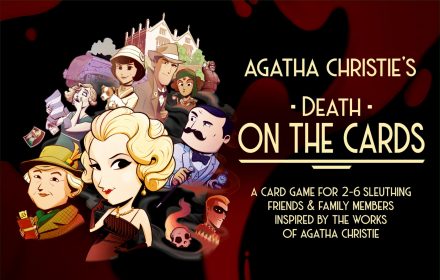
Agatha Christie’s Death on the Cards 🔵

In Agatha Christie’s: Death on the Cards, which consists of a deck of eighty cards, players work co-operatively to solve a murder, using their detective skills to unmask the culprit and prevent their escape. The twist is that one of the players is the murderer and must work against the group to keep themselves hidden. Players also have dark secrets from their past they want to keep hidden from the other players. Who can you trust?

Game Specifications:

  • 2 – 6 Players
  • 20 – 40 Minutes
  • Difficulty Weight 1.25

Abandon all Artichokes 🔵

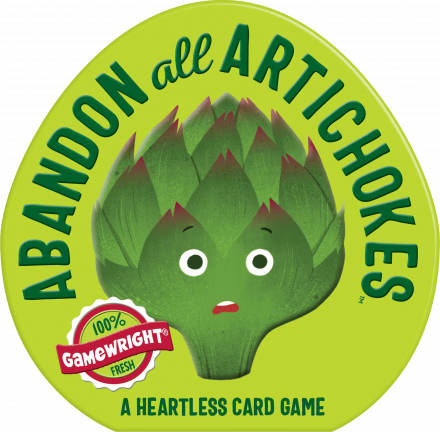
Abandon All Artichokes isn’t your garden-variety card game!

A bumper-crop of prickly produce has overtaken your patch, and there’s only one choice: abandon all artichokes! Prune your deck by harvesting fresh vegetables, each with a special power that lets you swap, discard, or compost cards. You need luck, strategy, and a green thumb to grow a winning hand!

Game Specifications:

  • 2 – 4 Players
  • ~20 Minutes
  • Difficulty Weight 1.32

5211 Azul 🔵

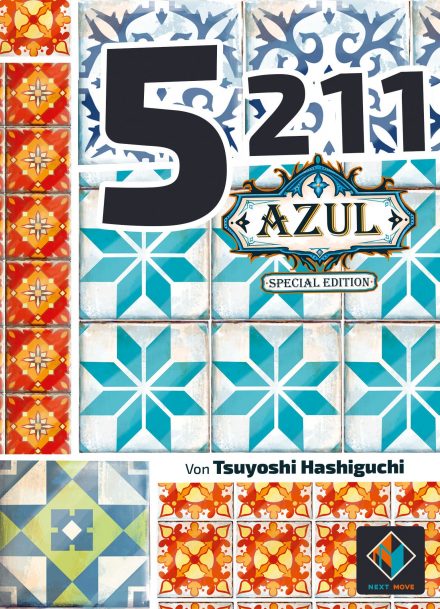
5211 is a fast-playing card game with a unique scoring method that rewards clever play!

This game has cards 1-6 in five colors. Each player starts with a hand of five cards. Players play two cards face-down, then simultaneously reveal them. They refill their hand, then repeat this process two more times, but only with one card.

The cards of the majority color will score — unless too many are present, in which case the color busts and the second most color scores. In case of a tie for majority, the tied colors are also out. These rounds are repeated until the deck runs out. The player with the most points wins.

5211 is a new edition of 5 COLORS that has all new art.

Game Specifications:

  • 2 – 5 Players
  • 20 – 30 Minutes
  • Difficulty Weight 1.22

Axis & Allies

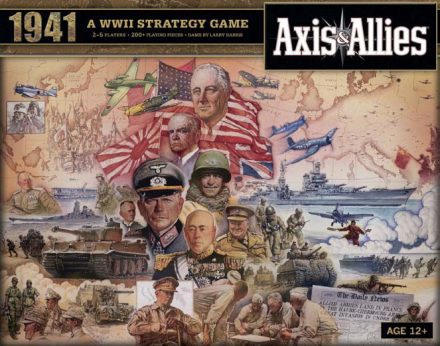
Axis and Allies is the most successful of Milton Bradley’s Gamemaster series.

It depicts WWII on a grand scale, full global level. Up to five players can play on two different teams. The Axis which has Germany and Japan, and the Allies which has the USA, the United Kingdom, and the USSR. A full map of the world is provided, broken up in various chunks similar to Risk. The game comes with gobs of plastic miniatures that represent various military units during WWII. Players have at their disposal infantry, armor, fighters, bombers, battleships, aircraft carriers, submarines, troop transports, anti-air guns, and factories. All of the units perform differently, and many have special functions. Players have to work together with their teammates in order to coordinate offenses and decide how best to utilize their production points. Players also have the option of risking production resources on the possibility of developing a super technology that might turn the tide of war.

Game Specifications:

  • 2 – 5 Players
  • ~180 Minutes
  • Difficulty Weight 3.04

Atiwa

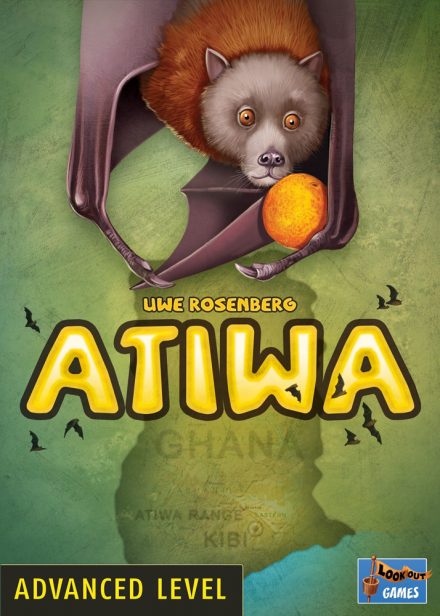
The Atiwa Range is a region of southeastern Ghana in Africa consisting of steep-sided hills with rather flat summits. A large portion of the range comprises an evergreen forest reserve, which is home to many endangered species. However, logging and hunting for bushmeat, as well as mining for gold and bauxite, are putting the reserve under a lot of pressure.

Meanwhile, in the nearby town of Kibi, the mayor is causing a stir by giving shelter to a large number of fruit bats in his own garden. This man has recognized the great value the animals have in deforested regions of our planet: Fruit bats sleep during the day and take off at sunset in search of food, looking for suitable fruit trees up to sixty miles away. They excrete the seeds of the consumed fruit, disseminating them across large areas as they fly home. A single colony of 150,000 fruit bats can reforest an area of up to two thousand acres a year.

Just like that mayor, in Atiwa, you know that fruit bats — once scorned and hunted as mere fruit thieves — are in fact incredibly useful animals, spreading seeds over large areas of the country. By doing so, they help to reforest fallow land and, in the medium term, improve harvests. This realization has led to a symbiotic co-operation between fruit bats and fruit farmers. The animals are kept as “pets” to increase the size of fruit farms more quickly. Tall trees are left as roosts, providing shelter for them rather than hunting them for their scant meat. However, if you have a lot of fruit bats, you need a lot of space…

In the game, you will develop a small community near the Atiwa Range, creating housing for new families and sharing your newly gained knowledge on the negative effects of mining and the importance that the fruit bats have for the environment. You must acquire new land, manage your animals and resources, and make your community prosper. The player who best balances the needs of their community and the environment wins.

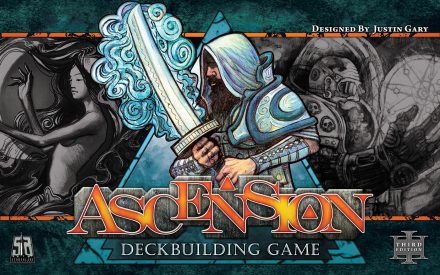
Ascension: Deckbuilding Game

Ascension: Deckbuilding Game — originally released as Ascension: Chronicle of the Godslayer — is a fast-paced deck-building game designed by Magic: The Gathering Pro Tour champions Justin Gary, Rob Dougherty, and Brian Kibler, with artwork by Eric Sabee.

Ascension is a deck-building game in which players spend Runes to acquire more powerful cards for their deck. It offers a dynamic play experience where players have to react and adjust their strategy accordingly. Each player starts with a small deck of cards, and uses those cards to acquire more and better cards for their deck, with the goal of earning the most Honor Points by gaining cards and defeating monsters.

Game Specifications:

  • 1 – 4 Players
  • ~30 Minutes
  • Difficulty Weight 2.14

Art Decko

Art Decko, first released as Promenade, is a light strategy game for 2 to 4 painting collectors in which you try to create a valuable deck of gold and painting cards over the course of play. These cards — gold and paintings — both count as currencies in the game, and you can use them to purchase more paintings, acquire more gold, and pay for exhibition space in a museum. Your long-term goal is to manipulate the market value of certain styles of artwork, while also earning points by placing paintings in the museum.

The game includes paintings from five styles of art — Art Nouveau, Pop Art, Renaissance, Surrealism, and Impressionism — and you start with five random painting cards in your deck. Each art style starts with a value of 1 gold for a painting. You also have five starting gold cards in your deck, with the cards being worth 1 or 2 gold, with some cards having a special ability on them.

To start the game, shuffle your deck, then take five cards in hand. Fill the four galleries with 2-3 random paintings each, then place two random 3-gold cards (each with a special power) in the bank, along with the deck of 5-gold cards. Paintings in galleries cost 1-8 gold, while gold cards cost 5 or 8 gold. On a turn, take two actions from these three choices, repeating an action, if desired:

• Haggle: Discard a card from your hand to draw two cards from your deck.
• Acquire: Pay the acquisition cost of a painting or gold card by discarding cards from your hand, then place that card in your discard pile. Increase the “market rating” of the painting’s art style or gold by the value listed in the gallery/bank. As the market rating of an art style increases, each painting in that style is worth more gold, effectively increasing its buying power; that art style is also worth more points at game’s end.
• Exhibit: Pay the exhibition cost for a gallery, then place a painting into that gallery that matches one of that gallery’s invitation markers. (A gallery might want, for example, 2 Impressionistic paintings, 1 Renaissance painting, and 1 painting of any type.) Mark that painting with one of your ownership tokens, then place the related invitation marker on the highest available victory point (VP) space, scoring those points for yourself immediately. That painting is now removed from your deck.

If you use the special ability on a gold card instead of its listed numerical value, remove that card from the game.

At the end of your turn, discard any number of cards from your hand, then refill your hand to five cards. If a gallery has no paintings in it, refill all of the galleries with 2-3 paintings, then replace each empty gallery’s cost token with the next highest one available. When at least twelve paintings are in the museum, the painting deck is empty, or an art style or gold reaches a market rating of 70, finish the round, then proceed to final scoring.

The value of gold depends on its market rating, with its value ratio ranging from 6:1 to 1:1. Each painting in your deck is worth 1-7 VPs depending on the market rating of its art style. Each exhibition space in the museum also has a random bonus that was revealed at the start of play, and you can earn additional points through these bonuses. In the end, the player with most VPs wins.

Game Specifications:

  • 2 – 4 Players
  • 45 – 60 Minutes
  • Difficulty Weight 2.31

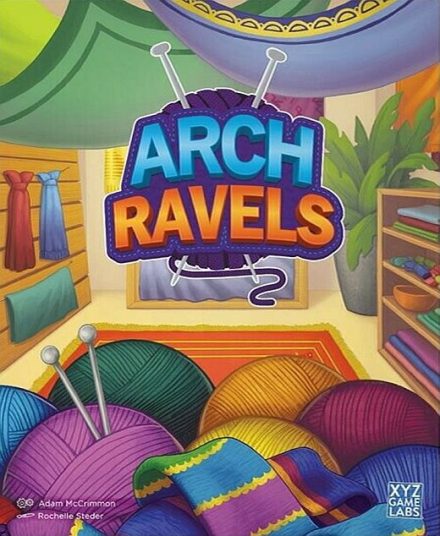
ArchRavels

Experience the colorful and crafty world of fiber arts with ArchRavels! Play as one of four characters, each with their own unique crafting specialty. Hit the Yarn Bazaar to build up your stash. Follow the patterns to make cuddly bears, warm blankets, and cozy scarves. Along the way you’ll get some unique special requests. Turn in your completed items to master a pattern, complete projects, and score points. When the project list runs out, the crafter with the most points wins!

Game Specifications:

  • 2 – 4 Players
  • 30 – 45 Minutes
  • Difficulty Weight 1.92

Animal Kingdoms 🟢

In Animal Kingdoms, each player takes on the role of a house leader, battling to gain control of the five kingdoms. Cards in your hand represent noble beasts that have pledged their allegiance to you. Over the course of three ages, you must deploy your beasts to the various territories – making sure that you adhere to each kingdom’s decree – to try and improve your influential position in the kingdoms. The house that gains the most influence by the end of the third age is declared the one true leader of the realm.

Game Specifications:

  • 1 – 5 Players
  • ~45 Minutes
  • Difficulty Weight 1.77

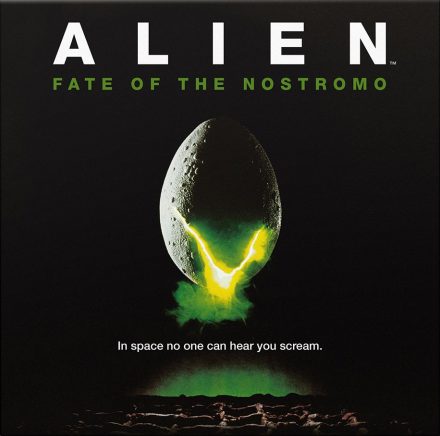
Alien: Fate of the Nostromo 🟢

In ALIEN: Fate of the Nostromo, players take the role of Nostromo crew members Ripley, Lambert, Parker, Brett, or Dallas. Over the course of the game, they collect scrap, craft items, and fulfill different objectives. The crew will lose and gain morale as they encounter the Alien and other situations. If crew morale reaches zero, players lose the game.

Each turn has two phases. In the Crew Action phase, players creep through the Nostromo’s halls, gathering scrap, crafting items, trading scrap and items with other players, and using items and their special abilities. Brett, for example, can craft items with one fewer scrap than other players. If the Alien is within three spaces of the player with the incinerator, that player can use the incinerator to send the Alien back to its nest.

In the Encounter phase, players draw and resolve an Encounter card. The Alien could be lurking behind any corner…

Once the players fulfill their initial objectives, they face one of five final missions, each with a unique set of requirements. Players must fulfill the final mission’s requirements simultaneously to win the game. Players can also introduce Science Officer Ash for a more challenging game. Ash moves through the ship, removing scrap and forcing the crew to lose morale.

Game Specifications:

  • 1 – 5 Players
  • 45 – 60 Minutes
  • Difficulty Weight 1.94