Tag: Track Movement

Ezra and Nemahiah

In his first year as king of Persia, Cyrus the Great issued a decree in writing to the Israelite exiles living under his rule:

The God of heaven has given me all the kingdoms of the earth and has appointed me to build a temple for Him in Jerusalem. Any of his people may go up to Jerusalem in Judah to build the temple of the Lord, the God of Israel. And in any place where survivors may now be living, the people of Persia are to provide them with silver, gold, goods, livestock, and offerings for the temple of God in Jerusalem. – Ezra 1:2-4 (paraphrased).

Decades later, in the twentieth year of Artaxerxes reign, the king noticed a sadness in his cupbearer, Nehemiah. When asked why he looked so ill, Nehemiah replied:

May the king live forever! Why should I not look sad when the city of my ancestors lies in ruins, and its gates have been destroyed by fire? If it pleases you, and if I have found favor in your sight, let me go to the city in Judah where my ancestors are buried so that I may rebuild it. – Nehemiah 2:3-5 (paraphrased).

The aim of Ezra and Nehemiah is to be the player with the most victory points (VP) at game’s end. Points are gained primarily by building the temple, rebuilding the city walls and gates, and by teaching the Torah to the returning exiles. Players may also seek to develop their land, travel to settlements outside the city walls, or stoke the altar’s fire to keep it burning day and night. The prophets Haggai and Zechariah will be doing their part to keep the people focused on what is most important.

Over three weeks (rounds), players will use their hand of cards, workers, and resources to do their part in rebuilding the great city of Jerusalem. After six days of work comes a Sabbath day of rest when food will be needed, and the week’s work will be reflected upon. The game ends after the third Sabbath has been completed.

—description from the designer

Game Mechanics:

  • Chaining
  • Hand Management
  • Multi-Use Cards
  • Solo / Solitaire Game
  • Tech Trees / Tech Tracks
  • Track Movement
  • Variable Set-up

Game Specifications:

  • 1 – 4 Players
  • 90 – 120 Minutes
  • Difficulty Weight 3.83

Agent Avenue

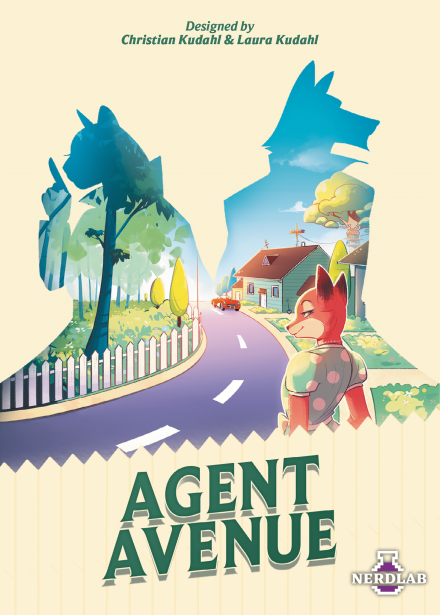
Agent Avenue is a competitive card game that combines bluffing, strategic set collection, and a race to uncover your opponent’s identity. Set in a colorful anthropomorphic world, players assume the roles of retired spies in a suburban neighborhood, outsmarting each other with cards that can score points or trigger special effects. The game’s art brings to life a quirky neighborhood of animal spies.

Use a unique “I split, you choose” mechanic to play one card face-up and one face-down each turn. Your opponent chooses one, influencing both your strategies. Cards feature different agents and tools that impact scoring and game progress on a track, advancing the “catch me” race to uncover the opposing spy.

Outwit your opponents by strategically collecting agent sets and effectively using spy tools. The game ends when a player successfully uncovers their opponent, combining both strategic depth and bluffing elements.

Perfect for those who love a mix of strategy and lighthearted competition, “Agent Avenue” challenges you to think like a spy and act like a friendly neighbor.

Game Mechanics:

  • Hand Management
  • Race
  • Set Collection
  • Track Movement

Game Specifications:

  • 2 – 4 Players
  • 10 – 20 Minutes
  • Difficulty Weight 1.30

Divinity Derby

Zeus has invited a bunch of divine friends, including a couple of new ones, from all around the Multiverse for a little get-together on Mount Olympus…and you are one of them! After a few rounds of ambrosia, soon the racing and betting begins, with the Olympic “All-father” as the ultimate judge.

Divinity Derby is a fun and fast betting and racing game for 3 to 6 players, with a clever “shared hand” card mechanism. Players, as god-like beings betting on the race of six flying creatures, share a cardholder with each neighbor, and every turn they play one card from each shared card holder. Are you able to guess what your neighbor’s intentions and secret bets are and make the best use of the shared knowledge to win your bets?

With beautiful components, colorful art, and simple but engaging gameplay, Divinity Derby is suitable for players of all ages and skill levels.

Game Mechanics:

  • Betting and Bluffing
  • Neighbor Scope
  • Open Drafting
  • Track Movement
  • Variable Player Powers

Game Specifications:

  • 3 – 6 Players
  • 45 – 90 Minutes
  • Difficulty Weight 1.91

Crafting the Cosmos

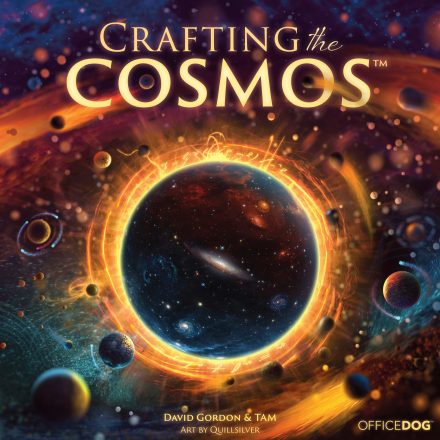
Welcome to Crafting the Cosmos, where you get to construct your very own universe! Each player’s turn is split into two phases: the Energy Phase and the Craft Phase, followed by a collective End Phase. During the Energy Phase, players will move their energy token around the board to gather resources, which they will then use in the Craft Phase to construct their own galaxy. You can create stars, nebulas, and even life to maximize your points and create the best universe!

Game Mechanics:

  • Contracts
  • Map Addition
  • Tile Placement
  • Track Movement
  • Variable Player Powers

Game Specifications:

  • 2 – 4 Players
  • 60 – 90 Minutes
  • Difficulty Weight 2.93

Cascadero

The kingdom is shattered, its towns are divided, and its people are distrusting. The newly crowned ruler, El Cascadero, seeks to reunite the land, but he can’t do it alone. Thus, he appoints four ministers to visit the people and restore civil harmony. While the ministers are obligated to bring prosperity to the entire land, each of them also has one dedicated responsibility: Farming, Crafting, Mining, and Markets. El Cascadero also records in his book the successes of his ministers…

Cascadero is the next epic tile placement strategy game from acclaimed designer Reiner Knizia. Ministers visit towns by placing their envoys adjacent to them; but towns are distrusting of single envoys, so newly placed envoys will only trigger town scoring when they are part of an established group or carry an official seal from El Cascadero himself. Towns with Royal Messengers at them or a history of envoy visits are even more valuable, as they willingly collaborate for even greater successes.

Players must decide between two competing strategies: build long chains of their envoys to achieve synergies and objectives, or establish smaller, separate groups of envoys to trigger timely town scoring. Both will award victory points, yet your victory points will mean nothing if you don’t also reach the end of your appointed success column.

By triggering town scoring, you’ll advance along that town’s matching success column, gaining bonuses as you pass over them. Bonuses include earning victory points, advancing further on any success column, claiming an official seal, repositioning an envoy, or even acquiring an additional turn. Through careful timing and clever plans, players can trigger a cascading combo of exciting bonuses that swing momentum in their favor.

Cascadero provides a wealth of replayability through emergent player interaction, variable board and tile setups, and an advanced player mode featuring traveling heralds. Yet the game will always end in one of two ways: when one player reaches fifty victory points or must place a tile but has no tiles left. The players who reached the end of their appointed success column qualify for victory, and whoever among them has the most victory points wins.

Game Mechanics:

  • Chaining
  • Connections
  • Network and Route Building
  • Tile Placement
  • Track Movement

Game Specifications:

  • 2 – 4 Players
  • 45 – 60 Minutes
  • Difficulty Weight 2.58