Tag: Map Addition

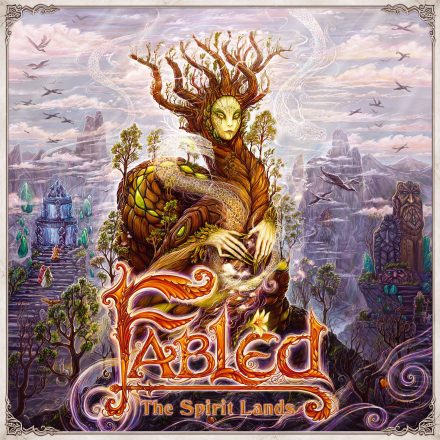
Fabled: The Spirit Lands

The End of Times is coming. The Gods have ruled over the human and spirits worlds for æons, but soon the time will come for them to depart into oblivion. On the verge of the Universe facing its rebirth, the Gods will entrust its reigns to the worthiest among the sage brotherhoods of humans. The greatest contest has begun, one neither world has ever seen before!

In Fabled, your brotherhood explores the fabulous lands of the spirit world. Your sages follow winding paths and visit fabled places along the way. Mighty allies assist them in their journey. Your ultimate goal is to gather books of wisdom, as they contain the magic essence of the Universe. The most prized of all are the books of Sun. The brotherhood to collect the most will receive the reins of the Universe from the Gods.

You have two ways to experience the game: competitively or opposing the Spirits — a game-controlled brotherhood created by the Gods. The Spirits may be faced solo, cooperatively with other players, or each player for themselves.

Game Specifications:

  • 1 – 5 Players
  • 40 – 75 Minutes
  • Difficulty Weight 2.50

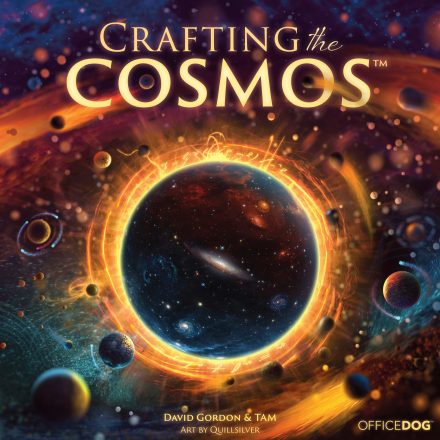
Crafting the Cosmos

Welcome to Crafting the Cosmos, where you get to construct your very own universe! Each player’s turn is split into two phases: the Energy Phase and the Craft Phase, followed by a collective End Phase. During the Energy Phase, players will move their energy token around the board to gather resources, which they will then use in the Craft Phase to construct their own galaxy. You can create stars, nebulas, and even life to maximize your points and create the best universe!

Game Mechanics:

  • Contracts
  • Map Addition
  • Tile Placement
  • Track Movement
  • Variable Player Powers

Game Specifications:

  • 2 – 4 Players
  • 60 – 90 Minutes
  • Difficulty Weight 2.93

Campsite

Campsite has players competing for the best camping spot. Play cards on top of each other to link elements like forests, mountains, and camping trails together to score the most points.

A clever card-based “tile” laying game that focus on maximizing your limited space!

Luck and strategy combine in the great outdoors (no actual camping required). Includes 72 cards 42 tokens, scorepad, and pencil.

Game Mechanics:

  • Connections
  • Map Addition
  • Melding and Splaying
  • Tile Placement

Game Specifications:

  • 2 – 6 Players
  • 20 – 60 Minutes
  • Difficulty Weight 1.00

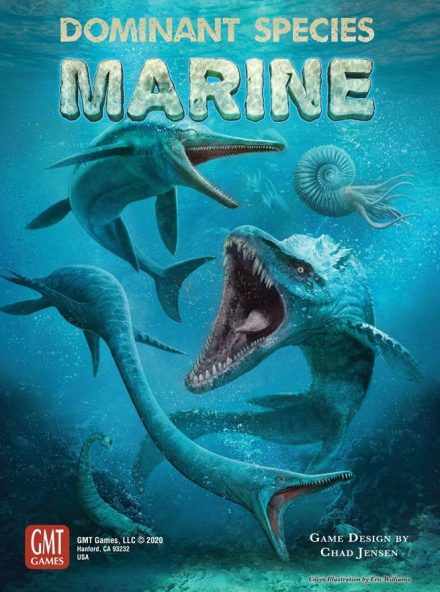
Dominant Species Marine

Sixty-Something Millions of Years Ago — A great ice age has ended. With massive warming altering the globe, another titanic struggle for supremacy has unwittingly commenced between the varying animal species.

Dominant Species: Marine is a game that abstractly recreates a small portion of ancient history: the ending of an onerous ice age and what that entails for the living creatures trying to adapt to the slowly-changing earth.

Each player will assume the role of one of four major aquatic-based animal classes — reptiles, fish, cephalopod or crustacean. Each begins the game more or less in a state of natural balance in relation to one another. But that won’t last: It is indeed “survival of the fittest.”

Through wily action pawn placement, you will attempt to thrive in as many different habitats as possible in order to claim powerful card effects. You will also want to propagate your individual species in order to earn victory points for your animal. You will be aided in these endeavors via speciation, migration and adaptation actions, among others.

All of this eventually leads to the end game – the final ascent of a vast tropical ocean and its shorelines – where the player having accumulated the most victory points will have their animal crowned the Dominant Species.

But somebody better become dominant quickly, because there’s a large asteroid heading this way….

Game Play

The large hexagonal tiles are used throughout the game to create an ever-expanding interpretation of the main ocean on earth as it might have appeared tens of millions of years ago. The smaller Hydrothermal Vent tiles will be placed atop some of the larger tiles throughout play, converting them into Vents in the process.

The action pawns drive the game. Each pawn allows a player to perform the various actions that can be taken—such as speciation, environmental change, migration or evolution. When placed on the action display, a pawn will immediately trigger that particular action for its owning player. Dominant Species: Marine includes new “special” pawns that can be acquired during the course of play. These special pawns have enhanced placement capabilities over the “basic” pawns that each player begins the game with.

Generally, players will be trying to enhance their own animal’s survivability while simultaneously trying to hinder that of their opponents’—hopefully collecting valuable victory points along the way. The various cards will aid in these efforts, giving players useful one-time abilities, ongoing benefits, or an opportunity for recurring VP gains.

Throughout the game species cubes will be added to, moved about on, and removed from the tiles in play (“earth”). Element disks will be added to and removed from both animals and earth.

When the game ends, players will conduct a final scoring of each tile and score their controlled special pawns—after which the player controlling the animal with the highest VP total wins the game.

Dominant Species Veterans

For players of the original Dominant Species, this iteration introduces several key evolutions to the system (pun definitely intended):

  1. Actions are taken immediately whenever a pawn is placed instead of waiting to execute actions after all pawns are on the board. This gives players a bit more flexibility in their strategy, doesn’t increase game time when more pawns are acquired by players, and lessens the brain-burn quite a bit since it alleviates the burden of having to plan out an entire turn in advance.
  2. Domination is no longer on a per-tile basis, and is no longer ‘competitive’ with other players. In this game you check dominance for each element type over the entire earth, and whether or not you dominate an element type is independent of whether one or more opponents also dominate it. Domination of an element is how you acquire – and try to maintain – control of the special pawns.
  3. Animals no longer have default special abilities. Now, players are dealt 3 Trait cards during setup, choosing one to keep and putting the others back in the box. The chosen Trait gives their animal one of eighteen unique abilities spread amongst the Trait cards.
  4. Acquiring special pawns through domination gives a player great flexibility in planning and executing a strategy. Special pawns can ‘bump’ an opponent’s basic pawn in order to take an action that would otherwise be blocked. They can be placed anywhere on the action display (where basic pawns must be placed in top-to-bottom order only). There are powerful action spaces where only a special pawn can be placed. And at the end of the game, each special pawn awards its owner VPs according to its highest achieved dominance value.

Game Mechanics:

  • Area Majority / Influence
  • Map Addition
  • Open Drafting
  • Tile Placement
  • Variable Player Powers
  • Worker Placement

Game Specifications:

  • 2 – 4 Players
  • 90 – 150 Minutes
  • Difficulty Weight 3.69

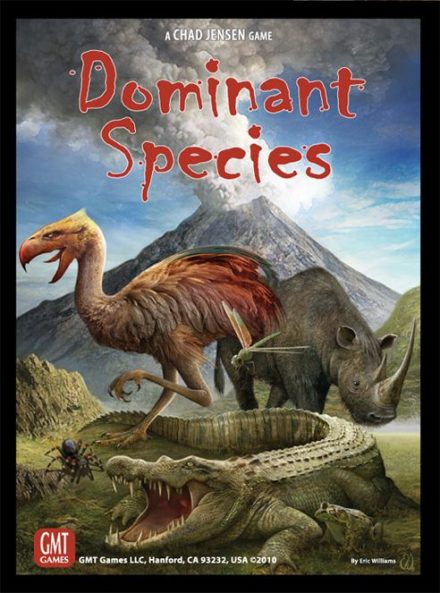
Dominant Species

90,000 B.C. — A great ice age is fast approaching. Another titanic struggle for global supremacy has unwittingly commenced between the varying animal species.
Dominant Species is a game that abstractly recreates a tiny portion of ancient history: the ponderous encroachment of an ice age and what that entails for the living creatures trying to adapt to the slowly-changing earth.
Each player will assume the role of one of six major animal classes—mammal, reptile, bird, amphibian, arachnid, or insect. Each begins the game more or less in a state of natural balance in relation to one another. But that won’t last: It is indeed “survival of the fittest”.
Through wily action pawn placement, players will strive to become dominant on as many different terrain tiles as possible in order to claim powerful card effects. Players will also want to propagate their individual species in order to earn victory points for their particular animal. Players will be aided in these endeavors via speciation, migration, and adaptation actions, among others.
All of this eventually leads to the end game—the final ascent of the ice age—where the player having accumulated the most victory points will have his animal crowned the Dominant Species.
But somebody better become dominant quickly, because it’s getting mighty cold…

Game Play
The large hexagonal tiles are used throughout the game to create an ever-expanding interpretation of earth as it might have appeared a thousand centuries ago. The smaller tundra tiles will be placed atop the larger tiles—converting them into tundra in the process—as the ice age encroaches.
The cylindrical action pawns (or “AP”s) drive the game. Each AP will allow a player to perform the various actions that can be taken, such as speciation, environmental change, migration, or glaciation. After being placed on the action display during the Planning Phase, an AP will trigger that particular action for the owning player during the Execution Phase.
Generally, players will be trying to enhance their own animal’s survivability while simultaneously trying to hinder that of their opponents’—hopefully collecting valuable victory points (or “VP”s) along the way. The various cards will aid in these efforts, giving players useful one-time abilities or an opportunity for recurring VP gains.
Throughout the game, species cubes will be added to, moved about in, and removed from the tiles in play (the “earth”). Element disks will be added to and removed from both animals and earth.
When the game ends, players will conduct a final scoring of each tile—after which the player controlling the animal with the highest VP total wins.

Game Mechanics:

  • Area Majority / Influence
  • Map Addition
  • Take That
  • Tile Placement
  • Variable Player Powers
  • Worker Placement

Game Specifications:

  • 2 – 6 Players
  • 120 – 240 Minutes
  • Difficulty Weight 4.04

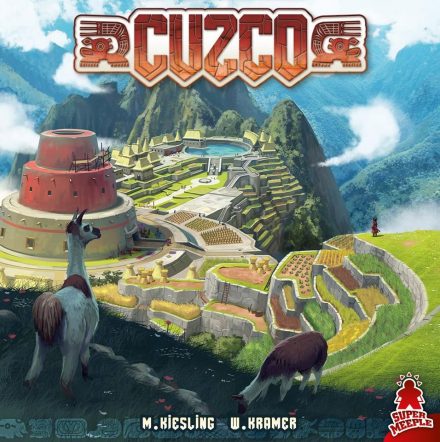
Cuzco

Cuzco is a new 2018 edition of Java from French publisher Super Meeple that moves the action to South America, which is in line with the other titles in the Mask Trilogy as well as the authors’ original plans for the design.

Game Mechanics:

  • Area Majority / Influence
  • Auction / Bidding
  • Hand Management
  • Map Addition
  • Tile Placement
  • Zone of Control

Game Specifications:

  • 2 – 4 Players
  • ~90 Minutes
  • Difficulty Weight 2.64

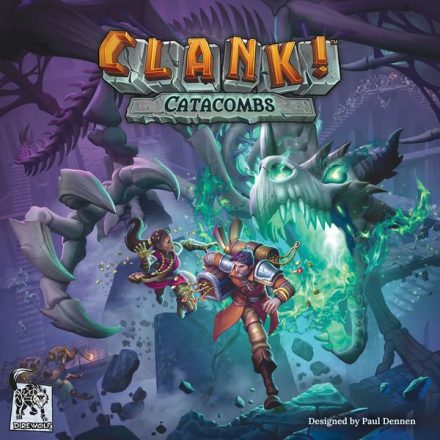
Clank! Catacombs

The catacombs of the skeletal dragon Umbrok Vessna are mysterious and dangerous. Portals transport you all around the dungeon depths. Wayshrines offer vast riches to intrepid explorers. Prisoners are counting on you to free them. Ghosts, once disturbed, may haunt you to death. Despite all that, it’s time to leave the board behind with Clank! Catacombs, a standalone deck-building adventure.

Each trip into the catacombs is unique since you lay tiles to create the dungeon. You can play using only the all-new dungeon deck, or you can include cards from previous Clank! expansions.

Find your fortune (and escape the dragon!) in Clank! Catacombs.

Game Mechanics:

  • Deck, Bag, and Pool Building
  • Map Addition
  • Map Deformation
  • Modular Board
  • Open Drafting
  • Player Elimination
  • Push Your Luck
  • Tile Placement
  • Variable Set-up

Game Specifications:

  • 2 – 4 Players
  • 45 – 90 Minutes
  • Difficulty Weight 2.50

Betrayal at House on the Hill

Betrayal at House on the Hill quickly builds suspense and excitement as players explore a haunted mansion of their own design, encountering spirits and frightening omens that foretell their fate. With an estimated one hour playing time, Betrayal at House on the Hill is ideal for parties, family gatherings or casual fun with friends.

Betrayal at House on the Hill is a tile game that allows players to build their own haunted house room by room, tile by tile, creating a new thrilling game board every time. The game is designed for three to six people, each of whom plays one of six possible characters.

Secretly, one of the characters betrays the rest of the party, and the innocent members of the party must defeat the traitor in their midst before it’s too late! Betrayal at House on the Hill will appeal to any game player who enjoys a fun, suspenseful, and strategic game.

Betrayal at House on the Hill includes detailed game pieces, including character cards, pre-painted plastic figures, and special tokens, all of which help create a spooky atmosphere and streamline game play.

Game Specifications:

  • 3 – 6 Players
  • ~60 Minutes
  • Difficulty Weight 2.40

Betrayal at Baldur’s Gate

The shadow of Bhaal has come over Baldur’s Gate, summoning monsters and other horrors from the darkness!

As you build and explore the iconic city’s dark alleys and deadly catacombs, you must work with your fellow adventurers to survive the terrors ahead. That is, until some horrific evil turns one — or possibly more — of you against each other. Was it a mind flayer’s psionic blast or the whisperings of a deranged ghost that caused your allies to turn traitor? You have no choice but to keep your enemies close!

Based on the award-winning Betrayal at House on the Hill board game, in Betrayal at Baldur’s Gate you’ll return to Baldur’s Gate again and again thanks to the fifty included scenarios only to discover it’s never the same game twice.

Can you and your party survive the madness, or will you succumb to the mayhem and split (or slaughter!) the party?

Game Specifications:

  • 3 – 6 Players
  • ~60 Minutes
  • Difficulty Weight 2.56

Fjords

Explore a landscape so stunning that even a Viking would hold their breath in awe…

Fjords is a tile-laying game that takes place in two phases. The first one invites the players to explore the fjords around them by laying hexagonal landscape tiles, creating a map that serves as the gameboard. In the second phase, players begin from the longhouses they placed during phase one and will walk the landscape, claiming as much of the plains and cliffs as possible.

The winner of the game will be the player who has claimed the most land. Savvy placements and the ability to plan ahead yet act tactically will be your most important tools.

This new edition of Fjords differs from the original release in the following ways:

  • The game now plays up to four players.
  • The game contains five new variants/modules designed by Phil Walker-Harding. These add optional variety and flavor to the game.

Game Specifications:

  • 2 – 4 Players
  • 30 – 45 Minutes
  • Difficulty Weight 1.53