Tag: Contracts

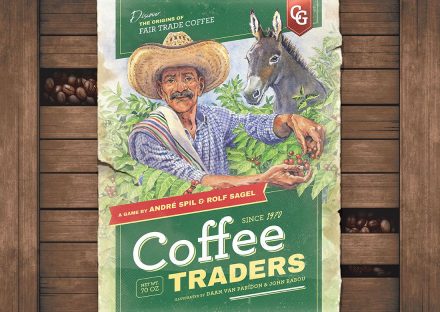
Coffee Traders

Thousands of coffee farmers all over the world support their families by using small stretches of hillside land for their coffee plantations. Farmers work day in and day out for very little, but the future of coffee farming is bright. Fair Trade organizations strive to improve living conditions for these farmers by helping them set up cooperatives. This enables them to establish better pricing agreements and take out loans for new plantations, all to help provide education and improve the quality of their lives, families, societies, and environment.

In Coffee Traders, set in 1970s Central and South America, Africa, and Asia, the delicious Arabica coffee beans farmers harvest are sold in Antwerp — and all over the world — to coffee roasters large and small. Work with your competitors to develop the regions you see fit for the best coffee beans while keeping a watchful eye on the market. Construct buildings to help your Fair Trade coffee plantations thrive while enhancing your network for trading coffee. Will your plantations fall to ruin, or will you rise to the top and become the world’s greatest coffee trader?

Game Mechanics:

  • Action Points
  • Area Majority / Influence
  • Contracts

Game Specifications:

  • 2 – 5 Players
  • 120 – 150 Minutes
  • Difficulty Weight 4.26

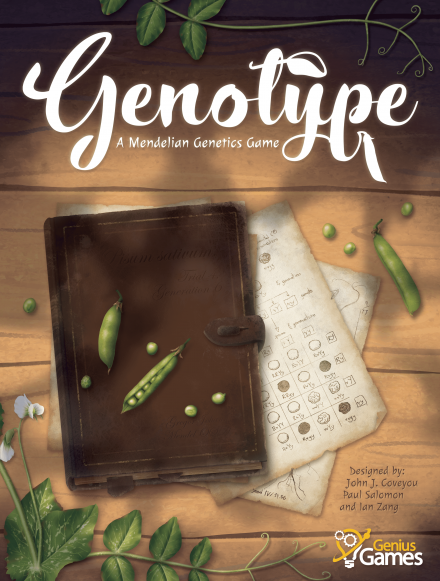
Genotype: A Mendelian Genetics Game MISSING

Gregor Mendel is the 19th Century Augustinian Friar credited with the discovery of modern genetics. In Genotype, you play as his assistants, competing to collect experimental data on pea plants by trying to control how the plants inherit key Traits from their parents: seed shape, flower color, stem color, and plant height. The observable Traits of a Pea Plant (its Phenotype) are determined by its genetic makeup (its Genotype). The relationship between Genotype and Phenotype and the nature of genetic inheritance are at the heart of Genotype: A Mendelian Genetics Game.

During the game, players get Pea Plant Cards which show a set of Phenotype Traits they hope to produce and collect (such as pink flowers and tall height) in order to score points. Each round, Dice are rolled to represent Plant breeding, which may result in the Traits players are looking for. After the Dice Roll, players take turns drafting Dice towards completing their Pea Plant Cards or advancing their Research. The Traits produced during the Dice Roll come through the science of Punnett Squares, which show how the parent genes combine, one from each parent plant. By changing the genes of these parent plants, players can influence the likelihood of rolling the Traits they need. The completion of Pea Plant Cards via the Dice Draft is the main way players score points.

Each round consists of 3 phases: Worker Placement, Dice Drafting, and Upgrades.
1) During Worker Placement, players take actions to get more Plant Cards, change the genes of a parent plant, Garden, Research, stake Phenotype claims, gather new Tools, or even position themselves ahead of other players for the Dice Drafting Phase in a couple of ways.
2) Dice Drafting features a couple of interest steps, including the possibility to get first pick of dice, but only for one type of Trait (like plant height), or the possibility to get a pick of any dice, but only after those first picks have happened. De Novo Mutation Dice allow players to change the Trait of other Dice or gain additional Research.
3) The Upgrades phase lets players spend their Research to gain upgrades that let them work on more Plant Cards, draft more Dice each round, or gain additional Workers to be used during the Worker Placement Phase of each round.

Players work to match their Pea Plant Cards to the outcome of the Dice Draft and complete the cards for points. If they’ve placed a Phenotype marker, they will earn bonus points for every completed card that matches their claim. At the end of 5 rounds, the player with the most points wins.

Game Specifications:

  • 1 – 5 Players
  • 45 – 90 Minutes
  • Difficulty Weight 2.78

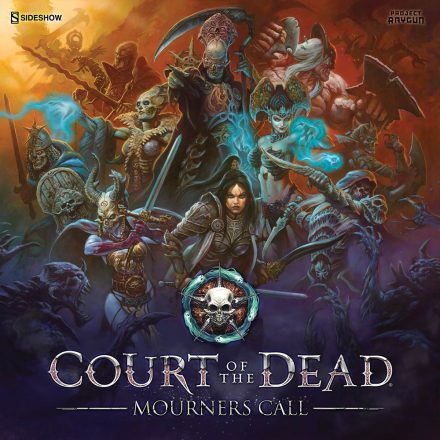
Court of the Dead: Mourner’s Call

Everyone is already dead in the Underworld. It’s time to join the factions of Bone, Flesh and Spirit as they work to achieve the goal of the Underworld: to gather enough forces to take on the celestials of Heaven and Hell to end their ceaseless war. If the players work diplomatically in Court of the Dead: Mourners Call to maintain a balance, they can ensure the Underworld survives long enough for them to also complete their collective and hidden individual objectives. The player who best contributes to these goals will earn Death’s favor and a place among the elite of the Underworld.

You are a Mourner — an allegiant of Death — dedicated to realizing his noble ambition to end the celestial war and restore balance to the universe. However, Death’s purpose includes your own ulterior motives. You and your fellow Mourners must unite and rise, or fall together. But only one Mourner will achieve their particular vision of the Underworld united. Your task will not be easy. While the Underworld is united in its purpose, it is divided in its strategy to achieve that aim. There are three factions in the Land of the Dead: Bone, Flesh, Spirit. Each is a unique path to rise up against Heaven and Hell.

You will need to strategically manipulate your influence within these factions, their strongholds and guilds, and within the Court of the Dead if you wish to achieve your ends. But beware: The power within mortal souls — known as Etherea — is a perilous substance. Use it carelessly, and you risk invoking the Dreadsgrip – a destructive force within every Mourner that consumes all it touches, including its former master. Failing to satiate the celestials’ war need, or triggering the Dreadsgrip, has dire consequences for all Mourners. Are you strong enough to achieve your own ambitions and be the champion for the uniting force for which all Mourners Call?

Game Mechanics:

  • Area Majority / Influence
  • Auction / Bidding
  • Closed Drafting
  • Contracts
  • Hand Management
  • Open Drafting
  • Take That
  • Worker Placement

Game Specifications:

  • 2 – 5 Players
  • ~90 Minutes
  • Difficulty Weight 2.95

Aftermath 🟡

Aftermath is an Adventure Book Game in which players take on the role of small critters struggling to survive and thrive in a big, dangerous world. Humans have mysteriously vanished, and the remnants of civilization are quickly being reclaimed by nature and the animals who still remain.

In the game, you play as a misfit band of critters known by their colony as “providers”. There’s the guinea pig with anger issues, a hamster that talks fast and drives faster, a small mouse with keen eyes and a lot to prove, and a mysterious vole who’s borderline feral. These characters each have their own personalities, play-styles, and personal goals.

You’ll leave the safety of your colony and venture out into the abandoned world on one of 20+ story-driven missions and side missions. Scavenge the ruins of mankind in search of food and supplies for your colony, but beware — the world is filled with bandits and predators, and you must fight or flee to stay alive.

Return to your colony with resources and information that will help your friends and family survive. Grow your colony and keep it safe by building structures and improvements with the spoils of your adventures, but plan accordingly, for the colony will face hardship each time you leave it…

Game Specifications:

  • 1 – 4 Players
  • 60 – 120 Minutes
  • Difficulty Weight 2.88

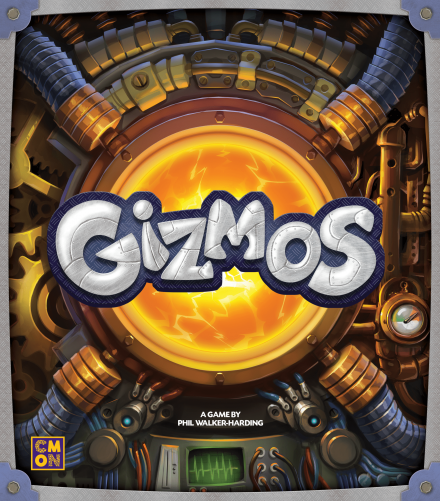
Gizmos

The smartest minds of our generation are gathering together at the Great Science Fair. Everyone’s been working hard on their creations, but only one will be crowned champion. Contestants have to think on the fly to build their machines quickly and efficiently. Whose project will be the best?

In Gizmos, you win the game by gaining victory points from building engines. And engines help you get things done faster. Whoever builds the greatest machine and collects the most victory points wins!

At the beginning of the game, you have 4 actions:

  • File: Put a card in the public to your Archive, allow you to build it later.
  • Pick: Take one energy marble from the 3D marble dispenser to your storage.
  • Build: Build one machine and put it on action! You have to pay the marbles with colors corresponding to the card cost.
  • Research: Draw some cards, and you can then File or Build one of the drawn cards. The rest go to the bottom of their deck.

Machines give you victory points and allow you to do more actions when conditions are met. As you build, new attachments can trigger chain reactions, letting you do even more on your turn.

Game Specifications:

  • 2 – 4 Players
  • 40 – 50 Minutes
  • Difficulty Weight 2.05

Funfair

Can you build the best theme park in town?

Choose and build an exciting mix of attractions in your very own theme park. Upgrade them to match blueprints, or just to stack up towering rides that pull in the crowds and make the most cash. Hire staff members and build super attractions to maximise your park’s strategy for the win!

Funfair is a standalone game in the Unfair universe. It’s a lighter and faster introduction to Unfair’s ludicrously modular theme park building. With fast setup and gameplay, and only positive player interaction included in Funfair, it’s a fun family-friendly game. However, new goals, new cards, all new build strategies, and tight combos will give experienced gamers and Unfair fans plenty of challenge.

Game Specifications:

  • 2 – 4 Players
  • 30 – 60 Minutes
  • Difficulty Weight 2.12

Flamecraft

Artisan dragons, the smaller and magically talented versions of their larger (and destructive) cousins, are sought by shopkeepers so that they may delight customers with their flamecraft. You are a Flamekeeper, skilled in the art of conversing with dragons, placing them in their ideal home and using enchantments to entice them to produce wondrous things. Your reputation will grow as you aid the dragons and shopkeepers, and the Flamekeeper with the most reputation will be known as the Master of Flamecraft.

In Flamecraft, 1-5 players take on the role of Flamekeepers, gathering items, placing dragons and casting enchantments to enhance the shops of the town. Dragons are specialized (bread, meat, iron, crystal, plant and potion) and the Flamekeepers know which shops are the best home for each. Visit a shop to gain items and a favor from one of the dragons there. Gathered items can be used to enchant a shop, gaining reputation and the favors of all the dragons in the shop. If you are fortunate enough to attract fancy dragons then you will have opportunities to secure even more reputation.

Game Specifications:

  • 1 – 5 Players
  • ~60 Minutes
  • Difficulty Weight 2.19

Ecos: First Continent

What if the formation of Earth had gone differently?

In Ecos: First Continent, players are forces of nature molding the planet, but with competing visions of its grandeur. You have the chance to create a part of the world, similar but different to the one we know. Which landscapes, habitats, and species thrive will be up to you.

Gameplay in Ecos is simultaneous. Each round, one player reveals element tokens from the element bag, giving all players the opportunity to complete a card from their tableau and shape the continent to their own purpose. Elements that cannot be used can be converted into energy cubes or additional cards in hand or they can be added to your tableau to give you greater options as the game evolves.

Mountain ranges, jungle, rivers, seas, islands and savanna, each with their own fauna, all lie within the scope of the players’ options.

Game Specifications:

  • 2 – 6 Players
  • 45 – 75 Minutes
  • Difficulty Weight 2.57

Dinner in Paris

The restaurant industry in Paris is buzzing after the inauguration of a new pedestrian square in a very popular district for Parisians and tourists from all around the globe. It is a golden opportunity for you, restaurant owners, to open one of the addresses that will contribute to the culinary diversity and the reputation of the French capital. However, there isn’t space for everyone and your opponents could throw a wrench in your gears!

Game Mechanics:

  • Area Majority / Influence
  • Contracts
  • Hand Management
  • Income
  • Race
  • Set Collection
  • Tile Placement

Game Specifications:

  • 2 – 4 Players
  • 40 – 60 Minutes
  • Difficulty Weight 2.16

Diabolik: Heists and Investigations

In Diabolik: Heists and Investigations, players will experience in first person the “impossible thefts” that are told every month in the comic books, both from the side of Diabolik and Eva Kant, and from Inspector Ginko and the police.

The mechanics are that of hidden movement, but with the exception that when discovered, the criminals will be forced to flee on the main board, visible to all cops. Thanks to the cards, every turn offers different situations.

The Criminals will have to complete two heists out of the three available to win the game and to do so they will have to move hidden in the shadows, leaving traces of their path that the Police will have to find to ruin the plans of the Criminals.

The Police will have the hard job of investigating the traces of Diabolik and Eva, but they are not alone, in fact they will have the opportunity to call four total Police Officers to help, to keep every corner of the city under observation. To win the game, the cops will have to raise the Danger Level to the maximum on the Danger Track. Usually, solving a Clue increases the Danger Level by 1 point, but that’s not the only way to do it. On the other hand, if Eva or DIabolik complete a Heist, the Danger Luevel is lowered.

In their turn, each player can perform a maximum of 3 individual actions. The only exception is for drawing, discarding or playing cards, which is a repeatable action.

Game Mechanics:

  • Action Points
  • Contracts
  • Deduction
  • Roles with Asymmetric Information
  • Targeted Clues
  • Team-Based Game
  • Variable Set-up

Game Specifications:

  • 2 – 4 Players
  • 60 – 90 Minutes
  • Difficulty Weight 2.25