Tag: Take That

Games with a “Take That” mechanic allows players to take actions that actively hinder an opponent’s progress in-game.

Baseball Highlights: 2045

American baseball was on its last legs as a spectator sport. Football had become the predominant national pastime — that is until the year 2032, the year baseball decided to revolutionize the game and regain the throne!

Starting in 2032, baseball games were shortened to six innings. Pitchers were encouraged to have bionic arm implants to improve their pitching. These cyborgs, or ‘Borgs as they’re affectionately known, were immediately popular and soon ruled the league. In 2041, robotic players were introduced to get more offense back into the game. These robots were similar to designated hitters in that they were used only to bat and did not field. However, recent reports indicate fielding ‘Bots are on the way.

Now in 2045, human players are still in the game and known as Naturals. They are the best fielders by far but are sorely challenged when it comes to hitting and pitching. Some Naturals have learned to hit by swinging before the pitcher starts his windup, which gives them a chance to hit the ball. Although it’s hard for a Natural to get into the league, those who do are popular. Many Naturals have named themselves after the great players of pre-2032 baseball by taking a first and last name borrowed from different star players of the past. The fans love them, and their presence on the team ensures good revenue!

The stage is now set! The fans are energized and root fanatically for their new favorites, be they ‘Bots, ‘Borgs or Naturals!

Baseball Highlights: 2045 is like watching TV highlights of early 21st-century baseball games, with the gameplay being full of theme with no outs or innings and without bogging down in a play-by-play baseball simulation. In this quick and interactive game, two players build their teams as they play, combining both strategy (building your team) and tactics (playing the game) without any of the downtime. During each “mini-game”, each player alternates playing six cards to simulate a full game’s highlights. The mini-game includes defensive and offensive actions, and your single card play may include elements of defensive and/or offensive plays. Do you try to thwart your opponent’s pending hits, put up strong offensive action of your own, or use your better players to do both? Players buy new free agents after each mini-game to improve their roster, and the team who wins the most mini-games in the series is the champ!

Game Specifications:

  • 1, 2, or 4 Players
  • ~45 Minutes
  • Difficulty Weight 2.20

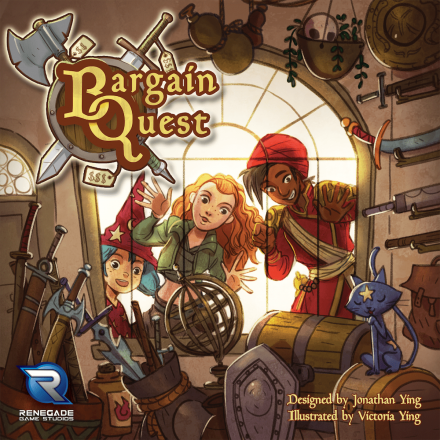
Bargain Quest

Bargain Quest is a game of adventure and capitalism for 2-6 players. Players will take the role of shopkeepers in an adventuring town plagued by monsters. Players must draft items and then secretly choose which items to place in their windows to attract wealthy heroes to their shops.

Once all heroes have been equipped, they venture out to battle against monstrous threats, earning money and prestige for the shop they represent. Throughout the game players will encounter new heroes and monsters while upgrading their shops and hiring employees. Once the third monster is defeated the player who has earned the most gold and prestige is the winner.

Game Specifications:

  • 2 – 6 Players
  • 30 – 60 Minutes
  • Difficulty Weight 2.01

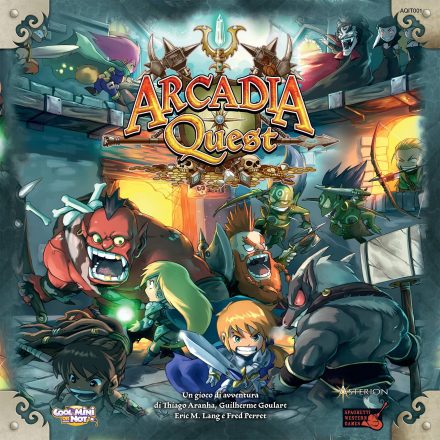
Arcadia Quest

In Arcadia Quest, players lead guilds of intrepid heroes on an epic campaign to dethrone the vampire lord and reclaim the mighty Arcadia for their own. But only one guild may lead in the end, so players must battle against each other as well as against the monstrous occupying forces.

Arcadia Quest is a campaign-based game for 2 to 4 players, where each player controls a guild of three unique heroes, facing off against the other players and the various monsters controlled by the game. Players need to accomplish a series of quests in order to win each scenario and choose where to go next in the campaign.

Players are able to choose the path their campaign takes, navigating through six out of eleven available scenarios, so each time the campaign is played it can have a different configuration of scenarios. As the campaign progresses, the heroes are able to acquire new weapons, equipment and abilities that give them powerful options to tackle the obstacles ahead. Furthermore, by fulfilling specific quests in a scenario, players unlock exclusive features in subsequent scenarios.

Game Specifications:

  • 2 – 4 Players
  • ~60 Minutes
  • Difficulty Weight 2.53

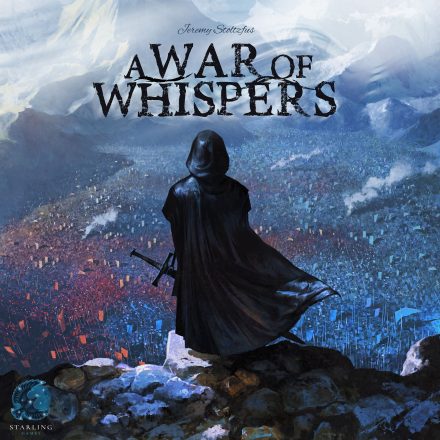
A War of Whispers 🟢

A War of Whispers is a competitive board game for 2 to 4 players. Five mighty empires are at war for the world, but you are no mighty ruler. Instead, you play a secret society that is betting on the results of this war while pulling strings to rig the results and ensure their bets pay off. A War of Whispers is a game of deep strategy, hidden agendas, and shifting loyalties.

You start the game with five loyalty tokens, each corresponding to one of the five different empires, bet randomly on a loyalty value. Your primary goal is to ensure that when the game ends, the empires you are most loyal to control the most cities across the globe. Gameplay consists of turns broken down into four phases:

  1. Deploy agents phase: In player order (starting with the first player and proceeding clockwise), each player removes, then deploys agents to empire councils, the positions on the board marked Sheriff, Steward, Marshall, and Chancellor.
  2. Empire turns phase: Each council position on each empire council will take an action. If a player has acquired cards, they may play them during this phase.
  3. Cleanup phase: Add the turn marker to the next space on the turn tracker, then each player discards down to the hand limit of five cards.
  4. Swap phase: In player order, each player may swap two of their unrevealed loyalty tokens. If you choose to do so, you must reveal both of the swapped loyalty tokens. They remain revealed for the rest of the game.

Gameplay repeats itself in this order four times. When the last space on the turn track is filled, the game ends immediately and scoring commences. The player with the most points based off their empire loyalties and the cities they control wins.

Game Specifications:

  • 2 – 4 Players
  • 30 – 60 Minutes
  • Difficulty Weight 2.57

Survive: Escape from Atlantis!

Survive: Escape from Atlantis!

Survive: Escape from Atlantis!

Survive is a cutthroat game where players seek to evacuate their pieces from an island that is breaking up, while remembering where their highest-valued pieces are located to maximize their score.

An island made up of 40 hex-tiles is slowly sinking into the ocean (as the tiles are removed from the board). Each player controls ten people (valued from 1 to 6) that they try and move towards the safety of the surrounding islands before the main island finally blows up. Players can either swim or use boats to travel but must avoid sea serpents, whales and sharks on their way to safety.

Game Mechanics:

  • Action Points
  • Bluffing
  • Dice Rolling
  • Grid Movement
  • Memory
  • Take That

Game Specifications:

  • 2 – 4 Players
  • 45 – 60 Minutes
  • Difficulty Weight 1.70

Stop Thief!

Stop Thief!

Stop Thief!

An alert pops up on your smartphone: A crime has just been committed! Grab your investigator’s license and your keen powers of deduction and hunt down the suspect. But watch out because you’re not the only private eye on the hunt, and only one of you can slap the cuffs on the suspect and claim the reward. Get enough reward money, and you can finally leave this rat race behind and retire to a sunny tropical beach in the Caribbean.

Stop Thief is a family game of logical deduction for 2-4 players. An invisible suspect commits a crime. Only the sounds they make give them away. Listen to the clues and figure out where they are hiding. Play cards from your unique deck to move around the board, sneak through a window, or even get a private tip. Once you have the suspect pinned down, swoop in and make the arrest.

The obvious first step in this restoration was taking the electronic device and turning it into an app. Doing that allows for better sound quality and a more dynamic platform for different modes of play. Next step was ditching the roll-and-move mechanism and, in general, stripping out some of the luck and adding in a healthy dose of strategy. By replacing the dice with decks of movement cards, it also allows asymmetrical decks, which increases the fun and replayability. Game effects were also added to the suspect cards to further spice things up.

Game Mechanics:

  • Cooperative
  • Deduction
  • Hand Management
  • Hidden Movement
  • Memory
  • Take That

Game Specifications:

  • 1 – 4 Players
  • 30 – 60 Minutes
  • Difficulty Weight 1.53

Sequence

Sequence

Sequence

Sequence is a board and card game. The board shows all the cards (except for the Jacks) of two (2) standard 52-card decks, laid in a 10 x 10 pattern. The four corners are free spaces and count for all players equally.

The players compete to create rows, columns or diagonals of 5 connected checkers placed on the cards that the player has laid down. Two-eyed Jacks are wild, while one-eyed Jacks allow an opponent’s checker to be removed. The game ends when someone has reached a specified number of connections.

Game Mechanics:

  • Abstract Strategy
  • Card Game
  • Hand Management
  • Pattern Building
  • Take That
  • Team Based

Game Specifications:

  • 2 – 12 Players
  • 10 – 30 Minutes
  • Difficulty Weight 1.33

Potion Explosion

Potion Explosion

Potion Explosion

Dear students, it’s time for the final exams of the Potions class! The rules are always the same: Take an ingredient marble from the dispenser and watch the others fall. If you connect marbles of the same color, they explode and you can take them, too! Complete your potions using the marbles you collect, and drink them to unleash their magical power. Remember, though, that to win the Student of the Year award, being quick won’t be enough: you’ll also need to brew the most valuable potions in Potion Explosion!

Game Mechanics:

  • Pattern Recognition
  • Puzzle
  • Set Collection
  • Take That

Game Specifications:

  • 2 – 4 Players
  • 30 – 45 Minutes
  • Difficulty Weight 1.76

Parcheesi: Vintage Game Collection

Parcheesi: Vintage Game Collection

Parcheesi: Vintage Game Collection

Pachisi, the national game of India, dates back to 4 AD and remains popular today. Each player has a set of pawns that start in his or her corner of the board. The goal is to move the pawns around the board to the “home” section. Movement is controlled by dice. All players move around the same board, so they may capture each others pawns. Captured pawns are returned to their player’s corner and must start their journey over. The winner is the first player to move all pawns “home”.

Game Mechanics:

  • Dice Rolling
  • Racing
  • Take That
  • Team Based

Game Specifications:

  • 2 – 6 Players
  • ~30 Minutes
  • Difficulty Weight 1.20

Munchkin

Munchkin

Munchkin

Go down in the dungeon. Kill everything you meet. Backstab your friends and steal their stuff. Grab the treasure and run.

Admit it. You love it.

This award-winning card game, designed by Steve Jackson, captures the essence of the dungeon experience… with none of that stupid roleplaying stuff. You and your friends compete to kill monsters and grab magic items. And what magic items! Don the Horny Helmet and the Boots of Butt-Kicking. Wield the Staff of Napalm… or maybe the Chainsaw of Bloody Dismemberment. Start by slaughtering the Potted Plant and the Drooling Slime, and work your way up to the Plutonium Dragon…

And it’s illustrated by John Kovalic! Fast-playing and silly, Munchkin can reduce any roleplaying group to hysteria. And, while they’re laughing, you can steal their stuff.

Game Mechanics:

  • Hand Management
  • Take That

Game Specifications:

  • 3 – 6 Players
  • 60 – 120 Minutes
  • Difficulty Weight 1.80