Tag: Set Collection

Games with Set Collection mechanics require players to collect resources in sets to achieve various rewards.

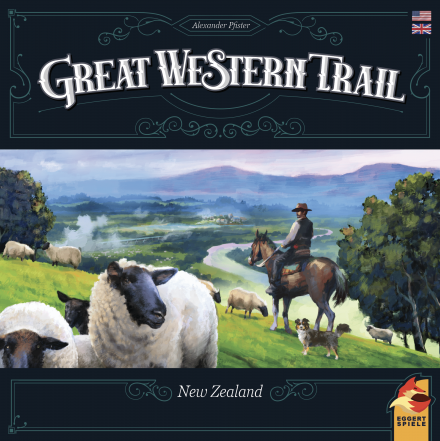
Great Western Trail: New Zealand

Kia ora, and welcome to Great Western Trail New Zealand!

Towards the end of the 19th century, you established yourself as a runholder (owner of a sheep station) on the South Island of New Zealand. Recent years have seen your family farm prosper by diversifying your breeds of sheep and increasing the value of your wool.

With the dawn of the new century, difficult challenges have arisen. You must acquire improved and valuable breeds of sheep to ensure the prosperity of your family business and the labourers who work for you. Decide whether to focus on your past strengths or to diversify into new ventures. Will the beginning of the 20th century be as rewarding as earlier years, or will the efforts of others surpass your strategy? Good luck, and kia kaha!

In Great Western Trail New Zealand, you move your runholder along a trail that winds and forks from the lower left corner of the game board to Wellington in the upper right. Along your path, you perform actions that provide you with various ways to earn victory points.

Each time your runholder reaches Wellington, you deliver sheep to a local or foreign trading post, which may also be worth victory points. Afterwards, your runholder continues its movement again.

Game Specifications:

  • 1 – 4 Players
  • 75 – 150 Minutes
  • Difficulty Weight 4.01

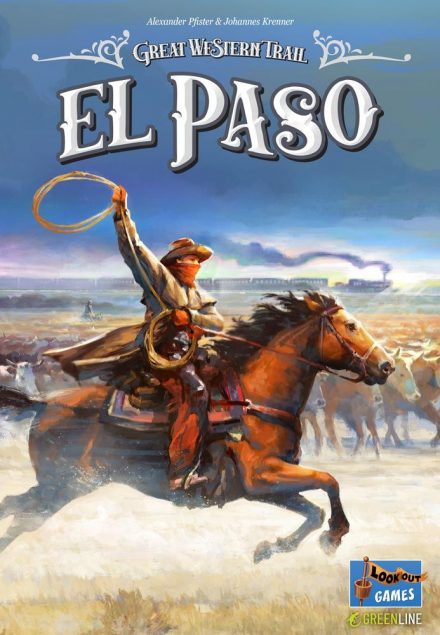
Great Western Trail: El Paso

El Paso at the end of the 19th century: Five railroad companies have connected the Sun City to their network and made it a major hub for the cattle trade. Ranchers from the surrounding parts of Texas and Mexico drive their cattle into the city to send them on their long journey to the north, east, and west of the United States.

In Great Western Trail: El Paso, you take on the role of the ranchers of that time and bring your best cattle to El Paso to earn money and victory points. Hire more cowboys, builders, and engineers to get closer to your goals:

Buy cattle to increase the value of your herd!
Construct buildings to unlock more actions!
Participate in the expansion of the railroad and secure the most attractive contracts!
El Paso is mechanically based on its predecessors in the Great Western Trail trilogy. It can serve as an introduction to the series and is the perfect game for game nights when there is not enough time for its big brothers!

—description from the publisher

Game Specifications:

  • 1 – 4 Players
  • 60 – 90 Minutes
  • Difficulty Weight 2.84

Grand Central Skyport

In Grand Central Skyport, you want to efficiently operate your airship station and attract the most prestigious tycoons to your city. During the game, you attract new airships to your skyport, and each airship has a color and an initial slotting movement. Try to maneuver your airships to group them by color so that they stack to score increasingly more points. Unfortunately, with each new ship entering your station, its movement will trigger the rearranging of previously placed airships, so ideally you can race other skyport owners around a central rondel to choose the incoming airships that are best for you.

Drafting tycoons to your skyport will bring unique advantages in manipulating your docked airships, as well as additional scoring opportunities at the end of the game.

Do you have the operational skills to handle the airships arriving at your station as efficiently as possible? If so, you may very well crown yours the grand central skyport.

Game Mechanics:

Game Specifications:

  • 2 – 4 Players
  • 30 – 60 Minutes
  • Difficulty Weight 2.00

Graft

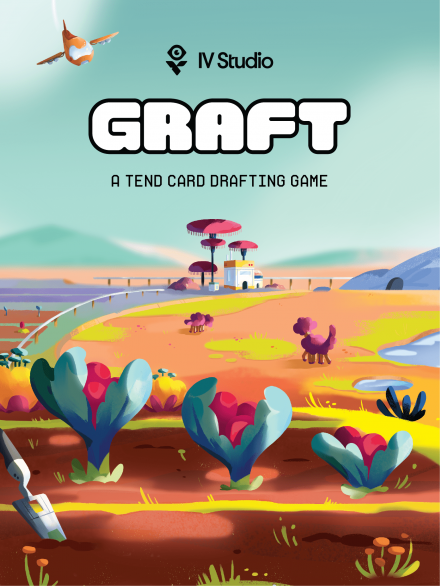
Graft is a card-drafting game in which 3-5 players race to collect sets of valuable goods and ship them back to Zenith.

Players simultaneously draft and play cards into their cargo manifest. Push your luck and chain combos of cards for high scores! But beware the cargo restrictions on some cards that limit what additional goods you can play – you’ll bust if your next hand has no valid option.

Ship your cargo to score points and claim bonus badges for specific sets of goods. Prepare additional groups of cards until the deck runs out. The player with the most points is recognized as the best pioneer by Zenith.

Game Mechanics:

Game Specifications:

  • 3 – 5 Players
  • 40 Minutes
  • Difficulty Weight 2.00

Gnome Hollow

Since the beginning of time, gnomes have been the humble caretakers of nature. In secret, they emerge from their underground homes to maintain meticulous rings of mushrooms known to the human folk as “fairy rings”. But the work must be done quickly because as soon as a mushroom path is finished, the mushrooms are ready for picking. Who will be the cleverest gnome and harvest the most mushrooms by the end of the season?

Gnome Hollow is a spatial, tile-placement, worker-placement game in which you grow a tabletop garden of mushrooms and flowers. Every piece is a hand-painted watercolor that captures the whimsical feel of gnomes and nature. Turns are deceptively simple: Players place tiles into the garden, and move a gnome to take a single action on their turn. Come to Gnome Hollow and experience a peaceful garden, the thrill of competing to harvest buckets of mushrooms, and the reward of gathering in all your shiny treasures!

Game Specifications:

  • 2 – 4 Players
  • 45 – 60 Minutes
  • Difficulty Weight 2.38

Aquatica: Duellum

Aquatica in a duel format: deeper, meaner and more intense.

Choose a Turtle King or a Squid Queen and improve your underwater realm by playing action cards and assembling locations on three-layered boards. After decades of turbulent times, it is time to unite the underwater world under the fin or tentacle of a single ruler!


New layer of depth is brought to the game by the dynamic market on a vortex board.


Be careful! The game can end not only when all players achieve their goals but also based on who is the fastest to collect the crowns. Tension is added by the tug of war mechanic.

Also, mantas will finally have the company of equally charming squids and turtles.

Game Specifications:

  • 1 – 2 Players
  • 30 – 45 Minutes
  • Difficulty Weight 3.00

Glen More II: Chronicles

Glen More II: Chronicles is a sequel to Glen More, expanding the gameplay substantially compared to the original game.

In Glen More II: Chronicles, each player represents the leader of a Scottish clan from the early medieval ages until the 19th century, a leader looking to expand their territory and wealth. The success of your clan depends on your ability to make the right decision at the right time, be it by creating a new pasture for your livestock, growing barley for whisky production, selling your goods on the various markets, or gaining control of special landmarks such as lochs and castles.

The game lasts four rounds, represented by four stacks of tiles. After each round, a scoring phase takes place in which players compare their number of whisky casks, scotsmen in the home castle, landmark cards, and persons against the player with the fewest items in each category and receives victory points (VPs) based on the relative difference. After four rounds, additional VPs are awarded for gold coins and some landmarks while VP penalties are assessed based on territory size, comparing each player’s territory to the smallest one in play.

The core mechanism of Glen More II: Chronicles and Glen More functions the same way: The last player in line takes a tile from a time track, advancing as far as they wish on this track. After paying the cost, they place this tile in their territory, with this tile activating itself and all neighboring tiles, triggering the production of resources, movement points, VPs, etc. Then the player who is last in line takes their turn.

Improvements over the original Glen More include bigger tiles, better materials, new artwork, the ability for each player to control the end of the game, and balancing adjustments to the tiles for a better suspense curve. The game is designed to consist of one-third known systems, one-third new mechanisms, and one-third improvements to Glen More.

The “Chronicles” in the title — a set of eight expansions to the base game — are a major part of these new mechanisms. Each Chronicle adds a new gameplay element to the base game. The “Highland Boat Race” Chronicle, for example, tells the story of a boat race in which the winner needs to be the first to reach their home castle after navigating their boat along the river through all the other players’ territories. The “Hammer of the Scots” Chronicle adds a neutral “Englishman” playing piece to the time track that players struggle to control to get an additional turn — if they can afford him, that is, as he is paid using the market mechanism. All Chronicles can be freely combined, although designer Matthias Cramer suggests that players use only one or two unless they want a “monster game”.

Another major change to the game is the ability to invest in famous Scottish people of the time, who are represented through a new “person” tile type. Persons not only have their own scoring, they also trigger one-time or ongoing effects on the tactical clan board. This adds a new layer of decision making, especially since the ongoing effects allow players to focus on a personal strategy of winning through the use of the clan board.

Game Specifications:

  • 2 – 4 Players
  • 90 – 120 Minutes
  • Difficulty Weight 3.01

Glasgow

In Glasgow, players travel the city (in an abstract manner) to collect resources, take special actions, and most important of all construct buildings. Build a factory, and you’ll receive more goods from it when other buildings are constructed in the right areas in relation to it; build a train station, and you may or may not score from it depending on what else you build; build a monument, and you’ll merely collect a lot of points — and in the end, points are what matters.

In slightly more detail, to set up the game, lay out a ring of town figures at random, with two of them being removed from play each game. Whoever is farther behind in the circle around town takes the next turn, advancing to whichever town figure they want to visit. Most of them give you resources — brick, steel, or money — and you have a limit on how many resources of each type you can hold. Some figures have two random building plans at them, and if you visit one with the right resources, you can pay them, then build something. If you pay extra, you can then build something else, too!

The first building is placed anywhere in the midst of play, then each subsequent building is placed adjacent to something already built, with the buildings eventually filling in a 4×5 (or 5×4, determined as the game progresses) grid of the players’ own creation. As soon as the twentieth building is erected, the game ends and players score points for what they built. Who has contributed more to the current state of Glasgow?

Game Specifications:

  • 2 Players
  • ~30 Minutes
  • Difficulty Weight 2.02

Fantasy Realms: Greek Legends

In the standalone card game Fantasy Realms: Greek Legends, you build your realm, one card at a time, as you collect heroes, quests, monsters, and more! Each card is unique, and scores points based on the other cards in your hand. You start with seven cards, and each turn, you draw a new card from the deck or discard area, then discard one card from your hand, always trying to improve your realm. Whoever’s realm scores the most points wins.

Fantasy Realms: Greek Legends takes the classic Fantasy Realms formula and adds new twists to match its theme. In addition to combining the right suits and attribute tags, you will:

  • Send cards to the afterlife, costing precious points but unlocking powerful abilities
  • Complete quests with unique card combinations
  • Vanquish legendary monsters with the right heroes

Game Specifications:

  • 2 – 6 Players
  • ~20 Minutes
  • Difficulty Weight 2.00

Gift of Tulips

In Gift of Tulips, tulip enthusiasts explore Amsterdam’s tulip festival to build colorful bouquets, give tulips to others (scoring points in the process), and manipulate the value of the market.

The deck includes tulips of four colors, with values 2-4. Lay out four festival cards based on the player count, with these cards showing the number of points scored for giving away tulips, keeping tulips, and having a majority of certain colors at the end of the game. Draw two cards of different colors, and place them under the festival cards in first and second place based on their value. Deal two cards to each player; keep one card face up in front of you and add the other face down to the “secret festival” pile.

On a turn, draw a card from the deck and KEEP/GIVE/ADD it, then draw a second card and take one of the actions you didn’t just take. The actions:

  • KEEP: Place the card face up in front of you, scoring points for it if that color is currently ranked third or fourth in the festival.
  • GIVE: Give the card to another player, who places it face up in front of themselves; you score “giving” points based on the current ranking of that color in the festival, plus points equal to the value of that tulip.
  • ADD: Place the card face down in the secret festival or add it face up to the festival, altering the ranking of colors if needed so that the color with the highest sum is first, etc.

When the deck runs out, shuffle the cards in the secret festival, then draw five at random and add them face up to the festival, adjusting the ranking as needed. (If fewer than five cards are in the secret festival, add all of these cards to the festival.) For the three highest ranked colors in the festival, whoever has the most and secondmost cards in these colors scores points as listed on the festival cards; in games with five and six players, the player with the thirdmost cards of a color also scores points. In case of a tie for card count, the tied player with the higher value of a color wins that tie. Whoever has the most points wins.

Game Specifications:

  • 2 – 6 Players
  • ~20 Minutes
  • Difficulty Weight 1.77