Tag: Rondel

A Rondel is a wheel-shaped game mechanic that represents all actions available to players in a game.

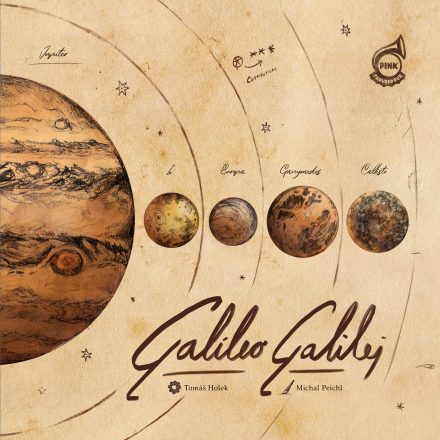
Galileo Galilei

“And yet it moves”, he said.

Galileo Galilei is a Euro-style game in which you take on the role of an astronomer who will discover new planets, find unknown star systems, develop their telescope, and make a scientific breakthrough in the difficult ages of obscurantism.

Use your telescope to select one of the five actions available, with you being able to evolve these actions into better ones. Collect cards of different planets and star systems. Collect lenses of the three main colors to make a discovery. Be wary of inquisitors as they might arrive unwelcomed and ruin your fame in no time. Better find a way to profit from their visit instead.

Game Specifications:

  • 1 – 4 Players
  • 50 – 100 Minutes
  • Difficulty Weight 3.04

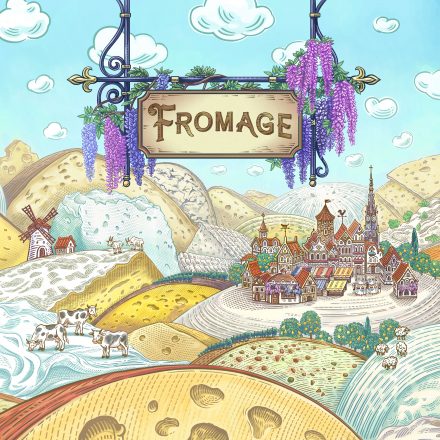
Fromage

You are a French cheesemaker in the early 20th century making, aging, and selling your artisanal cheeses. Become the most prestigious cheesemaker in all of France by running a highly successful creamery and crafting exceptional cheese.

Fromage is a simultaneous worker-placement game where players place Workers to make cheese and gather resources from the quadrant of the board facing them. Once all players have placed their Workers, the board rotates, aging any cheese that was made, and presenting each player with a new quadrant to place Workers into. Score Prestige Points by selling cheese to the four locations, and by efficiently managing and upgrading your creamery.

Game Specifications:

  • 1 – 4 Players
  • 30 – 45 Minutes
  • Difficulty Weight 2.38

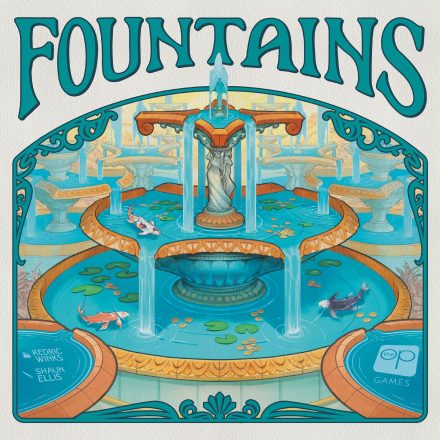
Fountains

Welcome to the elegant city of Florimelle, where a grand beautification effort has begun. In Fountains, you’ll become a master Fountaineer tasked with transforming Florimelle’s gardens and plazas by creating the most magnificent Fountain the world has ever seen!

Fountains is a take-and-make game in which each player starts with a round fountain that features a spout and room for four features.

On a turn, move one of the tokens 1-3 spaces clockwise around the central board, skipping occupied spaces, to land on an empty space. You then take the top tile next to this token and add it to your board. You can expand out or up or both, but you want to ensure that you have a spout at your highest level and water flowing through all of your lower levels or else you’ll have dead zones that won’t score. If you stop next to the tiny oval features instead of a tile stack, choose one of these features and add it to an empty space in your fountain.

When someone lands on the green, blue, or white space with the matching colored token, everyone scores for the linked item: lilypads, separate pools linked by constant water flow, and fish. (Fish come in three types, and the player who scores fish chooses which color scores.) For each item, you score 1, 2, 3, etc. points if the item is on the first, second, third, etc. level.

When a player hits a point threshold, players then score for all three colors once again, as well as endgame bonuses such as 2 points per coin icon and 4 points for a set of fish in the three colors.

Game Specifications:

  • 1 – 5 Players
  • 30 – 45 Minutes
  • Difficulty Weight 2.18

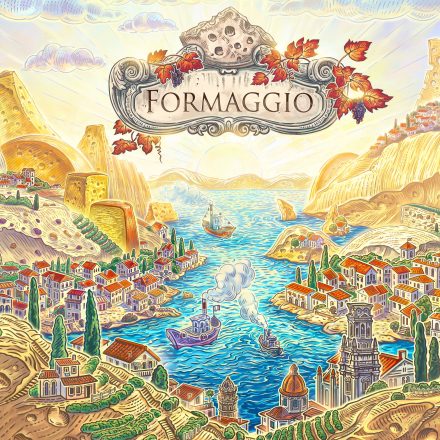
Formaggio

You are an Italian cheesemaker in the early 20th century making, aging, and selling your artisanal cheeses. Become the most prestigious cheesemaker in all of Italy by running a highly successful creamery and crafting exceptional cheese. Formaggio is a standalone expansion for Fromage. With both games put together, you can combine any 4 board quadrants, and draft any combination of structure tiles for more variety and more paths to victory.

Formaggio is a simultaneous worker-placement game where players place Workers to make cheese and gather resources from the quadrant of the board facing them. Once all players have placed their Workers, the board rotates, aging any cheese that was made, and presenting each player with a new quadrant to place Workers into. Score Prestige Points by selling cheese to the four locations, and by efficiently managing and upgrading your creamery.

Formaggio features 4 new board quadrants with all new puzzling mini-games:
• Pair your cheese with the wines at the Vigneto.
• Sell cheese to restaurants along the Venetian canals and attract customers.
• Distribute cheese across the Regioni of Italy.
• Deposit cheese in the Banca. (Yes, there is a real bank in Italy that accepts cheese as collateral for loans!)

Other new features:
• Platinum-tier cheeses.
• Reap various rewards in each of the Seasons.
• All new abilities on the Player Boards and Structure tiles.

Game Specifications:

  • 1 – 4 Players
  • 30 – 45 Minutes
  • Difficulty Weight 2.53

First in Flight

First in Flight is a push-your-luck, deck-building game about the race to early flight. Players take on the roles of the Wright Brothers, Samuel Langley, and other flight pioneers, racing to build and pilot the “flyers” that preceded modern airplanes.

Each player’s flyer design is represented by a deck of cards that they can steadily improve and refine, and which may include unknown design flaws that threaten their success.

Flying is a blackjack-style challenge to test a design, break new records, and gain experience — hopefully without crashing. Then, players head back to the workshop to refine their flyers and improve their chances on future flights. There are dozens of available technologies, pilot skills, and friends in the field available for players to customize their own play style and strategy.

Game Specifications:

  • 1 – 4 Players
  • 45 – 75 Minutes
  • Difficulty Weight 2.31

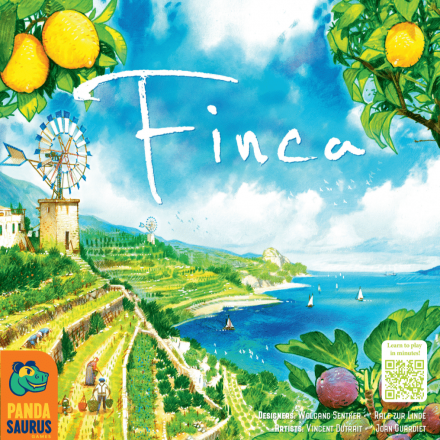
Finca

The gameboard of Finca shows the mediterranean island of Mallorca. Players try to crop and deliver the fruits of Mallorca (such as oranges, lemons, almonds, grapes etc.) by means of moving workers on a traditional windmill. Object of the game is to distribute your crop as effectively as possible in order to deliver faster than your opponents.

From the Box: Mallorca, Island of the Wind. A place of golden beaches and a light-blue sea. The almond harvest is at hand, in addition, juicy oranges, lemons, and figs are ready to be picked and taken to the market. Olive trees bewitch the country with their curled branches and sumptuous vineyards invite passers-by to walk among their warm earth. In the midst of this landscape, your centuries-old natural stone farmhouse provides a home and supports your large windmill: your FINCA.
Listen to the wind, which propels your windmill! Then take in the course of the yearly harvest the sweetest and most valuable fruits from the land. Load them on your old donkey cart and travel around the island, selling them everywhere. If you manage this quickly, you will soon be the richest farmer on the island.

Game Specifications:

  • 2 – 5 Players
  • ~45 Minutes
  • Difficulty Weight 2.07

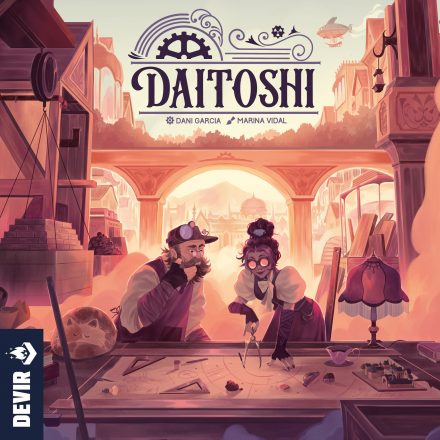
Daitoshi

We have finally perfected the power of steam, and we can now use it to our advantage! We live in an unprecedented era of progress, and new steam-powered inventions are developed faster than ever. Cities are growing, trade is flourishing, and we are developing our most ambitious machine ever: a giant contraption that will bring even more progress to the city. Yes, some trees are being cut down, and the river doesn’t flow as plentifully as before, but there’s still an abundance of trees and water, and we can use the extra space to expand our city — and it’s not like the old creatures on those forests can do anything about it.

On your turn in Daitoshi, you either produce or move your magnate to a new district in which you will be able to send your workers to work, command the exploit of forest or river hexes to fuel your endless need for steam, and perform an action to expand and show your greatness to the city.

These actions not only help you in your search for acknowledgement, but help all the inhabitants of the big city. You will expand the city and electrify its districts, discover and develop new steam-powered inventions, and trade with faraway cities. You may even help the city build its gargantuan project: the mega-machine. Some forests might be cut down, and some rivers may be dried up, but in your generosity, you will help the displaced workers from those areas by giving them new jobs at your service.

Old legends suggest the forests and rivers are guarded by Yōkai, but progress can’t be stopped because of some old fairy tales. Just in case, though, it could be wise to participate on some reforestation projects and hide your participation in the abuse of the natural resources…

—description from the publisher

Game Mechanics:

  • Follow
  • Modular Board
  • Rondel
  • Variable Set-up
  • Worker Placement

Game Specifications:

  • 1 – 4 Players
  • 120 Minutes
  • Difficulty Weight 3.94

West Kingdom Saga: Viscounts of the West Kingdom

West Kingdom Saga: Viscounts of the West Kingdom

West Kingdom Saga: Viscounts of the West Kingdom

Viscounts of the West Kingdom is set at a time when the King’s reign began to decline, circa 980 AD. Choosing peace over prosperity, our once strong King began offering our enemies gold and land to lay down their axes. But peace is a tenuous affair. As poverty spread, many people lost faith in his ability to lead and sought independence from the crown. Since finding favour in his courts, our future has also become uncertain. As viscounts, we must be wise and decisive. Loyalty is to be upheld, but gaining favour among the people must be our priority, should there be a sudden shift in power.

The aim of Viscounts of the West Kingdom is to be the player with the most victory points (VP) at game’s end. Points are gained by constructing buildings, writing manuscripts, working in the castle and acquiring deeds for new land. Players begin with a handful of townsfolk but should quickly seek out more suitable talents to advance their endeavors. Each turn they will be travelling around the kingdom, looking to increase their influence among the various areas of society. The game ends once the Kingdom reaches poverty or prosperity – or potentially both!

Game Mechanics:

  • Area Control
  • Deck Building
  • Hand Management
  • Rondel
  • Set Collection

Game Specifications:

  • 1 – 4 Players
  • 60 – 90 Minutes
  • Difficulty Weight 3.45

Virtu

Virtu

Virtu

It’s a time of upheaval, when the Middle Ages end and modernity is born. For those in the government, the situation is ripe for action. Your city must maintain its standing, and you, as its prince, must make this happen.

Virtù takes place during the Italian Renaissance, with each player embodying one of the powerful Italian cities of the time and trying to make it more powerful than all others through “virtù”, the ability to accomplish great things through a strong state (according to Machiavelli).

The foundation of the game is “wheelbuilding”, that is, creating a “wheel of actions” on your personal player board, which has a unique arrangement compared to other players and with you having a different set of starting family cards. Depending on how you place the cards, you have multiple options available and a starting strategy, but you can acquire and place new cards to alter your approach over the course of the game. You interact with others indirectly by taking cards they want or racing to goals or directly by sending agents to the palace or their cities as well as by attacking cities. Artists, merchants, and diplomats can also work to increase your prestige.

Virtù includes a two-player mode that is played differently from the game with 3-5 players.

Game Mechanics:

  • Rondel

Game Specifications:

  • 2 – 5 Players
  • 60 – 150 Minutes
  • Difficulty Weight 3.89

Tawantinsuyu

Tawantinsuyu

Tawantinsuyu

The great Sapa Inca Pachacuti turned to his offspring and ordered them to worship Inti, the Sun God, and to expand the Inca Empire as far as the llamas roam. With Chinchaysuyu, Antisuyu, Qullasuyu, and Kuntisuyu — the four regions of the new empire — now ripe for conquest, the time has come for Pachacuti’s true successor to arise.

Gather your people from the villages below and use their unique abilities to strategically place them where they can perform the greatest tasks for you. Climb the steps of the Sun Temple, reaping the rewards of your piety. Build structures that both nourish your people and provide you with benefits no other has at their disposal. Muster an army and conquer villages in the four realms of Tawantinsuyu. Prove yourself a worthy successor to Pachacuti and lead the Inca to glory!

During Tawantinsuyu: The Inca Empire, players place workers onto various locations on the game board, performing actions, collecting resources (potatoes, corn, stone, and gold), constructing buildings and stairs, sculpt statues, expanding their military strength, and collecting weavings.

The game board features a hill located within the old Inca capital of Cusco, the sides of which are terraced and divided into five sections. Atop the hill sits the Coricancha, The Golden Temple, the most important temple of the Inca Empire. Within the Coricancha, each player has a High Priest. On the terraced sections below exist a variety of worker placement locations, interconnected by paths and individually marked by symbols. On your turn, you must either place a worker onto a location outside the Coricancha OR choose two of the following:

  • Recruit one worker.
  • Take two god cards.
  • Draw two army cards and keep one of them.
  • Move your High Priest one or two steps clockwise within the Coricancha.

When placing a worker, you must first discard a god card with a matching symbol or pay one gold. Once placed, the worker remains on the game board for the rest of the game! Each worker placement location is connected to exactly three action spaces. You must always perform at least one of these actions. However, for each adjacent worker (i.e., connected to your worker’s location via direct path through one of the action spaces) that matches the type of worker just placed, you receive one additional action!

While some locations will result in you being able to perform multiple actions, other actions and placements may be more desirable, especially since each of the five types of workers has a unique ability:

  • Warrior: Remove one of the adjacent workers, placing it in your player area.
  • Craftsman: Gain +1 action if placed onto a craftsman space.
  • Architect: Gain +1 action if placed onto an architect space.
  • Courier: Decreased placement cost; +1 action if it’s the first worker placed within a given area.
  • Priest: Take one god card; you may pay one potato to gain +1 action.

All god cards feature one of the different symbols found on the worker placement locations. Before placing a worker, you must either discard a god card with a matching symbol or pay valuable gold resources. God cards also depict special abilities that can be activated only if you have previously built a matching statue!

Army cards allow you to send one or more units to conquer villages in nearby regions. You must compete against the other players for control of each region as well as for valuable rewards that can be gained as a result of military conquest.

The position of your High Priest within the Coricancha has a significant impact on your overall strategy, affecting your access to powerful actions and determining any potential resource costs when placing your workers. More specifically, when placing a worker, you must pay additional resources the farther your worker is from your High Priest, from nothing all the way up to eight potatoes or corn!

Additionally, when moving your High Priest, you can activate powerful actions available only within the Coricancha:

  • Produce: Gain all rewards from your production buildings.
  • Worship: Sacrifice previously sculpted statues to gain permanent temple advancements.
  • Offering: Pay resources to gain temple advancements.
  • Conquer: Engage in military conquest of nearby villages.
  • Rejuvenate: Refresh previously activated buildings and military units.

Throughout the game, you score victory points whenever you construct stairs or sculpt statues. Gain bonus victory points whenever another player makes use of the stairs you have constructed. Score victory points from temple advancements and control of the four regions.

The game ends when the worker pool has become exhausted, symbolizing the full incorporation of nearby regions and villages into the newly risen Inca Empire. You then score bonus victory points from reaching the top of the temple, from your woven tapestries, and from various buildings and resources you have accumulated.

Game Mechanics:

  • Action Points
  • Area Control
  • Civilization
  • Economic
  • Hand Management
  • Open Drafting
  • Pattern Building
  • Rondel
  • Set Collection
  • Worker Placement

Game Specifications:

  • 1 – 4 Players
  • 60 – 120 Minutes
  • Difficulty Weight 4.07