Tag: End Game Bonuses

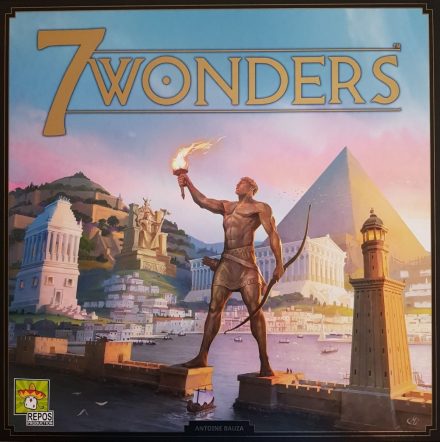
7 Wonders 🟢

You are the leader of one of the 7 great cities of the Ancient World. Gather resources, develop commercial routes, and affirm your military supremacy. Build your city and erect an architectural wonder which will transcend future times.

7 Wonders lasts three ages. In each age, players receive seven cards from a particular deck, choose one of those cards, then pass the remainder to an adjacent player. Players reveal their cards simultaneously, paying resources if needed or collecting resources or interacting with other players in various ways. (Players have individual boards with special powers on which to organize their cards, and the boards are double-sided). Each player then chooses another card from the deck they were passed, and the process repeats until players have six cards in play from that age. After three ages, the game ends.

In essence, 7 Wonders is a card development game. Some cards have immediate effects, while others provide bonuses or upgrades later in the game. Some cards provide discounts on future purchases. Some provide military strength to overpower your neighbors and others give nothing but victory points. Each card is played immediately after being drafted, so you’ll know which cards your neighbor is receiving and how her choices might affect what you’ve already built up. Cards are passed left-right-left over the three ages, so you need to keep an eye on the neighbors in both directions.

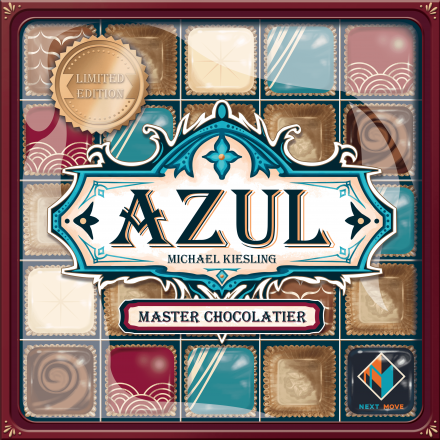
Azul: Master Chocolatier TAGS, EXCERPT, POST TAGS

In the game Azul, players take turns drafting colored tiles from suppliers to their player board. Later in the round, players score points based on how they’ve placed their tiles to decorate the palace. Extra points are scored for specific patterns and completing sets; wasted supplies harm the player’s score. The player with the most points at the end of the game wins.

Azul: Master Chocolatier includes double-sided factory boards, with these tiles being placed on these boards at the start of each round. One side of the factories is blank, and when using this side the game plays exactly like Azul. The other side of each factory tile has a special effect on it that modifies play in one way or another, putting a twist on the normal game. Additionally, the tiles are modeled to look like chocolates and other treats, despite remaining as inedible as the tiles in the original game.

Game Specifications:

  • 2 – 4 Players
  • 30 – 45 Minutes
  • Difficulty Weight 1.79

Azul

Introduced by the Moors, azuleijos (originally white and blue ceramic tiles) were fully embraced by the Portuguese when their king Manuel I, on a visit to the Alhambra palace in Southern Spain, was mesmerized by the stunning beauty of the Moorish decorative tiles. The king, awestruck by the interior beauty of the Alhambra, immediately ordered that his own palace in Portugal be decorated with similar wall tiles. As a tile-laying artist, you have been challenged to embellish the walls of the Royal Palace of Evora.

In the game Azul, players take turns drafting colored tiles from suppliers to their player board. Later in the round, players score points based on how they’ve placed their tiles to decorate the palace. Extra points are scored for specific patterns and completing sets; wasted supplies harm the player’s score. The player with the most points at the end of the game wins.

Akropolis 🔵

The most talented architects in ancient Greece stand ready to achieve this goal. Build housing, temples, markets, gardens and barracks, so you can grow your city and ensure it triumphs over the others. Raise its prestige with harmonious planning that conforms to specific rules, and enhance it by building plazas.

Stone is an essential resource, so make sure you do not neglect it. You’ll need enough quarries so you can build higher up, making your city stretch towards the sky.

  1. Choose a tile from the construction site
  2. Arrange it in your city to unlock each district’s full potential
  3. Build on higher levels, increase the value of your districts and win the game