Tag: Economic

Economic games encourage players to produce, distribute, and trade various resources.

Axis & Allies

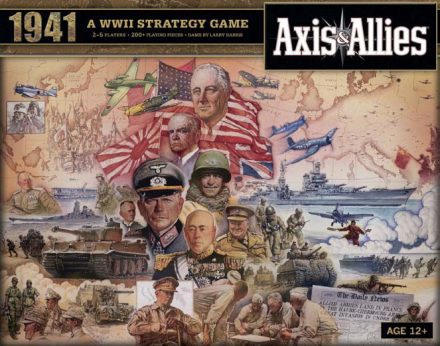
Axis and Allies is the most successful of Milton Bradley’s Gamemaster series.

It depicts WWII on a grand scale, full global level. Up to five players can play on two different teams. The Axis which has Germany and Japan, and the Allies which has the USA, the United Kingdom, and the USSR. A full map of the world is provided, broken up in various chunks similar to Risk. The game comes with gobs of plastic miniatures that represent various military units during WWII. Players have at their disposal infantry, armor, fighters, bombers, battleships, aircraft carriers, submarines, troop transports, anti-air guns, and factories. All of the units perform differently, and many have special functions. Players have to work together with their teammates in order to coordinate offenses and decide how best to utilize their production points. Players also have the option of risking production resources on the possibility of developing a super technology that might turn the tide of war.

Game Specifications:

  • 2 – 5 Players
  • ~180 Minutes
  • Difficulty Weight 3.04

Atiwa

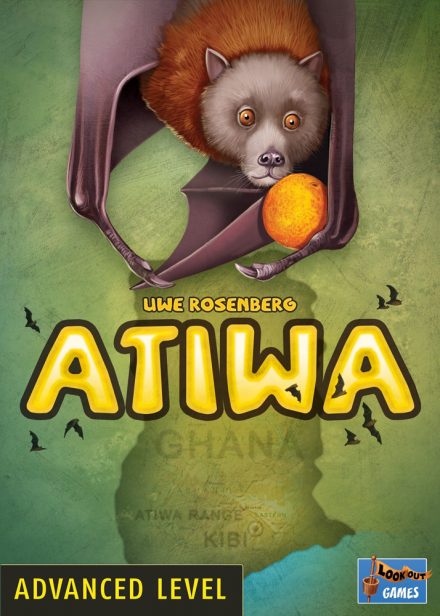
The Atiwa Range is a region of southeastern Ghana in Africa consisting of steep-sided hills with rather flat summits. A large portion of the range comprises an evergreen forest reserve, which is home to many endangered species. However, logging and hunting for bushmeat, as well as mining for gold and bauxite, are putting the reserve under a lot of pressure.

Meanwhile, in the nearby town of Kibi, the mayor is causing a stir by giving shelter to a large number of fruit bats in his own garden. This man has recognized the great value the animals have in deforested regions of our planet: Fruit bats sleep during the day and take off at sunset in search of food, looking for suitable fruit trees up to sixty miles away. They excrete the seeds of the consumed fruit, disseminating them across large areas as they fly home. A single colony of 150,000 fruit bats can reforest an area of up to two thousand acres a year.

Just like that mayor, in Atiwa, you know that fruit bats — once scorned and hunted as mere fruit thieves — are in fact incredibly useful animals, spreading seeds over large areas of the country. By doing so, they help to reforest fallow land and, in the medium term, improve harvests. This realization has led to a symbiotic co-operation between fruit bats and fruit farmers. The animals are kept as “pets” to increase the size of fruit farms more quickly. Tall trees are left as roosts, providing shelter for them rather than hunting them for their scant meat. However, if you have a lot of fruit bats, you need a lot of space…

In the game, you will develop a small community near the Atiwa Range, creating housing for new families and sharing your newly gained knowledge on the negative effects of mining and the importance that the fruit bats have for the environment. You must acquire new land, manage your animals and resources, and make your community prosper. The player who best balances the needs of their community and the environment wins.

Anno 1800: The Board Game 🟡

In Anno 1800, a board game based on the popular PC game from Ubisoft, you continuously build up your own industry to develop your home island.

Ship fleets allow for lively trade and the development of new islands in the Old and New World. You have to fulfill the wishes of your own population. While the inhabitants are initially satisfied with bread and clothing, they soon demand valuable luxury goods. You must plan production chains sensibly and keep an eye on the specialization of your population. The goal: A wise distribution of farmers, workers, craftsmen, engineers, and investors — but the competition never sleeps and can snatch the new achievements from under your nose at any time! Who can create the most prosperous island?

Union Stockyards

Union Stockyards

Union Stockyards

Union Stockyards is a mid-weight economic euro game with unique features:

  • A supply/demand driven market that is central to game play, not a sidebar.
  • Low randomness — market changes due to player decisions.
  • A worker-placement game where your workers may go on strike.
  • Extensively-researched historical theme about one of the great industrial wonders of U.S. Gilded Age.

Opening in 1865, the Union Stockyards became Chicago’s largest industry and one of the city’s top tourist attractions with a half million visitors annually in the early 1900’s. From the Civil War through the 1920’s, more meat was processed here than anywhere in the world. During its height, 40,000 mostly immigrant workers labored in “the busiest square mile on earth”, where over one million livestock passed monthly, supplying 80% of all U.S. meat. There were over 2,300 livestock pens and 130 miles of railroad within the “yards”.

You play one the “Big Five” meat packers, developing technologies to use every part of the animal while battling labor unions and manipulating the market to your advantage. Union Stockyards is played over six years (rounds), each beginning with an historical event affecting game conditions or adding an additional action. You select your actions through worker placement; however, if you don’t pay your workers enough, they may go on “strike”. You earn cash based on your profit margins when you slaughter cattle, hogs, or sheep. Your profit margin is your meat value minus the livestock cost. The livestock cost is the same for all players, but your meat values will differ due to your engine-building decisions of constructing buildings, establishing branch houses in eastern cities, and improving your brand reputation. At the end of each year, livestock costs (cattle, hogs, sheep) will be adjusted up or down depending on the demand that you created. Sometimes you may choose to slaughter certain livestock just to manipulate the market in your favor. Whichever packer accumulates the most wealth wins the game.

Game Mechanics:

  • Economic
  • Grid Coverage
  • Worker Placement

Game Specifications:

  • 2 – 5 Players
  • 45 – 90 Minutes
  • Difficulty Weight 2.45

Stone Age

Stone Age

Stone Age

The “Stone Age” times were hard indeed. In their roles as hunters, collectors, farmers, and tool makers, our ancestors worked with their legs and backs straining against wooden plows in the stony earth. Of course, progress did not stop with the wooden plow. People always searched for better tools and more productive plants to make their work more effective.

In Stone Age, the players live in this time, just as our ancestors did. They collect wood, break stone and wash their gold from the river. They trade freely, expand their village and so achieve new levels of civilization. With a balance of luck and planning, the players compete for food in this pre-historic time.

Players use up to ten tribe members each in three phases. In the first phase, players place their men in regions of the board that they think will benefit them, including the hunt, the trading center, or the quarry. In the second phase, the starting player activates each of their staffed areas in whatever sequence they choose, followed in turn by the other players. In the third phase, players must have enough food available to feed their populations, or they face losing resources or points.

Game Mechanics:

  • Dice Rolling
  • Economic
  • Set Collection
  • Worker Placement

Game Specifications:

  • 2 – 4 Players
  • 60 – 90 Minutes
  • Difficulty Weight 2.47

Stockpile

Stockpile

Stockpile

Stockpile is an economic board game that combines the traditional stockholding strategy of buy low, sell high with several additional mechanisms to create a fast-paced, engaging and interactive experience.

In Stockpile, players act as stock market investors at the end of the 20th century hoping to strike it rich, and the investor with the most money at the end of the game is the winner. Stockpile centers on the idea that nobody knows everything about the stock market, but everyone does know something. In the game, this philosophy manifests in two ways: insider information and the stockpile.

First, players are given insider information each round. This information dictates how a stock’s value will change at the end of the round. By privately learning if a stock is going to move up or down, each player has a chance to act ahead of the market by buying or selling at the right time.

Second, players purchase their stocks by bidding on piles of cards called stockpiles. These stockpiles will contain a mixture of face-up and face-down cards placed by other players in the game. In this way, nobody will know all of the cards in the stockpiles. Not all cards are good either. Trading fees can poison the piles by making players pay more than they bid. By putting stocks and other cards up for auction, Stockpile catalyzes player interaction, especially when potential profits from insider information are on the line.

Both of these mechanisms are combined with some stock market elements to make players consider multiple factors when selling a stock. Do you hold onto a stock in hopes of catching a lucrative stock split or do you sell now to avoid the potential company bankruptcy? Can you hold onto your stock until the end of the game to become the majority shareholder, or do you need the liquidity of cash now for future bidding? Do you risk it all by investing heavily into one company, or do you mitigate your risk by diversifying your portfolio?

In the end, everyone knows something about the stock market, so it all comes down to strategy execution. Will you be able to navigate the movements of the stock market with certainty? Or will your investments go under from poor predictions?

Game Mechanics:

  • Auction/Bidding
  • Economic
  • Open Drafting
  • Stock Holding

Game Specifications:

  • 2 – 5 Players
  • ~45 Minutes
  • Difficulty Weight 2.11

Splendor: Marvel

Splendor: Marvel

Splendor: Marvel

Bring together a team of super heroes and prevent Thanos from ending the world!
The Infinity Stones are scattered throughout the Multiverse. Use their essence to recruit heroes and villains and gain Infinity Points.

Assemble the Avengers, acquire locations and when ready, claim the Infinity Gauntlet!

Pick your tokens carefully, recruit characters to gain Infinity Points and bonuses. These bonuses help you recruit more powerful heroes and acquire locations… until you gather enough characters, power, and Infinity Points to trigger the endgame!

Even though Splendor Marvel uses Splendor’s core rules and high-quality materials, it has a different color structure, a new endgame trigger, and new victory conditions. You can also gain Infinity Points with the Avengers Assemble tile that can be passed from one player to another several times during the game!

If you are keen on Splendor, learning the rules will be easy, but mastering the game may take you a while.

And if you don’t know Splendor, soon you will enjoy its quick and simple rules and become addicted to this game without even realizing it!

Game Mechanics:

  • Economic
  • Open Drafting
  • Racing
  • Set Collection

Game Specifications:

  • 2 – 4 Players
  • ~30 Minutes
  • Difficulty Weight 1.91

Rocketmen

Rocketmen

Rocketmen

They have set up their empires of trailblazing innovation and groundbreaking technologies on a somewhat unremarkable planet circling around a rather average star. Years of hard work and steadfast dedication to their clear-cut vision of looking further than the day-to-day toils and chores of human civilization have cemented their reputation as the forefathers of the future humanity. Secretly, they have never stopped dreaming about the thrust of all their entrepreneurial actions and deeds – reaching the stars. Now, the time has come for them to embark on a second giant leap for humankind, to make the outer reaches of the solar system our home. Only one of them shall go down in history as the first explorer of space and a person who truly forged their will and power according to the bold words: citius, altius, fortius – faster, higher, stronger.

Immerse yourself in a fast-paced race to the final frontier: space. A deck-building confrontation of swift decision-making and tactical choices, Rocketmen gives you the feel of taking a front seat in a technologically wonderful spectacle of space exploration. It’s up to your predictive abilities and resource management skills to determine what kind of endeavor would be most suitable for paving the way to Earth’s celestial neighbors. It doesn’t matter whether it would be a low Earth orbit satellite or a manned base destined for the Red Planet; plan your mission carefully, equip your shuttles and rockets craftily, yet do not hesitate when your gut instinct tells you when it’s time to launch!

The universe might wait for you eternally. Your opponents won’t!

Game Mechanics:

  • Deck Building
  • Economic
  • Hand Management
  • Hidden Roles
  • Open Drafting
  • Push Your Luck
  • Racing

Game Specifications:

  • 1 – 4 Players
  • 30 – 90 Minutes
  • Difficulty Weight 2.58

Raccoon Tycoon

Raccoon Tycoon

Raccoon Tycoon

Astoria is a land bustling with productivity and growth! New towns, factories, and railroads are springing up across the land. A few savvy business tycoons (you and your opponents) are determined to make your fortunes on the crest of this wave. These tycoons start out as the producers of the key commodities: wheat to feed the growing towns and factories, wood and iron to build them, coal to fuel the trains and factories, and manufactured goods and luxuries to fill the insatiable demand of the animals of Astoria.

Cornering the market for the most valuable commodities can create small fortunes that can be invested in the new businesses, turning them into huge fortunes. The sky is the limit during this Gilded Age!

In Raccoon Tycoon, players try to produce the most valuable commodities in an ever-changing marketplace. They then use those commodities to build towns, or sell them at the best price to secure great profits that can be used to win auctions for the all-important railroads. The profits may also be used to buy powerful buildings that give the players power-ups or bonuses in production. Owning the best towns and railroads determines victory. There can be only one “top dog” in Astoria. Is it you?

Game Mechanics:

  • Auction/Bidding
  • Economic
  • Set Collection

Game Specifications:

  • 2 – 5 Players
  • 60 – 90 Minutes
  • Difficulty Weight 2.10

The Pursuit of Happiness

The Pursuit of Happiness

The Pursuit of Happiness

We all have one common desire: the desire for happiness. As we build our life, taking steps towards the pursuit of happiness, we come closer to the realization that happiness lies in the pursuit.

The Pursuit of Happiness is a game in which you take a character from birth and you live the life you always wanted. Using a worker-placement mechanism with time as your workers, you take on projects, you get jobs, you buy items, you establish relationships, you raise families. The possibilities are endless as you live the life you have always wanted.

How much will you be able to achieve in just one lifetime during The Pursuit of Happiness?

Game Mechanics:

  • Economic
  • Open Drafting
  • Worker Placement

Game Specifications:

  • 1 – 4 Players
  • 60 – 90 Minutes
  • Difficulty Weight 2.50