Category: Beginner Games

Forbidden Island

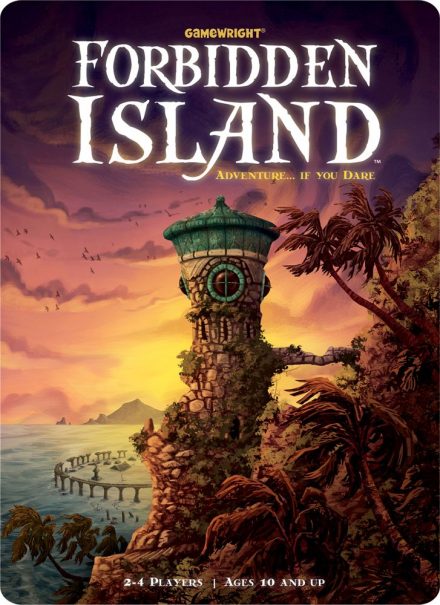
Dare to discover Forbidden Island! Join a team of fearless adventurers on a do-or-die mission to capture four sacred treasures from the ruins of this perilous paradise. Your team will have to work together and make some pulse-pounding maneuvers, as the island will sink beneath every step! Race to collect the treasures and make a triumphant escape before you are swallowed into the watery abyss!

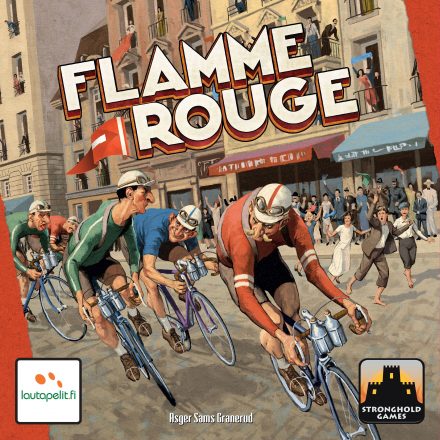
Flamme Rouge

The excitement in the air is electric as the leaders round the last corner and head for the finish line. Each team has used cunning and skill to position their sprinter for this moment, but only one has done enough to pull off the win!

Will your team lead from the front and risk exhaustion? Should you play it safe in the middle of the pack? Could you surprise everyone by striking from the back? Can you time your move perfectly?

Anyone can race, few become champions!

Flamme Rouge is a fast-paced, tactical bicycle racing game where each player controls a team of two riders: a Rouleur and a Sprinteur. The players’ goal is to be the first to cross the finish line with one of their riders. Players move their riders forward by drawing and playing cards from that riders specific deck, depleting it as they go. Use slipstreams to avoid exhaustion and position your team for a well timed sprint for the win.

Game Specifications:

  • 2 – 4 Players
  • 30 – 45 Minutes
  • Difficulty Weight 1.70

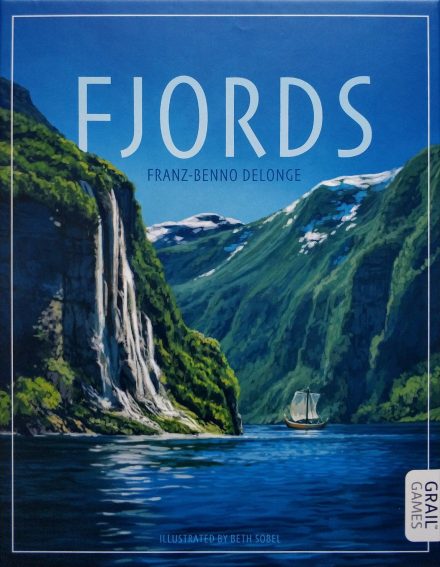
Fjords

Explore a landscape so stunning that even a Viking would hold their breath in awe…

Fjords is a tile-laying game that takes place in two phases. The first one invites the players to explore the fjords around them by laying hexagonal landscape tiles, creating a map that serves as the gameboard. In the second phase, players begin from the longhouses they placed during phase one and will walk the landscape, claiming as much of the plains and cliffs as possible.

The winner of the game will be the player who has claimed the most land. Savvy placements and the ability to plan ahead yet act tactically will be your most important tools.

This new edition of Fjords differs from the original release in the following ways:

  • The game now plays up to four players.
  • The game contains five new variants/modules designed by Phil Walker-Harding. These add optional variety and flavor to the game.

Game Specifications:

  • 2 – 4 Players
  • 30 – 45 Minutes
  • Difficulty Weight 1.53

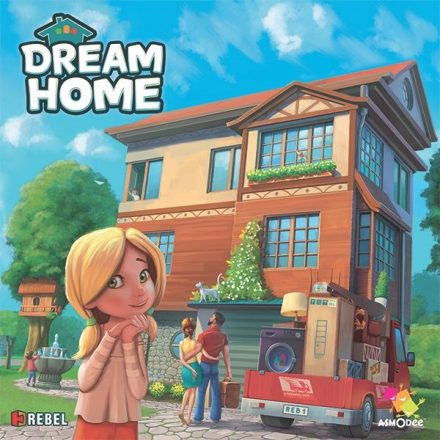
Dream Home

What would your house look like? Would you rather have a huge bedroom with an elegant canopy bed or a spacious living room with a grand piano? You are going to play a part of designers who will plan a house and add more and more rooms to it.

Dream Home is a family game about building and furnishing your new house. Over twelve rounds, players collect pairs of cards consisting of a room card and an accessory card (roof, helper, furnishing or tool) and place them on their personal boards, creating their dream homes.

At the end of the game, all players’ houses are finished and fully furnished. Players compare their houses, counting points for functionality, good design, quality of roof and furnishing. The player with the nicest and most comfortable house wins.

Game Specifications:

  • 2 – 4 Players
  • ~30 Minutes
  • Difficulty Weight 1.65

Downforce

High-stakes bidding on million-dollar race cars. Frantic bets placed in secret even as the cars race around the track. And to the victor, the biggest purse of all. But in the world of motor racing, the margin between victory and defeat can be a single moment: a steep banked turn, tires screaming and spitting out smoke, and the downforce, pressing you down in your seat and keeping you on the track as you make your move inside to pull ahead.

Downforce is a card-driven bidding, racing, and betting game for 2-6 players based on Top Race, the award-winning design by the legendary Wolfgang Kramer. Players first bid to own the six cars in the race, then they play cards from their hand to speed them around the track. However, most cards will also move their opponents’ cars. So figuring out just the right time to play a card is the key to victory. Along the way, players make secret bets on who they think will win the race. Whoever has the most money from their prize money, winning bets, and remaining bank wins.

This is a game whose design needed no attention. Years of play and multiple versions have honed it to near perfection. On the contrary, one of the design challenges was figuring which of the many rules modules to incorporate to create the most fun version. Downforce also adds variable player powers to improve replayability. But mostly, it improves the look of the game to make it gorgeous and easy to play. Special attention was paid to the colors, the layout of the cards, the design of the cars, the details on the board, and more.

Game Specifications:

  • 2 – 6 Players
  • 20 – 40 Minutes
  • Difficulty Weight 1.73

Dixit

Each turn in Dixit, one player is the storyteller, chooses one of the six cards in their hand, then makes up a sentence based on that card’s image and says it out loud without showing the card to the other players. Each other player then selects the card in their hand that best matches the sentence and gives the selected card to the storyteller, without showing it to anyone else.

The storyteller shuffles their card with all of the received cards, then reveals all of these cards. Each player other than the storyteller then secretly guesses which card belongs to the storyteller. If nobody or everybody guesses the correct card, the storyteller scores 0 points, and each other player scores 2 points. Otherwise, the storyteller and whoever found the correct answer score 3 points. Additionally, the non-storyteller players score 1 point for every vote received by their card.

The game ends when the deck is empty or if a player has scored at least 30 points. In either case, the player with the most points wins.

Game Mechanics:

  • Race
  • Singing
  • Storytelling
  • Targeted Clues
  • Voting

Game Specifications:

  • 3 – 6 Players
  • ~30 Minutes
  • Difficulty Weight 1.19

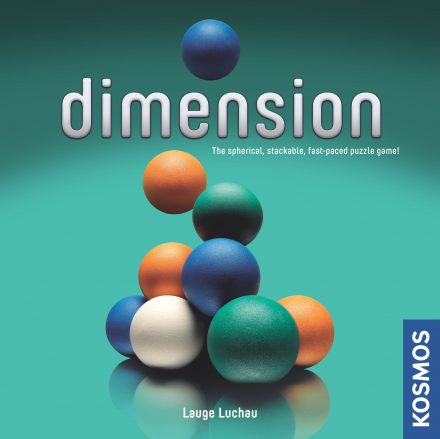
Dimension

In the puzzle game Dimension six task cards are laid out each round, with these cards dictating how the balls in the game should be stacked on top of one another and side to side. These challenges aren’t easy as some colors shouldn’t touch one another.

Fast puzzle-solving is important, but more than that in the end whoever solves the most of these difficult tasks wins.

Game Mechanics:

  • Pattern Building
  • Puzzle

Game Specifications:

  • 1 – 4 Players
  • ~30 Minutes
  • Difficulty Weight 1.41

Decorum

Decorum is a cooperative, hidden information game where you and your partner share the same objective: decorate your home in a way that makes you both happy. The problem is, different things make each of you happy and nobody says exactly what they need. Can you find a happy compromise, or is it time to move out?!

Game Mechanics:

  • Communication Limits
  • Cooperative Game
  • Roles with Asymmetric Information
  • Scenario / Mission / Campaign Game

Game Specifications:

  • 2 – 4 Players
  • 30 – 45 Minutes
  • Difficulty Weight 2.02

Dance Card! Freshman Year

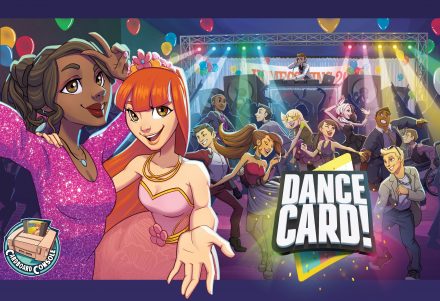
Dance Card! is a family friendly strategy game, set during a high school Homecoming dance! All of the players take on the roles of students and have the objective of dancing with each of their personal dance partners to win the game. The contemporary setting, vibrant art style, and unique theme is designed to appeal to younger players, those new to the tabletop hobby, and parents who want a game to help their kids transition into the world of hobby gaming. Despite being a gateway game, Dance Card! also provides plenty of challenge and replay value for more experienced players as well.

The most important aspect of Dance Card! is its cast. Rather than include generic students, each of the 32 playable characters in Dance Card are completely unique, with their own style and personal abilities. To better reflect the real, contemporary world that high school students live in today, the cast of Dance Card is designed to be inclusive and representative of many different cultures, orientations, and dress styles.

Game Mechanics:

  • Race
  • Set Collection
  • Solo / Solitaire Game
  • Team-Based Game
  • Variable Player Powers

Game Specifications:

  • 1 – 4 Players
  • ~45 Minutes
  • Difficulty Weight 1.75

Clue: Harry Potter Edition

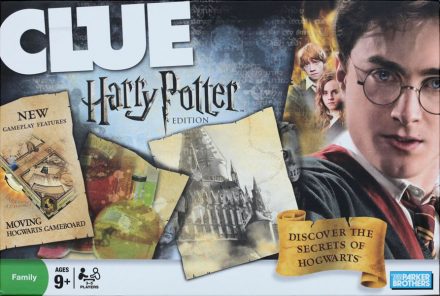
Discover the secrets of Hogwarts in this version of the classic Mystery game. Enjoy new game play features and a moving Hogwarts game board. Dark magic has been performed at Hogwarts. A fellow student has vanished from the famous School of Witchcraft and Wizardry–and it is up to you to solve the mysterious disappearance.
Play as Harry, Ron, Hermione, Ginny, Luna or Neville and try to discover who did it, what spell or item they used, and where the student was attacked. Was it Draco Malfoy with a Sleeping Draught in the Owlery?

Move around Hogwarts making suggestions–but watch out. Wheels on the board actually move to reveal secret passages, hidden staircases, and even the Dark Mark. Think you’ve gathered all the facts you need? Go to Dumbledore’s office to make your final accusation to win the game.

This version of the classic Clue game combines the standard clue idea of going from room to room making suggestions of who, what, and where. However, this version adds a few new ideas. The first is the ever changing board. On a players turn s/he roles three dice, two regular and a special die. The special die has the four houses of Hogwarts on it. This allows a player to change the layout of the board, by opening/closing doors, changing the secret passage way, reveling the dark mark (causing lose of house points), or getting help cards.

The house points are a second change. In this version either a player can win, or all players can lose and the dark side wins, by getting all the players house points. House points are lost when the dark mark appears and a card is reveled from the dark deck. The players affected must either show a help card that protects them from the dark deck card, or lose the set number of house points. Dropping to zero house points causes a player to lose and out of the game.

The other two card types are the third change in the game. There are help cards that consist of items, allies, and spells. These are used to combat the second deck, the Dark Deck. The dark deck cards are revealed when a dark mark appears either on the dice roll, or by moving the house wheels changing the door layouts. The dark mark card affect players in specific locations and those players must be able to show the indicated help cards or lose house points.

All-in-all the idea is the same as traditional clue, but the extra things makes the game just different enough. People that like Clue and/or Harry Potter would enjoy this version.

Game Mechanics:

  • Deduction
  • Paper and Pencil
  • Roll / Spin and Move

Game Specifications:

  • 3 – 5 Players
  • ~30 Minutes
  • Difficulty Weight 1.57