Tag: Tech Trees / Tech Tracks

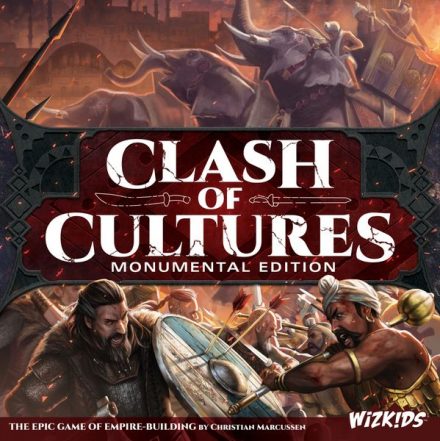
Clash of Cultures: Monumental Edition

Clash of Cultures: Monumental Edition brings back the classic game of exploration, expansion, and development with the Clash of Cultures base game and the Civilizations and Aztecs expansions in one box! Grow your civilization, advance your culture and tech, and leave your mark by building wonders, with this edition of the game including fully-sculpted miniatures of the Seven Wonders.

In Clash of Cultures, each player leads a civilization from a single settlement to a mighty empire. Players must explore their surroundings, build large cities, research advances and conquer those who stand in the way. The game features a modular board for players to explore, 48 distinct advances, seven mighty wonders, and loads of miniatures and cards. The winner will create a culture that will be remembered and admired for millennia.

Game Mechanics:

  • City Building
  • Hand Management
  • Modular Board
  • Tech Trees / Tech Tracks
  • Trading
  • Variable Player Powers

Game Specifications:

  • 2 – 4 Players
  • 180 – 240 Minutes
  • Difficulty Weight 3.72

Carnegie

Carnegie was inspired by the life of Andrew Carnegie who was born in Scotland in 1835. Andrew Carnegie and his parents emigrated to the United States in 1848. Although he started his career as a telegraphist, his role as one of the major players in the rise of the United States’ steel industry made him one of the richest men in the world and an icon of the American dream.

Andrew Carnegie was also a benefactor and philanthropist; upon his death in 1919, more than $350 million of his wealth was bequeathed to various foundations, with another $30 million going to various charities. His endowments created nearly 2,500 free public libraries that bear his name: the Carnegie Libraries.

During the game you will recruit and manage employees, expand your business, invest in real estate, produce and sell goods, and create transport chains across the United States; you may even work with important personalities of the era. Perhaps you will even become an illustrious benefactor who contributes to the greatness of his country through deeds and generosity!

The game takes place over 20 rounds; players will each have one turn per round. On each turn, the active player will choose one of four actions, which the other players may follow.

The goal of the game is to build the most prestigious company, as symbolized by victory points.

Game Mechanics:

  • Area Movement
  • End Game Bonuses
  • Income
  • Network and Route Building
  • Solo / Solitaire Game
  • Tech Trees / Tech Tracks
  • Variable Phase Order
  • Worker Placement

Game Specifications:

  • 1 – 4 Players
  • 90 – 120 Minutes
  • Difficulty Weight 3.81

Genotype: A Mendelian Genetics Game MISSING

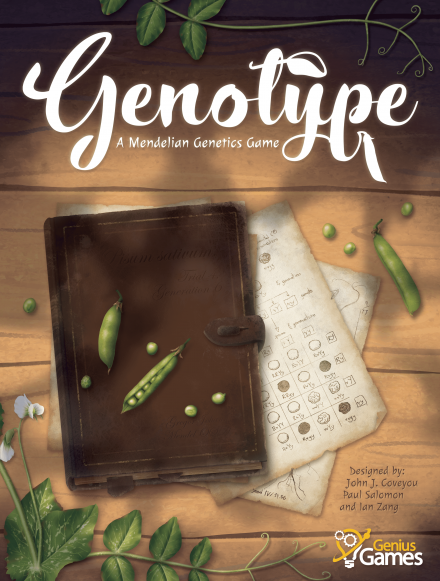
Gregor Mendel is the 19th Century Augustinian Friar credited with the discovery of modern genetics. In Genotype, you play as his assistants, competing to collect experimental data on pea plants by trying to control how the plants inherit key Traits from their parents: seed shape, flower color, stem color, and plant height. The observable Traits of a Pea Plant (its Phenotype) are determined by its genetic makeup (its Genotype). The relationship between Genotype and Phenotype and the nature of genetic inheritance are at the heart of Genotype: A Mendelian Genetics Game.

During the game, players get Pea Plant Cards which show a set of Phenotype Traits they hope to produce and collect (such as pink flowers and tall height) in order to score points. Each round, Dice are rolled to represent Plant breeding, which may result in the Traits players are looking for. After the Dice Roll, players take turns drafting Dice towards completing their Pea Plant Cards or advancing their Research. The Traits produced during the Dice Roll come through the science of Punnett Squares, which show how the parent genes combine, one from each parent plant. By changing the genes of these parent plants, players can influence the likelihood of rolling the Traits they need. The completion of Pea Plant Cards via the Dice Draft is the main way players score points.

Each round consists of 3 phases: Worker Placement, Dice Drafting, and Upgrades.
1) During Worker Placement, players take actions to get more Plant Cards, change the genes of a parent plant, Garden, Research, stake Phenotype claims, gather new Tools, or even position themselves ahead of other players for the Dice Drafting Phase in a couple of ways.
2) Dice Drafting features a couple of interest steps, including the possibility to get first pick of dice, but only for one type of Trait (like plant height), or the possibility to get a pick of any dice, but only after those first picks have happened. De Novo Mutation Dice allow players to change the Trait of other Dice or gain additional Research.
3) The Upgrades phase lets players spend their Research to gain upgrades that let them work on more Plant Cards, draft more Dice each round, or gain additional Workers to be used during the Worker Placement Phase of each round.

Players work to match their Pea Plant Cards to the outcome of the Dice Draft and complete the cards for points. If they’ve placed a Phenotype marker, they will earn bonus points for every completed card that matches their claim. At the end of 5 rounds, the player with the most points wins.

Game Specifications:

  • 1 – 5 Players
  • 45 – 90 Minutes
  • Difficulty Weight 2.78

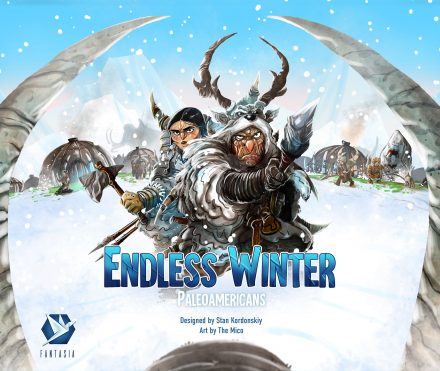
Endless Winter: Paleoamericans

Endless Winter: Paleoamericans takes place in North America, around 10,000 BCE. Players guide the development of their tribes across several generations—from nomadic hunter-gatherers to prosperous tribal societies. Over the course of the game, tribes migrate and settle new lands, establish cultural traditions, hunt paleolithic megafauna, and build everlasting megalithic structures.

Endless Winter is a euro-style game that combines worker placement and deck building in an innovative way. Each round, players send their tribe members to various action spaces, and pay for the actions by playing cards and spending resources. Tribe cards grant additional labor, while Culture cards provide a variety of unique effects. As an alternative, cards can be saved for an end-of-round Eclipse phase, where they are simultaneously revealed to determine the new player order, and trigger various bonus actions.

The game features a novel blend of interwoven systems and mechanisms, such as multi-use cards, area influence, tile placement, and set collection. Plus, there are many viable paths to victory. After four brisk rounds, scores are tallied, and the tribe with the most points wins!

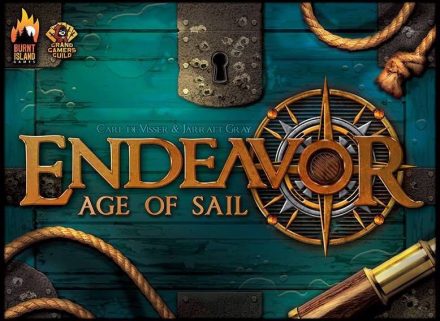
Endeavor: Age of Sail

In Endeavor: Age of Sail, players strive to earn glory for their empires. Sailing out from Europe and the Mediterranean, players will establish shipping routes and occupy cities the world over. As they do so, players will leverage their growing industry, culture, finance, and Influence, building their engine and extending their reach into the far-flung regions of the world.

In this second edition, players will experience:

  • Double-sided board to accommodate different player counts
  • Variable starting set ups with new buildings
  • Exploits to enhance the mechanisms and story of the different regions
  • Updated visuals by the original artist and graphic designer, Josh Cappel

Game Specifications:

  • 2 – 5 Players
  • 60 – 90 Minutes
  • Difficulty Weight 2.85

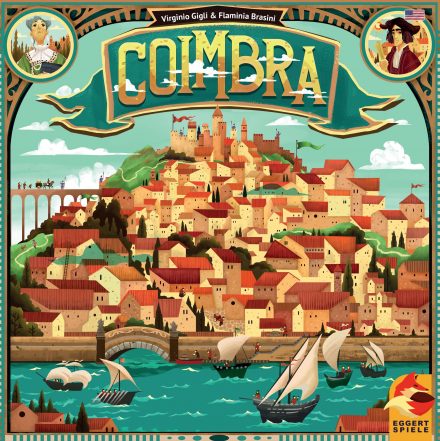
Coimbra

In the 15th and 16th century, Portugal is thriving under its leading role during the Age of Discovery. Nestled in the heart of Portugal, the city of Coimbra serves as a cultural center of the country. As the head of one of Coimbra’s oldest houses, you seek to earn prestige by deepening relationships with nearby monasteries or funding expeditions of the era. To reach this goal, you must vie for the favors of the city’s most influential citizens, even if you must offer a bit of coin or some protective detail.

Coimbra introduces an innovative new dice mechanism in which the dice players draft each round are used in multiple different ways and have an impact on many aspects of their decision making. While there are many paths to victory, players should always seek to optimize their opportunities with every roll of the dice. Combined with ever-changing synergies of the citizens, expeditions, and monasteries, no two games of Coimbra will ever be the same!

Game Mechanics:

  • Auction / Bidding
  • Open Drafting
  • Set Collection
  • Tech Trees / Tech Tracks
  • Variable Set-up
  • Worker Placement

Game Specifications:

  • 2 – 4 Players
  • 60 – 90 Minutes
  • Difficulty Weight 3.25

Anno 1800: The Board Game 🟡

In Anno 1800, a board game based on the popular PC game from Ubisoft, you continuously build up your own industry to develop your home island.

Ship fleets allow for lively trade and the development of new islands in the Old and New World. You have to fulfill the wishes of your own population. While the inhabitants are initially satisfied with bread and clothing, they soon demand valuable luxury goods. You must plan production chains sensibly and keep an eye on the specialization of your population. The goal: A wise distribution of farmers, workers, craftsmen, engineers, and investors — but the competition never sleeps and can snatch the new achievements from under your nose at any time! Who can create the most prosperous island?

Ankh: Gods of Egypt 🟡

Play as a god of ancient Egypt, competing to survive as society begins to forget the old ways, so that only you and your followers remain.

Build caravans, summon monsters, and convert followers in your quest to reign supreme in Ankh: Gods of Egypt. Deities, monsters, and the people of ancient Egypt have been lovingly reimagined and interpreted in beautiful illustrations and detailed miniatures, and players will truly feel like gods as they shake the very foundations of Egypt. All gameplay in Ankh, including combat, is streamlined and non-random. Compete and win solely on your godly wits alone.

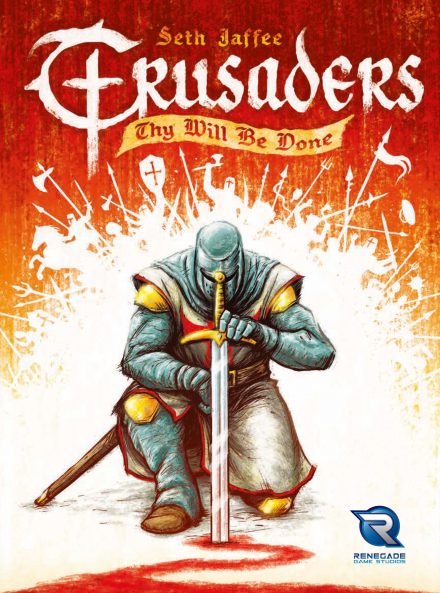
Crusaders: Thy Will Be Done

Move your knights, erect buildings, and go crusading to spread the influence of your Order. When the Orders get too strong, King Philip will become nervous and disband all Templar orders, ending the game.

Crusaders: Thy Will Be Done uses a combination of rondel and mancala mechanisms. Each player has their own rondel, which they can upgrade over the course of the game, that controls their action choices during the game. Your faction gives you a special power to control your rondel, and the buildings you erect will help you form a strategy.

Game Mechanics:

  • Area Majority / Influence
  • Mancala
  • Rondel
  • Tech Trees / Tech Tracks
  • Variable Player Powers
  • Worker Placement

Game Specifications:

  • 2 – 4 Players
  • 40 – 60 Minutes
  • Difficulty Weight 2.48

7 Wonders Duel 🟢

In many ways 7 Wonders Duel resembles its parent game 7 Wonders as over three ages players acquire cards that provide resources or advance their military or scientific development in order to develop a civilization and complete wonders.

What’s different about 7 Wonders Duel is that, as the title suggests, the game is solely for two players, with the players not drafting cards simultaneously from hands of cards, but from a display of face-down and face-up cards arranged at the start of a round. A player can take a card only if it’s not covered by any others, so timing comes into play as well as bonus moves that allow you to take a second card immediately. As in the original game, each card that you acquire can be built, discarded for coins, or used to construct a wonder.

Each player starts with four wonder cards, and the construction of a wonder provides its owner with a special ability. Only seven wonders can be built, though, so one player will end up short.

Players can purchase resources at any time from the bank, or they can gain cards during the game that provide them with resources for future building; as you acquire resources, the cost for those particular resources increases for your opponent, representing your dominance in this area.

A player can win 7 Wonders Duel in one of three ways: each time you acquire a military card, you advance the military marker toward your opponent’s capital, giving you a bonus at certain positions; if you reach the opponent’s capital, you win the game immediately; similarly, if you acquire any six of seven different scientific symbols, you achieve scientific dominance and win immediately; if none of these situations occurs, then the player with the most points at the end of the game wins.