Tag: Modular Board

Arkham Horror

The year is 1926, and it is the height of the Roaring Twenties. Flappers dance till dawn in smoke-filled speakeasies, drinking alcohol supplied by rum runners and the mob. It’s a celebration to end all celebrations in the aftermath of the War to End All Wars.

Yet a dark shadow grows in the city of Arkham. Alien entities known as Ancient Ones lurk in the emptiness beyond space and time, writhing at the thresholds between worlds. Occult rituals must be stopped and alien creatures destroyed before the Ancient Ones make our world their ruined dominion.

Only a handful of investigators stand against the Arkham Horror. Will they prevail?

Arkham Horror (Third Edition) is a cooperative board game for one to six players who take on the roles of investigators trying to rid the world of eldritch beings known as Ancient Ones. Based on the works of H.P. Lovecraft, players will have to gather clues, defeat terrifying monsters, and find tools and allies if they are to stand any chance of defeating the creatures that dwell just beyond the veil of our reality.

Game Specifications:

  • 1 – 6 Players
  • 120 – 180 Minutes
  • Difficulty Weight 3.36

Ginkgopolis

2212: Ginkgo Biloba, the oldest and strongest tree in the world, has become the symbol of a new method for building cities in symbiosis with nature. Humans have exhausted the resources that the Earth offered them, and humanity must now develop cities that maintain a delicate balance between resource production and consumption. Habitable space is scarce, however, and mankind must now face the challenge of building ever upwards. To develop this new type of city, you will gather a team of experts around you, and try to become the best urban planner for Ginkgopolis.

In Ginkgopolis, the city tiles come in three colors: yellow, which provides victory points; red, which provides resources; and blue, which provides new city tiles. Some tiles start in play, and they’re surrounded by letter markers that show where new tiles can be placed.

On a turn, each player chooses a card from his hand simultaneously. Players reveal these cards, adding new tiles to the border of the city in the appropriate location or placing tiles on top of existing tiles. Each card in your hand that you don’t play is passed on to your left-hand neighbor, so keep in mind how your play might set up theirs!

When you add a new tile to the city, you take a “power” card of the same color, and these cards provide you additional abilities during the game, allowing you to scale up your building and point-scoring efforts.

Game Specifications:

  • 1 – 5 Players
  • ~45 Minutes
  • Difficulty Weight 2.91

Ghost Stories

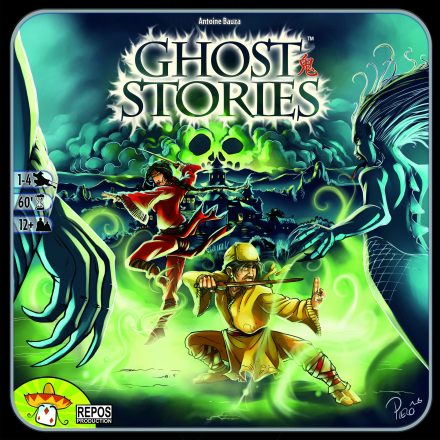
Ghost Stories is a cooperative game in which the players protect the village from incarnations of the lord of hell – Wu-Feng – and his legions of ghosts before they haunt a town and recover the ashes that will allow him to return to life. Each Player represents a Taoist monk working together with the others to fight off waves of ghosts.

The players, using teamwork, will have to exorcise the ghosts that appear during the course of the game. At the beginning of his turn, a player brings a ghost into play and places it on a free spot, and more than one can come in at the same time. The ghosts all have abilities of their own – some affecting the Taoists and their powers, some causing the active player to roll the curse die for a random effect, and others haunting the villager tiles and blocking that tile’s special action. On his turn, a Taoist can move on a tile in order to exorcise adjacent ghosts or to benefit from the villager living on the tile, providing it is not haunted. Each tile of the village allows the players to benefit from a different bonus. With the cemetery, for example, Taoists can bring a dead Taoist back to life, while the herbalist allows to recover spent Tao tokens, etc. It will also be possible to get traps or move ghosts or unhaunt other village tiles.

To exorcise a ghost, the Taoist rolls three Tao dice with different colors: red, blue, green, yellow, black, and white. If the result of the roll matches the color(s) of the ghost or incarnation of Wu-Feng, the exorcism succeeds. The white result is a wild color that can be used as any color. For example, to exorcise a green ghost with 3 resistance, you need to roll three green, three white, or a combination of both. If your die rolls fall short, you can also use Tao tokens that match the color in addition to your roll. You may choose to use these after your roll. Taoists gain these tokens by using certain village tiles or by exorcising certain ghosts. One of the Taoists has a power that allows him to receive such a token once per turn.

To win, the players must defeat the incarnation of Wu-Feng, a boss who arrives at the end of the game. There are also harder difficulty levels that add more incarnations of Wu-Feng, in which to win, you must defeat all of them.

There are many more ways to lose, however. The players lose if three of the village’s tiles are haunted, if the draw pile is emptied while the incarnation of Wu-Feng is still in play, or if all the priests are dead.

Game Specifications:

  • 1 – 4 Players
  • ~60 Minutes
  • Difficulty Weight 2.91

Five Tribes: The Djinns of Naqala

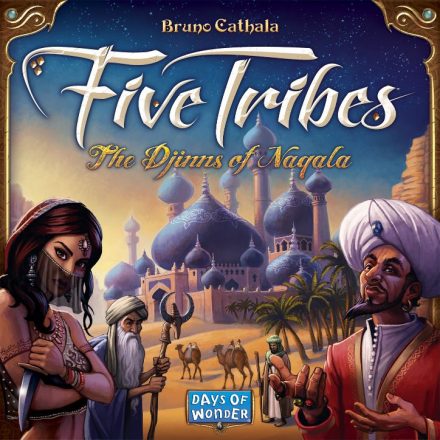
Crossing into the Land of 1001 Nights, your caravan arrives at the fabled Sultanate of Naqala. The old sultan just died and control of Naqala is up for grabs! The oracles foretold of strangers who would maneuver the Five Tribes to gain influence over the legendary city-state. Will you fulfill the prophecy? Invoke the old Djinns and move the Tribes into position at the right time, and the Sultanate may become yours!

Designed by Bruno Cathala, Five Tribes builds on a long tradition of German-style games that feature wooden meeples. Here, in a unique twist on the now-standard “worker placement” genre, the game begins with the meeples already in place – and players must cleverly maneuver them over the villages, markets, oases, and sacred places tiles that make up Naqala. How, when, and where you dis-place these Five Tribes of Assassins, Elders, Builders, Merchants, and Viziers determine your victory or failure.

As befitting a Days of Wonder game, the rules are straightforward and easy to learn. But devising a winning strategy will take a more calculated approach than our standard fare. You need to carefully consider what moves can score you well and put your opponents at a disadvantage. You need to weigh many different pathways to victory, including the summoning of powerful Djinns that may help your cause as you attempt to control this legendary Sultanate.

Game Specifications:

  • 2 – 4 Players
  • 40 – 80 Minutes
  • Difficulty Weight 2.84

Far Away

Far Away is a two-player co-operative board game about discovery, survival, and the crushing loneliness of being the only two humans for lightyears.

Join the Federation Alliance, a bureaucracy with an ambitious charter of mapping new worlds and a minimalist budget. Succeed in a variety of missions on randomly generated worlds with unique ecosystems, without luxuries like radios, landing gear, and medical supplies. Trust in your partner is paramount since, without radios, you can’t communicate (in real life) after separating on the game board.

Survive, and you’ll be rewarded with a meager paycheck. Succumb to the planet, and you’ll find help is too far away.

The Far Away Program

The Federation Alliance started the Far Away program nearly 50 cycles ago to discover and explore new worlds. The missions we undertake are of vital importance to galactic prosperity. However, budget setbacks have forced us to reduce operational expenses. That’s where you, the willing explorer, can help!

Explorer Duties

The Federation has several active missions for you to choose. Each offers unique challenges and potential sub-objectives we would love for you to accomplish off-the-clock. Thanks to the randomly generated universe, every mission attempt will be different.

Once you’ve selected a mission and crashed into the planet (landing gear has been deemed “optional”), you must begin surviving. Your goal is to complete the mission and rebuild your ship. You will fail if you die of hunger, loneliness, or multiple grievous injuries. Don’t fail!

Be forewarned: communication will be a challenge. Radios will not be provided, so the only way to communicate with your partner is to be in close physical proximity. Plan ahead! This not only allows you to strategize, but also prevents the psychological meltdown that comes with being alone on an alien world.

Alien Creatures

Each planet has a unique ecosystem. Experts have identified upwards of 32 creatures in the known universe, each with their own behavioral patterns.

Explorers will be tasked to Realistically and Objectively Log Events Performed Logically by Animals and Yourself (ROLEPLAY). Creature behavior is dictated by their diet, temperament, and other factors. Explorers are provided a quick guide to educate them on default creature movement, but we encourage explorers to embrace their inner-alien and log the creature actions with creativity and vibrant storytelling.

The Far Away Recruitment Kit

Your exploration kit can be delivered straight to your home. Inside the 5.75# box, you’ll find over 800 pieces. We have included an instruction manual so you can assemble your spaceship with minimal government intervention. Please register your DNA online so we can credit your account upon mission completion.

Game Specifications:

  • 2 Players
  • 90 – 150 Minutes
  • Difficulty Weight 2.84

Fallout

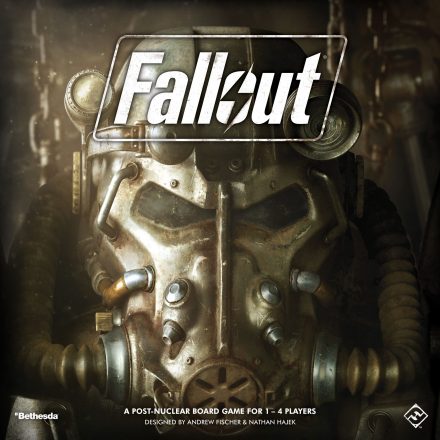
Fallout is a post-nuclear adventure board game for one to four players. Based on the hit video game series by Bethesda Softworks, each Fallout scenario is inspired by a familiar story from the franchise. Survivors begin the game on the edge of an unexplored landscape, uncertain of what awaits them in this unfamiliar world. With just one objective to guide them from the very beginning, each player must explore the hidden map, fight ferocious enemies, and build the skills of their survivor as they attempt to complete challenging quests and balance feuding factions within the game.

As they advance their survivors’ stories, players come across new quests and individual targets, leading them to gain influence. Who comes out ahead depends on how keenly and aggressively each player ventures through the game; however, if a single faction is pushed to power too quickly, the wasteland will be taken for their own, and the survivors conquered along with it.

Game Specifications:

  • 1 – 4 Players
  • 120 – 180 Minutes
  • Difficulty Weight 3.01

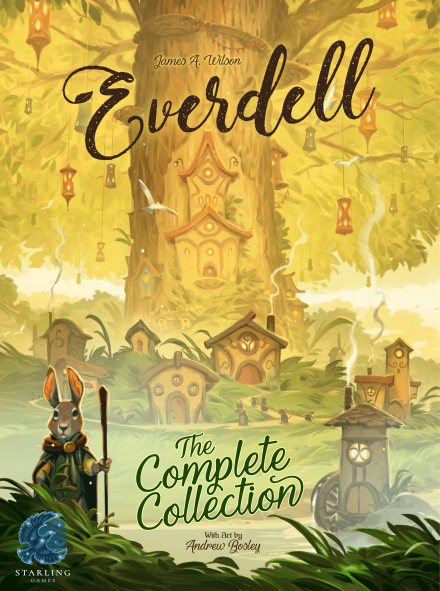
Everdell: The Complete Collection

Dive tailfirst into the world of Everdell with the Complete Collection. Build a city of critters and constructions and explore the Emerald Valley and beyond; celebrate the Bellfaire, wonder at Newleaf’s mechanical marvels, trek into the Spirecrest Mountains, explore the underwater depths of Pearlbrook, and chance the dangers of Mistwood. Play against automated opponents including the dastardly Rugwort and cunning Nightweave and meet heroes of renown like Corrin Evertail himself. Everdell is easy to learn, yet offers satisfying strategic depth and endless replayability. Will the sun shine brightest on your city?

Everdell Complete Collection contains 23 different types of Critter meeples, player powers for asymmetric play, Giant Critters with saddles to ride on, and an amazing array of pieces including wooden twigs, squishy berries, smooth pebbles, amber resin, glass pearls, and more. Featuring deluxe components, including the shiny metal point tokens and the wooden Ever Tree, this Complete Collection is the ultimate edition of Everdell.

Includes all content from:

– Everdell
– Pearlbrook
– Spirecrest
– Bellfaire
– Newleaf
– Mistwood
– Wooden Ever Tree
– Collector’s upgrade packs (Freshwater, Glimmergold, and Trailblazers)
– Everdell Big Ol’ Box of Storage

Game Specifications:

  • 1 – 6 Players
  • 40 – 120 Minutes
  • Difficulty Weight 3.07

Endless Winter: Paleoamericans

Endless Winter: Paleoamericans takes place in North America, around 10,000 BCE. Players guide the development of their tribes across several generations—from nomadic hunter-gatherers to prosperous tribal societies. Over the course of the game, tribes migrate and settle new lands, establish cultural traditions, hunt paleolithic megafauna, and build everlasting megalithic structures.

Endless Winter is a euro-style game that combines worker placement and deck building in an innovative way. Each round, players send their tribe members to various action spaces, and pay for the actions by playing cards and spending resources. Tribe cards grant additional labor, while Culture cards provide a variety of unique effects. As an alternative, cards can be saved for an end-of-round Eclipse phase, where they are simultaneously revealed to determine the new player order, and trigger various bonus actions.

The game features a novel blend of interwoven systems and mechanisms, such as multi-use cards, area influence, tile placement, and set collection. Plus, there are many viable paths to victory. After four brisk rounds, scores are tallied, and the tribe with the most points wins!

Descent: Journeys in the Dark (Second Edition)

In Descent: Journeys in the Dark (Second Edition), one player takes on the role of the treacherous overlord, and up to four other players take on the roles of courageous heroes. During each game, the heroes embark on quests and venture into dangerous caves, ancient ruins, dark dungeons, and cursed forests to battle monsters, earn riches, and attempt to stop the overlord from carrying out his vile plot.

With danger lurking in every shadow, combat is a necessity. For such times, Descent: Journeys in the Dark (Second Edition) uses a unique dice-based system. Players build their dice pools according to their character’s abilities and weapons, and each die in the pool contributes to an attack in different ways. Surges, special symbols that appear on most dice, also let you trigger special effects to make the most of your attacks. And with the horrors awaiting you beneath the surface, you’ll need every advantage you can take…

Featuring double-sided modular board pieces, countless hero and skill combinations, and an immersive story-driven campaign, Descent: Journeys in the Dark (Second Edition) transports heroes to a vibrant fantasy realm where they must stand together against an ancient evil.

Compared to the first edition of Descent: Journeys in the Dark, this game features:

  • Simpler rules for determining line of sight
  • Faster setup of each encounter
  • Defense dice to mitigate the tendency to “math out” attacks
  • Shorter quests with plenty of natural stopping points
  • Cards that list necessary statistics, conditions, and effects
  • A new mechanism for controlling the overlord powers
  • Enhanced hero selection and creation process
  • Experience system to allow for hero growth and development
  • Out-of-the-box campaign system

Game Mechanics:

  • Hand Management
  • Modular Board
  • Role Playing
  • Scenario / Mission / Campaign Game
  • Solo / Solitaire Game
  • Team-Based Game
  • Variable Player Powers

Game Specifications:

  • 1 – 5 Players
  • ~120 Minutes
  • Difficulty Weight 3.21

Deja Vu: Fragments of Memory

As the nameless girl returned to consciousness, she found herself lying in an egg-like space pod, holding a bowl of luminous blue flowers, and her forearm was tattooed with some kind of alien symbols. “What is this place? Who am I?” She did not remember anything. In the space pod’s computer was a black box with records of all the planets it had visited. Bewildered but resolute, she set out to revisit all the planets in reverse order in the hope of retrieving all her lost memories.

Deja Vu: Fragments of Memory is about memory, but it is NOT a memory game; instead the game focuses on tableau-building and set-collecting, and to win the game, you must perform well both tactically and strategically. In the tactical part, players collect wooden tokens on the map with various combinations of color and shape, and both the color and shape are essential to success! The process of collecting is a pleasantly perplexing mind puzzle.

In the strategic part, players use the wooden tokens they gained to add cards to their tableau, building up their “card engine”, which serves to generate victory points, reinforce their resource-collecting ability, and improve the engine itself. Should you increase your selection of cards first? Or create more space to save up resources? Maybe you should plant more cosmic flowers? Balanced and efficient long-term planning is the key to victory.

The central cosmic map, aside from being a place to hold resources, is also a battlefield to contest precious memory fragments which, when paired with the right cards, can earn enormous amount of victory points for you!

Game Mechanics:

  • Deck, Bag, and Pool Building
  • Mancala
  • Modular Board
  • Set Collection

Game Specifications:

  • 2 – 4 Players
  • 45 – 90 Minutes
  • Difficulty Weight 2.67