Tag: Worker Placement

Games with a Worker Placement mechanic require players to coordinate various workers as those workers gather resources.

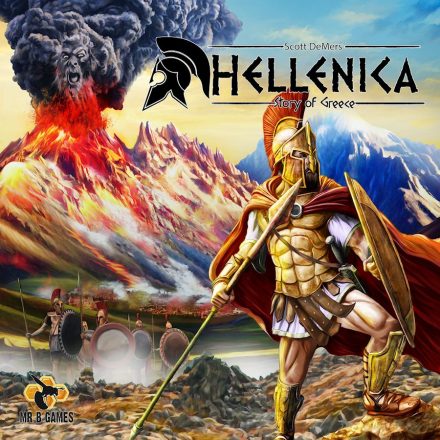
Hellenica: Story of Greece

An explosion of creativity and violence erupted in the Aegean Basin in 800 B.C. that defined ancient Greece. This combination of science, mythology, development, and war was led by powerful city-states like Athens, Sparta, Corinth, Troy, Byzantium, Corcyra, and Thebes. These states vied for control over their rivals and dominated the lesser states around them. In time, some of them became so well known that they are remembered even today.

Hellenica: Story of Greece is a 3.5X civilization game in which you harness the powers of one of seven beginning city-states to dominate the world around you. Your goal is to become the preeminent symbol of Greece for all posterity by completing a combination of secret and public goals. Will you be remembered as a warmonger or a peaceful philosopher? Great priest or apostate? Will you develop a devotion to the gods or focus on the advancement of your people?

Can you guide your civilization during these turbulent times? Will your vision of Hellenic civilization be remembered for all time, or will you merely be a stepping stone for another…?

Game Specifications:

  • 1 – 7 Players
  • 120 – 180 Minutes
  • Difficulty Weight 3.26

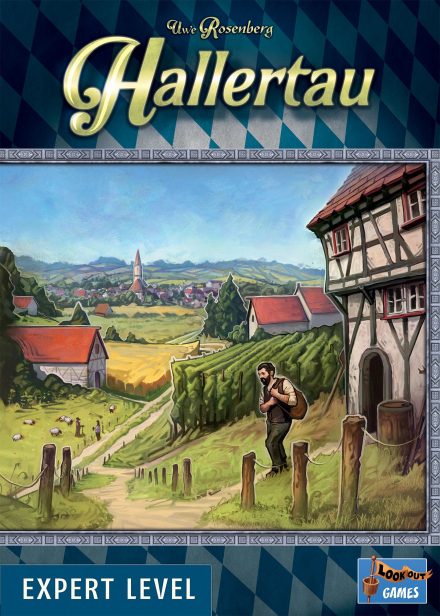
Hallertau

The Hallertau in Bavaria, Germany is the largest continuous hop-producing region in the world. It prides itself upon being the first in Middle Europe to cultivate hops. This game is set around 1850, when the Hallertau became what it is today.

As chief of a small Bavarian village in the Hallertau, your objective is to increase its wealth and prestige in the eyes of the world.

To achieve this, you will need to supply the local crafts folk with goods from agriculture and sheep breeding.

Place your workers, play your cards right, and let your village shine!

  • Progressive Worker Placement: Action spaces can be used multiple times, becoming more expensive in the process.
  • Two-Field Rotation System: Fields lose their potency over time so fallowing fields allows them to become increasingly effective.
  • Card Combos: You can play cards at any time; this timing—and the combination of cards—can be very powerful.
  • Sheep with an Expiration Date: Breeding sheep early comes with a lot of perks, but, eventually, sheep will die of natural causes.

Game Specifications:

  • 1 – 4 Players
  • 50 – 140 Minutes
  • Difficulty Weight 3.30

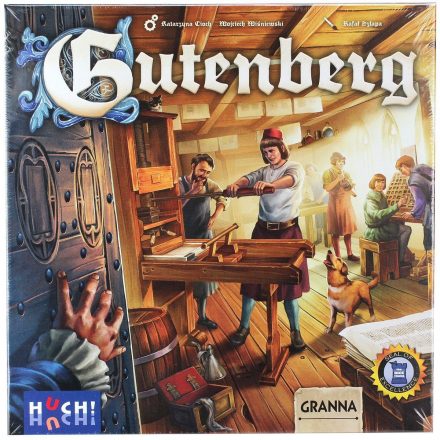
Gutenberg

Gutenberg is a board game for 1-4 people in which players will play as the pioneers of printing in the 15th century. By carrying out orders, they will build their wealth and fame. By improving their printing workshops and gaining the support of patrons, they will develop their production capacity. The game will be won by a printer who boasts the greatest recognition and wealth.

By bidding for specific actions, players will develop their workshop, acquire new fonts, inks and decorations. The unique system of rotating gears allows you to combine bonuses and earn a large number of points.

The game is won by the player with the most points after six rounds.

Game Mechanics:

  • Auction/Bidding
  • Open Drafting
  • Worker Placement

Game Specifications:

  • 1 – 4 Players
  • 60 – 120 Minutes
  • Difficulty Weight 2.63

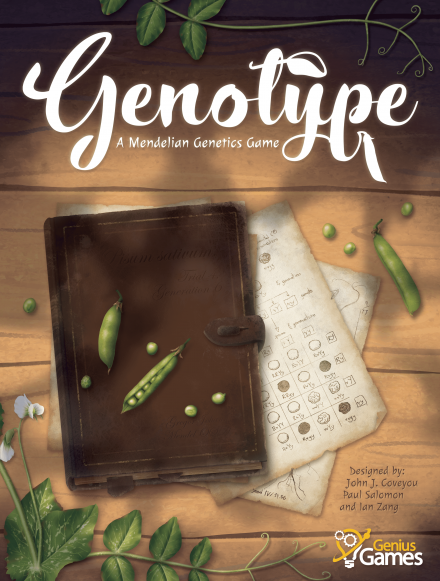
Genotype: A Mendelian Genetics Game MISSING

Gregor Mendel is the 19th Century Augustinian Friar credited with the discovery of modern genetics. In Genotype, you play as his assistants, competing to collect experimental data on pea plants by trying to control how the plants inherit key Traits from their parents: seed shape, flower color, stem color, and plant height. The observable Traits of a Pea Plant (its Phenotype) are determined by its genetic makeup (its Genotype). The relationship between Genotype and Phenotype and the nature of genetic inheritance are at the heart of Genotype: A Mendelian Genetics Game.

During the game, players get Pea Plant Cards which show a set of Phenotype Traits they hope to produce and collect (such as pink flowers and tall height) in order to score points. Each round, Dice are rolled to represent Plant breeding, which may result in the Traits players are looking for. After the Dice Roll, players take turns drafting Dice towards completing their Pea Plant Cards or advancing their Research. The Traits produced during the Dice Roll come through the science of Punnett Squares, which show how the parent genes combine, one from each parent plant. By changing the genes of these parent plants, players can influence the likelihood of rolling the Traits they need. The completion of Pea Plant Cards via the Dice Draft is the main way players score points.

Each round consists of 3 phases: Worker Placement, Dice Drafting, and Upgrades.
1) During Worker Placement, players take actions to get more Plant Cards, change the genes of a parent plant, Garden, Research, stake Phenotype claims, gather new Tools, or even position themselves ahead of other players for the Dice Drafting Phase in a couple of ways.
2) Dice Drafting features a couple of interest steps, including the possibility to get first pick of dice, but only for one type of Trait (like plant height), or the possibility to get a pick of any dice, but only after those first picks have happened. De Novo Mutation Dice allow players to change the Trait of other Dice or gain additional Research.
3) The Upgrades phase lets players spend their Research to gain upgrades that let them work on more Plant Cards, draft more Dice each round, or gain additional Workers to be used during the Worker Placement Phase of each round.

Players work to match their Pea Plant Cards to the outcome of the Dice Draft and complete the cards for points. If they’ve placed a Phenotype marker, they will earn bonus points for every completed card that matches their claim. At the end of 5 rounds, the player with the most points wins.

Game Specifications:

  • 1 – 5 Players
  • 45 – 90 Minutes
  • Difficulty Weight 2.78

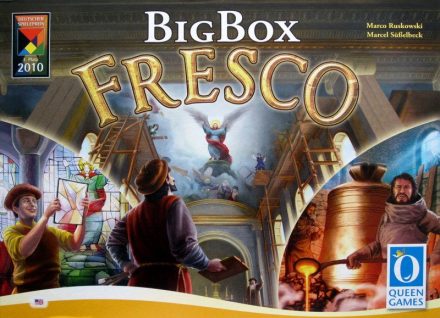
Fresco: Big Box

In Fresco, players are master painters, working to restore a fresco in a Renaissance church.

Each round begins with players deciding what time they would like to wake up for the day. The earlier you wake up, the earlier you will be in turn order, and the better options you will be guaranteed to have. Wake up early too often, however, and your apprentices will become unhappy and stop working as efficiently. They would much rather sleep in!

Then, players decide their actions for the turn, deploying their apprentice work force to various tasks. You’ll need to buy paint, mix paint, work on painting the fresco, raise money by painting portraits (which you’ll need to buy the aforementioned paint!), and perhaps even send your apprentices to the opera in order to increase their happiness. Points are scored mostly by painting the fresco, which requires specific combinations of paints, so you’ll need to buy and mix your paints wisely, in addition to beating other players to the paints and frescos you would like to paint.

Fresco: Big Box contains all of the material from the original Fresco game, plus all expansions released through the end of 2012 and the all new 2nd expansion (with modules 8, 9, and 10)! You can play without expansions for a lighter family game, or add in expansions – whether one, two, or all – to vary play and to increase the decision-making and difficulty, resulting in a very flexible game with a high replay value.

Game Specifications:

  • 2 – 4 Players
  • ~60 Minutes
  • Difficulty Weight 2.75

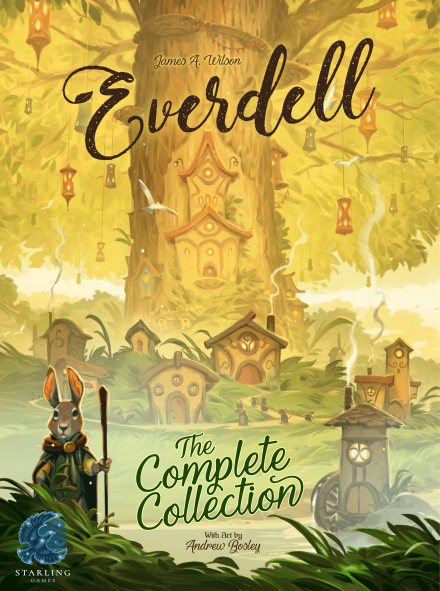
Everdell: The Complete Collection

Dive tailfirst into the world of Everdell with the Complete Collection. Build a city of critters and constructions and explore the Emerald Valley and beyond; celebrate the Bellfaire, wonder at Newleaf’s mechanical marvels, trek into the Spirecrest Mountains, explore the underwater depths of Pearlbrook, and chance the dangers of Mistwood. Play against automated opponents including the dastardly Rugwort and cunning Nightweave and meet heroes of renown like Corrin Evertail himself. Everdell is easy to learn, yet offers satisfying strategic depth and endless replayability. Will the sun shine brightest on your city?

Everdell Complete Collection contains 23 different types of Critter meeples, player powers for asymmetric play, Giant Critters with saddles to ride on, and an amazing array of pieces including wooden twigs, squishy berries, smooth pebbles, amber resin, glass pearls, and more. Featuring deluxe components, including the shiny metal point tokens and the wooden Ever Tree, this Complete Collection is the ultimate edition of Everdell.

Includes all content from:

– Everdell
– Pearlbrook
– Spirecrest
– Bellfaire
– Newleaf
– Mistwood
– Wooden Ever Tree
– Collector’s upgrade packs (Freshwater, Glimmergold, and Trailblazers)
– Everdell Big Ol’ Box of Storage

Game Specifications:

  • 1 – 6 Players
  • 40 – 120 Minutes
  • Difficulty Weight 3.07

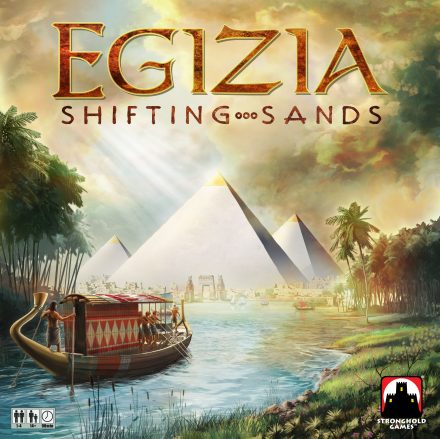
Egizia: Shifting Sands

Egizia: Shifting Sands is an updated version of the beloved strategy game Egizia. Players travel down the Nile, placing boats as they go, to collect resources that will help them construct some of Egypt’s most famous monuments. With new monuments to build, new cards to collect, and a constantly shifting river, Egizia: Shifting Sands Edition is a streamlined, modern update that both longtime fans and new players can easily pick up and enjoy.

In Egizia, players must place their pawns following the course of the Nile, moving northwards. In this way, each placement not only blocks the opponents from choosing the same square (except monuments, where multiple players are always allowed), but also forces the player to place their remaining pawns only on the squares below the one they just occupied.

When the placement phase is over, the workers of the players (which are separate from the pawns) must be fed with the grain produced in the fields. The production of each field is based on the floods of the Nile, so some fields may not give grain each turn. If a player doesn’t have enough grain for all their workers, they must buy it with victory points. After that, stones are received from the owned quarries and used to build the monuments (if the right to do so was reserved earlier) along with the workers.

In this new edition, players each get a chance to build across the Colonnade, a new monument. The more columns you build, the better powers you unlock to help you on the river. Perhaps once per turn you can place boats on occupied river spaces or upstream, or gain an extra point each time you place bricks in monuments. With randomized rewards from game to game, the Colonnade is a dynamic new monument to shake up traditional gameplay.

Below the Colonnade, where the graves once stood, lie the mysterious statues — a new monument unlike anything else in Egizia. These tiny build sites are cheaper than any other monument, but they hold the potential for high reward if you fulfill their requirements. Players must plan early as they can place only one brick in a statue per round, and each level they build has more strenuous requirements for endgame bonuses.

Egizia: Shifting Sands keeps all the painstaking risk/reward decisions of the original Egizia and adds new depths of strategy, balance, and gameplay for a fresh twist on a timeless classic.

Game Specifications:

  • 2 – 4 Players
  • ~90 Minutes
  • Difficulty Weight 2.86

Dune Imperium

Dune: Imperium is a game that finds inspiration in elements and characters from the Dune legacy, both the new film from Legendary Pictures and the seminal literary series from Frank Herbert, Brian Herbert, and Kevin J. Anderson.

As a leader of one of the Great Houses of the Landsraad, raise your banner and marshal your forces and spies. War is coming, and at the center of the conflict is Arrakis – Dune, the desert planet.

Dune: Imperium uses deck-building to add a hidden-information angle to traditional worker placement.

You start with a unique leader card, as well as a deck identical to those of your opponents. As you acquire cards and build your deck, your choices will define your strengths and weaknesses. Cards allow you to send your Agents to certain spaces on the game board, so how your deck evolves affects your strategy. You might become more powerful militarily, able to deploy more troops than your opponents. Or you might acquire cards that give you an edge with the four political factions represented in the game: the Emperor, the Spacing Guild, the Bene Gesserit, and the Fremen.

Unlike many deck-building games, you don’t play your entire hand in one turn. Instead, you draw a hand of cards at the start of every round and alternate with other players, taking one Agent turn at a time (playing one card to send one of your Agents to the game board). When it’s your turn and you have no more Agents to place, you’ll take a Reveal turn, revealing the rest of your cards, which will provide Persuasion and Swords. Persuasion is used to acquire more cards, and Swords help your troops fight for the current round’s rewards as shown on the revealed Conflict card.

Defeat your rivals in combat, shrewdly navigate the political factions, and acquire precious cards. The Spice must flow to lead your House to victory!

Game Specifications:

  • 1 – 4 Players
  • 60 – 120 Minutes
  • Difficulty Weight 3.07

Dinosaur World

The triumph of science that led to dinosaurs returning to the world once more has become public knowledge. New parks spring up regularly, often beginning operations even before everything has been finalized. There is no shortage of patrons eager to be entertained by these returned species in new and exciting ways. However, as with any form of entertainment, elements of triumph are often accompanied by elements of tragedy. This means it is of the utmost importance that you take every precaution by ensuring each visitor signs the safety waiver before enjoying the wonders of Dinosaur World!

Each round in Dinosaur World, you draft a new résumé card to acquire new workers; spend workers to take public actions building your park and acquiring DNA; spend further workers to take private actions improving that park; then drive your jeep around experiencing the wonder and excitement of what you have built! Throughout the game you acquire victory points through a variety of means — and possibly a few visitor deaths as a natural consequence of overly enthusiastic dinosaur encounters. At the end of the game, you lose points if you accumulated too many deaths, then the player with the most points wins!

Game Mechanics:

  • Dice Rolling
  • Income
  • Movement Points
  • Tile Placement
  • Worker Placement

Game Specifications:

  • 2 – 4 Players
  • 60 – 120 Minutes
  • Difficulty Weight 3.27

Dinosaur Island

In Dinosaur Island, players will have to collect DNA, research the DNA sequences of extinct dinosaur species, and then combine the ancient DNA in the correct sequence to bring these prehistoric creatures back to life. Dino cooking! All players will compete to build the most thrilling park each season, and then work to attract (and keep alive!) the most visitors each season that the park opens.

Do you go big and create a pack of Velociraptors? They’ll definitely excite potential visitors, but you’d better make a large enough enclosure for them. And maybe hire some (read: a lot of) security. Or they WILL break out and start eating your visitors, and we all know how that ends. You could play it safe and grow a bunch of herbivores, but then you aren’t going to have the most exciting park in the world (sad face). So maybe buy a roller coaster or two to attract visitors to your park the good old-fashioned way?

Game Mechanics:

  • Action Points
  • Dice Rolling
  • Economic
  • Set Collection
  • Tile Placement
  • Worker Placement

Game Specifications:

  • 1 – 4 Players
  • 90 – 120 Minutes
  • Difficulty Weight 3.05