Tag: Open Drafting

Games with Open Drafting mechanics allow players to choose new resources from a shared pool. The pool of resources is public, meaning all players will see available options.

Baseball Highlights: 2045

American baseball was on its last legs as a spectator sport. Football had become the predominant national pastime — that is until the year 2032, the year baseball decided to revolutionize the game and regain the throne!

Starting in 2032, baseball games were shortened to six innings. Pitchers were encouraged to have bionic arm implants to improve their pitching. These cyborgs, or ‘Borgs as they’re affectionately known, were immediately popular and soon ruled the league. In 2041, robotic players were introduced to get more offense back into the game. These robots were similar to designated hitters in that they were used only to bat and did not field. However, recent reports indicate fielding ‘Bots are on the way.

Now in 2045, human players are still in the game and known as Naturals. They are the best fielders by far but are sorely challenged when it comes to hitting and pitching. Some Naturals have learned to hit by swinging before the pitcher starts his windup, which gives them a chance to hit the ball. Although it’s hard for a Natural to get into the league, those who do are popular. Many Naturals have named themselves after the great players of pre-2032 baseball by taking a first and last name borrowed from different star players of the past. The fans love them, and their presence on the team ensures good revenue!

The stage is now set! The fans are energized and root fanatically for their new favorites, be they ‘Bots, ‘Borgs or Naturals!

Baseball Highlights: 2045 is like watching TV highlights of early 21st-century baseball games, with the gameplay being full of theme with no outs or innings and without bogging down in a play-by-play baseball simulation. In this quick and interactive game, two players build their teams as they play, combining both strategy (building your team) and tactics (playing the game) without any of the downtime. During each “mini-game”, each player alternates playing six cards to simulate a full game’s highlights. The mini-game includes defensive and offensive actions, and your single card play may include elements of defensive and/or offensive plays. Do you try to thwart your opponent’s pending hits, put up strong offensive action of your own, or use your better players to do both? Players buy new free agents after each mini-game to improve their roster, and the team who wins the most mini-games in the series is the champ!

Game Specifications:

  • 1, 2, or 4 Players
  • ~45 Minutes
  • Difficulty Weight 2.20

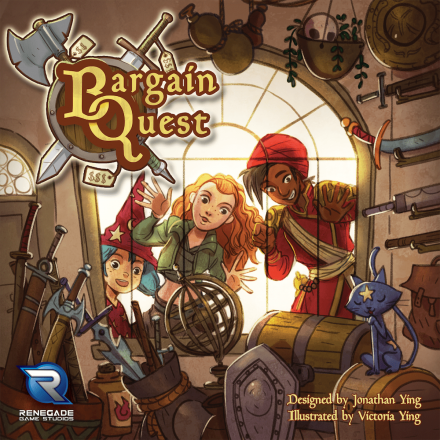
Bargain Quest

Bargain Quest is a game of adventure and capitalism for 2-6 players. Players will take the role of shopkeepers in an adventuring town plagued by monsters. Players must draft items and then secretly choose which items to place in their windows to attract wealthy heroes to their shops.

Once all heroes have been equipped, they venture out to battle against monstrous threats, earning money and prestige for the shop they represent. Throughout the game players will encounter new heroes and monsters while upgrading their shops and hiring employees. Once the third monster is defeated the player who has earned the most gold and prestige is the winner.

Game Specifications:

  • 2 – 6 Players
  • 30 – 60 Minutes
  • Difficulty Weight 2.01

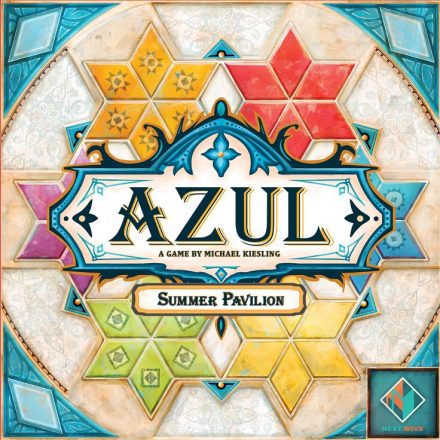
Azul: Summer Pavilion

At the turn of the 16th Century, King Manuel I commissioned Portugal’s greatest artisans to construct grandiose buildings. After completing the Palaces of Evora and Sintra, the king sought to build a summer pavilion to honor the most famous members of the royal family. This construction was intended for the most talented artisans — whose skills meet the splendor that the royal family deserves. Sadly, King Manuel I died before construction ever began.

In Azul: Summer Pavilion, players return to Portugal to accomplish the task that never began. As a master artisan, you must use the finest materials to create the summer pavilion while carefully avoiding wasting supplies. Only the best will rise to the challenge to honor the Portuguese royal family.

Azul: Summer Pavilion lasts six rounds, and in each round players draft tiles, then place them on their individual player board to score points. Each of the six colors of tiles is wild during one of the rounds.

At the start of each round, draw tiles at random from the bag to refill each of the five, seven, or nine factories with four tiles each. Draw tiles as needed to refill the ten supply spaces on the central scoring board. Players then take turns drafting tiles. You can choose to take all of the tiles of a non-wild color on a factory and place them next to your board; if any wild tiles are on this factory, you must take one of them. Place all remaining tiles in the center of the table. Alternatively, you can take all tiles of a non-wild color from the center of play; you must also take one wild tile, if present.

After all tiles have been claimed, players then take turns placing tiles on their individual boards. Each board depicts seven stars that would be composed of six tiles; each space on a star shows a number from 1-6, and six of the stars are for tiles of a single color while the seventh will be composed of one tile of each color. To place a tile on the blue 5, for example, you must discard five blue or wild tiles from next to your player board (with at least one blue being required), placing one blue tile in the blue 5 space and the rest in the discard tower. You score 1 point for this tile and 1 point for each tile within this star connected to the newly placed tile.

If you completely surround a pillar, statue, or window on your game board with tiles, you get an immediate bonus, taking 1-3 tiles from the central supply spaces and placing them next to your board. At the end of the round, you can carry over at most four tiles to the next round; discard any others, losing 1 point for each such tile.

After six rounds, you score a bonus for each of the seven stars that you’ve filled completely. Additionally, you score a bonus for having covered all seven spaces of value 1, 2, 3 or 4. You lose 1 point for each remaining tile unused, then whoever has the most points wins.

Game Specifications:

  • 2 – 4 Players
  • 30 – 45 Minutes
  • Difficulty Weight 2.07

Azul: Stained Glass of Sintra

Created by Michael Kiesling, Azul: Stained Glass of Sintra challenges players to carefully select glass panes to complete their windows while being careful not to damage or waste supplies in the process. The window panels are double-sided, providing players with a dynamic player board that affords nearly infinite variability!

Players can expect to discover new unique art and components in Azul: Stained Glass of Sintra, including translucent window pane pieces, a tower to hold discarded glass panes, and double-sided player boards and window pane panels, in addition to many other beautiful components!

Game Specifications:

  • 2 – 4 Players
  • 30 – 45 Minutes
  • Difficulty Weight 2.01

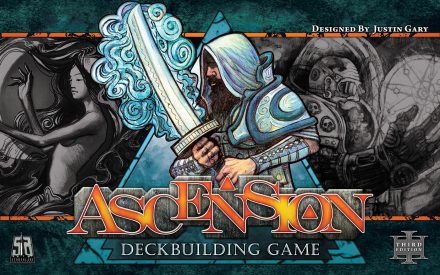
Ascension: Deckbuilding Game

Ascension: Deckbuilding Game — originally released as Ascension: Chronicle of the Godslayer — is a fast-paced deck-building game designed by Magic: The Gathering Pro Tour champions Justin Gary, Rob Dougherty, and Brian Kibler, with artwork by Eric Sabee.

Ascension is a deck-building game in which players spend Runes to acquire more powerful cards for their deck. It offers a dynamic play experience where players have to react and adjust their strategy accordingly. Each player starts with a small deck of cards, and uses those cards to acquire more and better cards for their deck, with the goal of earning the most Honor Points by gaining cards and defeating monsters.

Game Specifications:

  • 1 – 4 Players
  • ~30 Minutes
  • Difficulty Weight 2.14

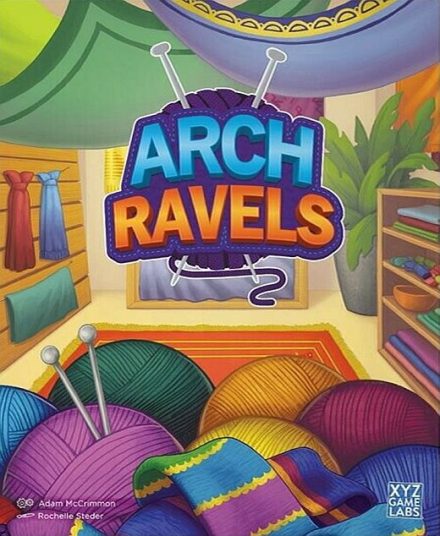
ArchRavels

Experience the colorful and crafty world of fiber arts with ArchRavels! Play as one of four characters, each with their own unique crafting specialty. Hit the Yarn Bazaar to build up your stash. Follow the patterns to make cuddly bears, warm blankets, and cozy scarves. Along the way you’ll get some unique special requests. Turn in your completed items to master a pattern, complete projects, and score points. When the project list runs out, the crafter with the most points wins!

Game Specifications:

  • 2 – 4 Players
  • 30 – 45 Minutes
  • Difficulty Weight 1.92

Aquatica

Aquatica is a deep, but easy to learn family engine builder about underwater kingdoms.

In the game you will become one of the mighty ocean kings, struggling to bring glory to his realm. To win the game, you need to capture and buy locations, recruit new characters, and complete goals; each of these actions gives you victory points at the end of the game. To do so, you need to play cards from your hand (each with a unique set of actions) and combine them. Don’t think it’s simple! With a good strategy during your turn, you can take up to ten actions in a row.

You will encounter plenty of mysterious ocean creatures and take them to your hand. With their help you will explore the unknown locations and raise found resources from the ocean depths to your kingdom. Mechanically this is represented with the help of three-layered player board and the unique mechanism of card-rising.

Abyss 🟢

The Abyss power is once again vacant, so the time has come to get your hands on the throne and its privileges. Use all of your cunning to win or buy votes in the Council. Recruit the most influential Lords and abuse their powers to take control of the most strategic territories. Finally, impose yourself as the only one able to rule the Abyssal people!

Abyss is a game of development, combination and collection in which players try to take control of strategic locations in an underwater city. To achieve this, players must develop on three levels: first by collecting allies, then using them to recruit Lords of the Abyss, who will then grant access to different parts of the city. Players acquire cards through a draft of sorts, and the Lords of the Abyss acquired on those cards grant special powers to the cardholder — but once you use the cards to acquire a location, that power is shut off, so players need to time their land grabs well in order to put themselves in the best position for when the game ends.

Game Specifications:

  • 2 – 4 Players
  • 30 – 60 Minutes
  • Difficulty Weight 2.34

7 Wonders Duel 🟢

In many ways 7 Wonders Duel resembles its parent game 7 Wonders as over three ages players acquire cards that provide resources or advance their military or scientific development in order to develop a civilization and complete wonders.

What’s different about 7 Wonders Duel is that, as the title suggests, the game is solely for two players, with the players not drafting cards simultaneously from hands of cards, but from a display of face-down and face-up cards arranged at the start of a round. A player can take a card only if it’s not covered by any others, so timing comes into play as well as bonus moves that allow you to take a second card immediately. As in the original game, each card that you acquire can be built, discarded for coins, or used to construct a wonder.

Each player starts with four wonder cards, and the construction of a wonder provides its owner with a special ability. Only seven wonders can be built, though, so one player will end up short.

Players can purchase resources at any time from the bank, or they can gain cards during the game that provide them with resources for future building; as you acquire resources, the cost for those particular resources increases for your opponent, representing your dominance in this area.

A player can win 7 Wonders Duel in one of three ways: each time you acquire a military card, you advance the military marker toward your opponent’s capital, giving you a bonus at certain positions; if you reach the opponent’s capital, you win the game immediately; similarly, if you acquire any six of seven different scientific symbols, you achieve scientific dominance and win immediately; if none of these situations occurs, then the player with the most points at the end of the game wins.

3000 Scoundrels 🟢

“The Traveler brought much change to our small frontier town in the last five years. He showed us marvels beyond imagination and taught us how to use his strange machines. Now that the Traveler has vanished, a storm is coming. Who will control the destiny of the American Frontier?”

In 3000 Scoundrels, players assume the roles of rival leaders attempting to steal precious technology left behind by the Traveler. By overlaying clear cards, you create unique scoundrels and use them to outsmart your foes. In short, hire scoundrels to build powerful combos, steal technology, and outsmart your foes.

Each turn, you play a poker card from your hand face down in front of your player board, then use all abilities matching your claimed number. You don’t need to tell the truth when claiming a number, but if an opponent catches you bluffing, it will damage your reputation and decrease your odds of winning the game.

Each leader has a unique perspective and motivation in the conflict of Graystone Gulch. Are you driven by money, fame, or the deep-seated desire to improve the world? Advanced rules add unique strategies to each leader that reflect their unique strengths and cunning tricks.

Game Specifications:

  • 2 – 4 Players
  • 60 – 90 Minutes
  • Difficulty Weight 2.18