Tag: Set Collection

Games with Set Collection mechanics require players to collect resources in sets to achieve various rewards.

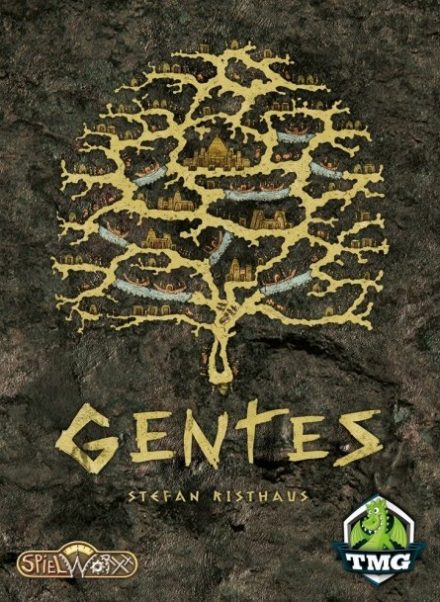
Gentes: Deluxified Edition

“Gentes” is the Latin plural word for greater groups of human beings (e.g., tribes, nations, people; singular: “gens”). In this game, players take the role of an ancient people who are attempting to develop by building monuments and colonizing or founding new cities in the Mediterranean sea.

The game is played in six rounds, each consisting of two phases: action phase, and tidying up. There are three eras — rounds 1-2, 3-4, 5-6 — with new monument cards entering the game at the beginning of rounds 1, 3 and 5. Each player has a personal player mat with a time track for action markers and sand timer markers. In the action phase of a round, the players take their turns in clockwise order, conducting one action per turn. Each action requires an action marker from the main board that is placed on the time track. Depending on the information on the action marker, you have to also pay some money or take sand timers that are placed on the time track. When you have no free spaces on your time track, you must pass for the remainder of the round. Therefore, the number of actions per player in a single round may vary significantly if, for example, you choose double sand timers instead of two single ones or take action markers that require more money but fewer sand timers. Single sand timers are dropped in the tidying up phase, while double sand timers are flipped to become single sand timer markers and stay for another round. The actions are:

Buy new cards from the common display
Build monuments (playing cards from your hand to your personal display for victory points and new options)
Train/Educate your people
Build/found cities
Take money
To play a card, you must meet the requirements printed on that card, such as having specific persons on your personal board (e.g., two priests and four soldiers). These requirements are why training — i.e., getting specific people — is important, but that is not that easy because there are six different types of people — three on the left and three on the right side of your personal player board — and you have only six spaces in total for the two types in the same line. If you have three merchants, for example, you move your marker for counting merchants three spaces toward the side of the soldiers and thus you have only three spaces left for soldiers. By educating a fourth soldier and moving your soldier marker forward to its fourth space, you automatically lose one merchant because that marker is pushed back to its second space.

It is crucial to generate additional actions by using the specific functions of monuments in your display and cities you have built. Cities are expensive, but they create benefits at the end of each round or provide new options for taking an action without acquiring an action marker, gaining only a sand timer marker instead.

Try to have a steady income to avoid wasting actions to take money. Pay attention to the display of common cards, which is new in every single game, because the monument cards are shuffled randomly within the decks of eras I, II and III. Collect identical achievement symbols on the cards to benefit from the increasing victory points for a series of symbols. Build cities to enlarge your options!

Game Specifications:

  • 1 – 4 Players
  • 75 – 120 Minutes
  • Difficulty Weight 3.25

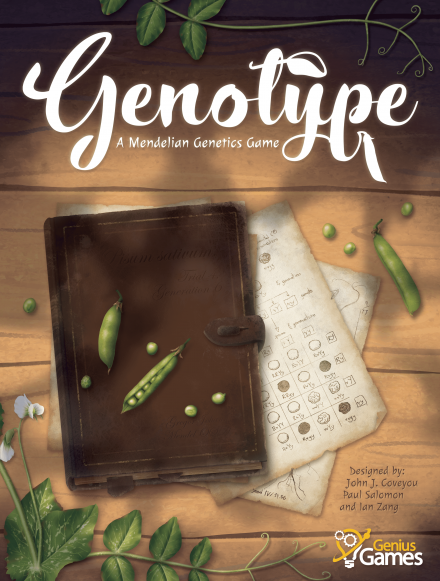
Genotype: A Mendelian Genetics Game MISSING

Gregor Mendel is the 19th Century Augustinian Friar credited with the discovery of modern genetics. In Genotype, you play as his assistants, competing to collect experimental data on pea plants by trying to control how the plants inherit key Traits from their parents: seed shape, flower color, stem color, and plant height. The observable Traits of a Pea Plant (its Phenotype) are determined by its genetic makeup (its Genotype). The relationship between Genotype and Phenotype and the nature of genetic inheritance are at the heart of Genotype: A Mendelian Genetics Game.

During the game, players get Pea Plant Cards which show a set of Phenotype Traits they hope to produce and collect (such as pink flowers and tall height) in order to score points. Each round, Dice are rolled to represent Plant breeding, which may result in the Traits players are looking for. After the Dice Roll, players take turns drafting Dice towards completing their Pea Plant Cards or advancing their Research. The Traits produced during the Dice Roll come through the science of Punnett Squares, which show how the parent genes combine, one from each parent plant. By changing the genes of these parent plants, players can influence the likelihood of rolling the Traits they need. The completion of Pea Plant Cards via the Dice Draft is the main way players score points.

Each round consists of 3 phases: Worker Placement, Dice Drafting, and Upgrades.
1) During Worker Placement, players take actions to get more Plant Cards, change the genes of a parent plant, Garden, Research, stake Phenotype claims, gather new Tools, or even position themselves ahead of other players for the Dice Drafting Phase in a couple of ways.
2) Dice Drafting features a couple of interest steps, including the possibility to get first pick of dice, but only for one type of Trait (like plant height), or the possibility to get a pick of any dice, but only after those first picks have happened. De Novo Mutation Dice allow players to change the Trait of other Dice or gain additional Research.
3) The Upgrades phase lets players spend their Research to gain upgrades that let them work on more Plant Cards, draft more Dice each round, or gain additional Workers to be used during the Worker Placement Phase of each round.

Players work to match their Pea Plant Cards to the outcome of the Dice Draft and complete the cards for points. If they’ve placed a Phenotype marker, they will earn bonus points for every completed card that matches their claim. At the end of 5 rounds, the player with the most points wins.

Game Specifications:

  • 1 – 5 Players
  • 45 – 90 Minutes
  • Difficulty Weight 2.78

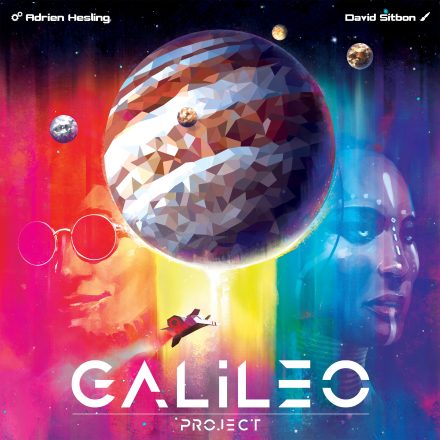
Galileo Project

Thirty years after sending the first colonial ships from Ganymede, humanity decided to launch Project Galileo! Its goal: Settle the four main satellites of Jupiter (Io, Europa, Ganymede and Callisto) in order to broaden human presence in the solar system. This project is named after the Italian intellectual Galileo, the first to observe these four satellites in the sky in 1610.

In Galileo Project, you play as the same corporations involved in the events of Ganymede and settle the four satellites of Jupiter by acquiring robots from Earth and Mars, recruiting experts, developing technologies, and building superstructures.

Galileo Project is a standalone game in the Ganymede universe, combining combos and engine-building.

Game Mechanics:

Game Specifications:

  • 2 – 4 Players
  • 40 – 80 Minutes
  • Difficulty Weight 2.77

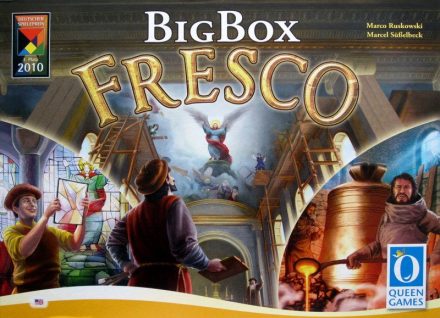
Fresco: Big Box

In Fresco, players are master painters, working to restore a fresco in a Renaissance church.

Each round begins with players deciding what time they would like to wake up for the day. The earlier you wake up, the earlier you will be in turn order, and the better options you will be guaranteed to have. Wake up early too often, however, and your apprentices will become unhappy and stop working as efficiently. They would much rather sleep in!

Then, players decide their actions for the turn, deploying their apprentice work force to various tasks. You’ll need to buy paint, mix paint, work on painting the fresco, raise money by painting portraits (which you’ll need to buy the aforementioned paint!), and perhaps even send your apprentices to the opera in order to increase their happiness. Points are scored mostly by painting the fresco, which requires specific combinations of paints, so you’ll need to buy and mix your paints wisely, in addition to beating other players to the paints and frescos you would like to paint.

Fresco: Big Box contains all of the material from the original Fresco game, plus all expansions released through the end of 2012 and the all new 2nd expansion (with modules 8, 9, and 10)! You can play without expansions for a lighter family game, or add in expansions – whether one, two, or all – to vary play and to increase the decision-making and difficulty, resulting in a very flexible game with a high replay value.

Game Specifications:

  • 2 – 4 Players
  • ~60 Minutes
  • Difficulty Weight 2.75

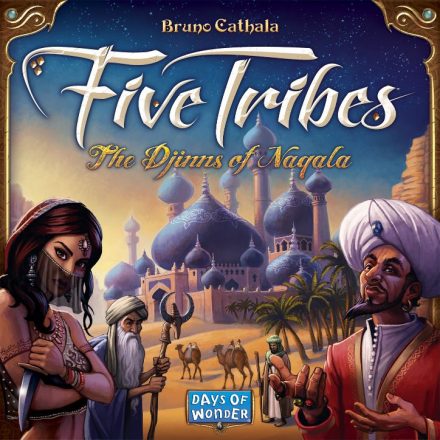
Five Tribes: The Djinns of Naqala

Crossing into the Land of 1001 Nights, your caravan arrives at the fabled Sultanate of Naqala. The old sultan just died and control of Naqala is up for grabs! The oracles foretold of strangers who would maneuver the Five Tribes to gain influence over the legendary city-state. Will you fulfill the prophecy? Invoke the old Djinns and move the Tribes into position at the right time, and the Sultanate may become yours!

Designed by Bruno Cathala, Five Tribes builds on a long tradition of German-style games that feature wooden meeples. Here, in a unique twist on the now-standard “worker placement” genre, the game begins with the meeples already in place – and players must cleverly maneuver them over the villages, markets, oases, and sacred places tiles that make up Naqala. How, when, and where you dis-place these Five Tribes of Assassins, Elders, Builders, Merchants, and Viziers determine your victory or failure.

As befitting a Days of Wonder game, the rules are straightforward and easy to learn. But devising a winning strategy will take a more calculated approach than our standard fare. You need to carefully consider what moves can score you well and put your opponents at a disadvantage. You need to weigh many different pathways to victory, including the summoning of powerful Djinns that may help your cause as you attempt to control this legendary Sultanate.

Game Specifications:

  • 2 – 4 Players
  • 40 – 80 Minutes
  • Difficulty Weight 2.84

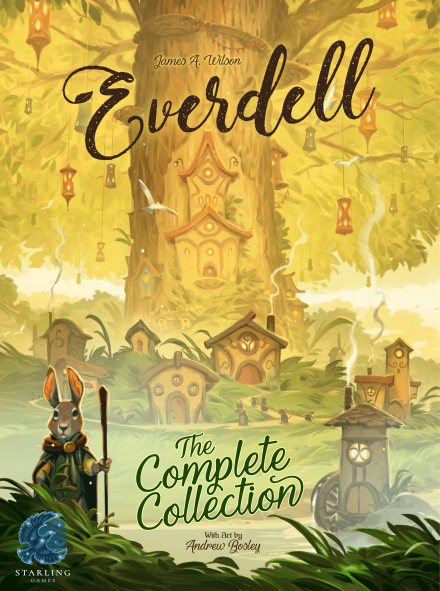
Everdell: The Complete Collection

Dive tailfirst into the world of Everdell with the Complete Collection. Build a city of critters and constructions and explore the Emerald Valley and beyond; celebrate the Bellfaire, wonder at Newleaf’s mechanical marvels, trek into the Spirecrest Mountains, explore the underwater depths of Pearlbrook, and chance the dangers of Mistwood. Play against automated opponents including the dastardly Rugwort and cunning Nightweave and meet heroes of renown like Corrin Evertail himself. Everdell is easy to learn, yet offers satisfying strategic depth and endless replayability. Will the sun shine brightest on your city?

Everdell Complete Collection contains 23 different types of Critter meeples, player powers for asymmetric play, Giant Critters with saddles to ride on, and an amazing array of pieces including wooden twigs, squishy berries, smooth pebbles, amber resin, glass pearls, and more. Featuring deluxe components, including the shiny metal point tokens and the wooden Ever Tree, this Complete Collection is the ultimate edition of Everdell.

Includes all content from:

– Everdell
– Pearlbrook
– Spirecrest
– Bellfaire
– Newleaf
– Mistwood
– Wooden Ever Tree
– Collector’s upgrade packs (Freshwater, Glimmergold, and Trailblazers)
– Everdell Big Ol’ Box of Storage

Game Specifications:

  • 1 – 6 Players
  • 40 – 120 Minutes
  • Difficulty Weight 3.07

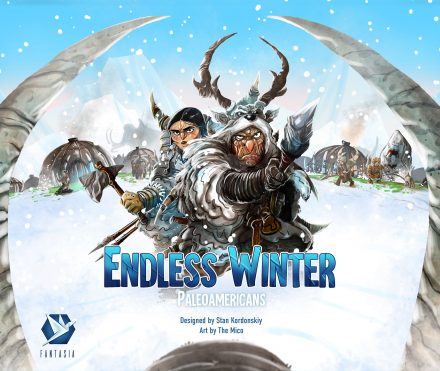
Endless Winter: Paleoamericans

Endless Winter: Paleoamericans takes place in North America, around 10,000 BCE. Players guide the development of their tribes across several generations—from nomadic hunter-gatherers to prosperous tribal societies. Over the course of the game, tribes migrate and settle new lands, establish cultural traditions, hunt paleolithic megafauna, and build everlasting megalithic structures.

Endless Winter is a euro-style game that combines worker placement and deck building in an innovative way. Each round, players send their tribe members to various action spaces, and pay for the actions by playing cards and spending resources. Tribe cards grant additional labor, while Culture cards provide a variety of unique effects. As an alternative, cards can be saved for an end-of-round Eclipse phase, where they are simultaneously revealed to determine the new player order, and trigger various bonus actions.

The game features a novel blend of interwoven systems and mechanisms, such as multi-use cards, area influence, tile placement, and set collection. Plus, there are many viable paths to victory. After four brisk rounds, scores are tallied, and the tribe with the most points wins!

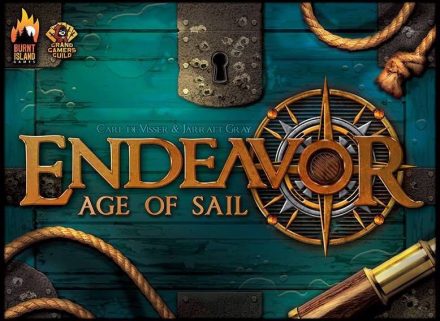
Endeavor: Age of Sail

In Endeavor: Age of Sail, players strive to earn glory for their empires. Sailing out from Europe and the Mediterranean, players will establish shipping routes and occupy cities the world over. As they do so, players will leverage their growing industry, culture, finance, and Influence, building their engine and extending their reach into the far-flung regions of the world.

In this second edition, players will experience:

  • Double-sided board to accommodate different player counts
  • Variable starting set ups with new buildings
  • Exploits to enhance the mechanisms and story of the different regions
  • Updated visuals by the original artist and graphic designer, Josh Cappel

Game Specifications:

  • 2 – 5 Players
  • 60 – 90 Minutes
  • Difficulty Weight 2.85

Eleven: Football Manager Board Game

Eleven — the number of players you have on the pitch at any given time, with those players making all the difference between being the best team and the worst. But every team knows that to be the best in the league it takes a lot more than players; it also takes an incredible manager.

Eleven: Football Manager Board Game is an economic strategy game set in a world of sport. Your task is to manage and grow your own football club over the course of a season. During the game, you hire staff members, including trainers, physical therapists, PR specialists, and directors. You acquire sponsors, expand the stadium infrastructure, and take care of your club’s position in social media. Among the many tasks on the list are transferring new players and choosing the right tactics for each of the upcoming matches.

Eleven can be played multiplayer or solo. The solo mode includes six different scenarios that challenge players with different starting situations and goals for the season. In the beginning, the task is simple: You have to climb the steps of the football leagues and achieve the appropriate experience. You may have to manage the club in a crisis, and at other times you will have to rejuvenate a football team of players that are not so young anymore. You may also have to fight against time to try to complete the stadium before the deadline!

Game Specifications:

  • 1 – 4 Players
  • 60 – 120 Minutes
  • Difficulty Weight 3.34

Distilled

Distilled is a highly thematic strategy card game about crafting spirits in a distillery, with resource management and push-your-luck elements. In the game, you have inherited a distillery and are hoping to someday achieve the title of master distiller through purchasing goods, building up your distillery, and creating the world’s most renowned spirits.

Use cards to purchase new ingredients and invest in upgrades to your distillery, all while eventually distilling the spirit and sending it to the warehouse. Once in the warehouse, age your spirit to enhance its flavor and bottle it to sell it for major profits!

Achieve the title of Master Distiller by having the most victory points at the end of the game. Points are obtained by distilling and selling spirits.

Game Mechanics:

  • Economic
  • Hand Management
  • Income
  • Market
  • Set Collection

Game Specifications:

  • 1 – 5 Players
  • 30 – 150 Minutes
  • Difficulty Weight 3.03