Tag: Economic

Economic games encourage players to produce, distribute, and trade various resources.

On Mars

On Mars

On Mars

Following the success of unmanned rover missions, the United Nations established the Department of Operations and Mars Exploration (D.O.M.E.). The first settlers arrived on Mars in the year 2037 and in the decades after establishment Mars Base Camp, private exploration companies began work on the creation of a self-sustaining colony. As chief astronaut for one of these enterprises, you want to be a pioneer in the development of the biggest, most advanced colony on Mars by achieving both D.O.M.E. mission goals as well as your company’s private agenda.

In the beginning, you will be dependent on supplies from Earth and will have to travel often between the Mars Space Station and the planet’s surface. As the colony expands over time, you will shift your activities to construct mines, power generators, water extractors, greenhouses, oxygen factories, and shelters. Your goal is to develop a self-sustaining colony independent of any terrestrial organization. This will require understanding the importance of water, air, power, and food — the necessities for survival.

Do you dare take part in humankind’s biggest challenge?

On Mars is played over several rounds, each consisting of two phases – the Colonization Phase ​and the Shuttle Phase​.

During the Colonization Phase, each player takes a turn during which they take actions. The available actions depend on the side of the board they are on. If you are in orbit, you can take blueprints, buy and develop technologies, and take supplies from the Warehouse. If you are on the surface of the planet, you can construct buildings with your bots, upgrade these buildings using blueprints, take scientists and new contracts, welcome new ships, and explore the planet’s surface with your rover. In the Shuttle Phase, players may travel between the colony and the Space Station in orbit.

All buildings on Mars have a dependency on each other and some are required for the colony to grow. Building shelters for Colonists to live in requires oxygen; generating oxygen requires plants; growing plants requires water; extracting water from ice requires power; generating power requires mining minerals; and mining minerals requires Colonists. Upgrading the colony’s ability to provide each of these resources is vital. As the colony grows, more shelters are needed so that the Colonists can survive the inhospitable conditions on Mars.

During the game, players are also trying to complete missions. Once a total of three missions have been completed, the game ends. To win the game, players must contribute to the development of the first colony on Mars. This is represented during the game by players gaining Opportunity Points (OP). The player with the most OP at the end of the game is declared the winner.

Game Mechanics:

  • Action Points
  • City Building
  • Closed Drafting
  • Economic
  • Hand Management
  • Set Collection
  • Tile Placement
  • Worker Placement

Game Specifications:

  • 1 – 4 Players
  • 90 – 150 Minutes
  • Difficulty Weight 4.66

John Company

John Company

John Company

In John Company, players assume the roles of ambitious families attempting to use the British East India Company for personal gain. The game begins in the early eighteenth-century, when the Company has a weak foothold on the subcontinent. Over the course of the game, the Company might grow into the most powerful and insidious corporation in the world or collapse under the weight of its own ambition.

John Company is a game about state-sponsored trade monopoly. Unlike most economic games players often do not control their own firms. Instead, they will collectively guide the Company by securing positions of power, attempting to steer the Company’s fate in ways that benefit their own interests. However, the Company is an unwieldy thing. It is difficult to do anything alone, and players will often need to negotiate with one another. In John Company, most everything is up for negotiation.

Ultimately, this game isn’t about wealth; it’s about reputation. Each turn some of your family members may retire from their Company positions, giving them the opportunity to establish estates. Critically, players do not have full control over when these retirements happen. You will often need to borrow money from other players to make the best use for a chance of retirement. Players also gain victory points by competing in the London Season for prestige and securing fashionable properties.

John Company engages very seriously with its theme. It is meant as a frank portrait of an institution that was as dysfunctional as it was influential. Accordingly, the game wrestles many of the key themes of imperialism and globalization in the eighteenth and nineteenth centuries and how those developments were felt domestically. As such, this game might not be suitable for all players. Please make sure everyone in your group consents to this exploration before playing.

The second edition is extensively revised and is not a reprint.

Game Mechanics:

  • Bribery
  • Dice Rolling
  • Economic
  • Negotiation
  • Push Your Luck
  • Worker Placement

Game Specifications:

  • 1 – 6 Players
  • 90 – 240 Minutes
  • Difficulty Weight 4.41

Gaia Project

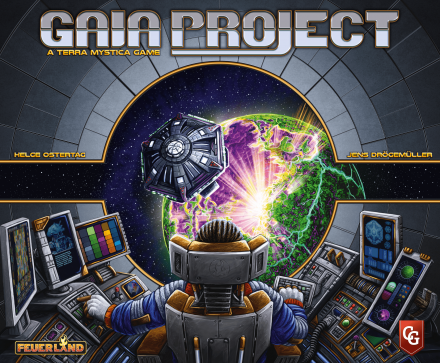
Gaia Project is a new game in the line of Terra Mystica. As in the original Terra Mystica, fourteen different factions live on seven different kinds of planets, and each faction is bound to their own home planets, so to develop and grow, they must terraform neighboring planets into their home environments in competition with the other groups. In addition, Gaia planets can be used by all factions for colonization, and Transdimensional planets can be changed into Gaia planets.

All factions can improve their skills in six different areas of development — Terraforming, Navigation, Artificial Intelligence, Gaiaforming, Economy, Research — leading to advanced technology and special bonuses. To do all of that, each group has special skills and abilities.

The playing area is made of ten sectors, allowing a variable set-up and thus an even bigger replay value than its predecessor Terra Mystica. A two-player game is hosted on seven sectors.

Game Specifications:

  • 1 – 4 Players
  • 60 – 150 Minutes
  • Difficulty Weight 4.40

Frostpunk: The Board Game

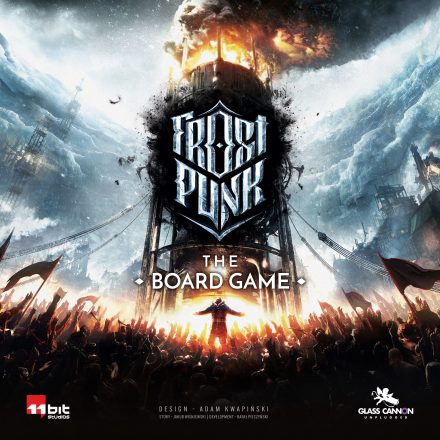
In Frostpunk: The Board Game, up to four players will take on the role of leaders of a small colony of survivors in a post-apocalyptic world that was hit by a severe ice age. Their duty is to effectively manage both its infrastructure and citizens. The core gameplay will be brutal, challenging, and complex, but easy to learn. The citizens won’t just be speechless pieces on the board. Society members will issue demands and react accordingly to the current mood, so every decision and action bears consequences.

The players will decide the fate of their people. Will you treat them like another resource? Are you going to be an inspiring builder, a fearless explorer, or a bright scientist? Is your rule going to be a sting of tyranny or an era of law and equality?

The game is based on a bestseller video game by 11bit studios, the creators of This War Of Mine. The original (digital) edition of Frostpunk is a highly successful strategy-survival-city-builder, a BAFTA-nominee that originally launched in 2018.

Game Specifications:

  • 1 – 4 Players
  • 120 – 150 Minutes
  • Difficulty Weight 4.39

Wendake

Wendake

Wendake

“Wendake” is the name that the Wyandot people use for their traditional territory. This population, also known as the Huron Nation, lived in the Great Lakes region, together with the tribes who formed the Iroquois Confederacy, and many others. In this game, you will explore the traditions and everyday life of these tribes during the 1756–1763 period, when the Seven Years’ War between the French and the English took place in these territories.

But this white man’s war is only a marginal aspect of the game; the focus is on life in the native villages, fields, and forests. In this game, you won’t find the traditional tipis, which were used by southwestern tribes who moved their camps to follow the bison herds. The natives of the Great Lakes were more sedentary, living in longhouses. The women farmed beans, corn, and pumpkins, while the men hunted beavers in the forests, mainly to sell their pelts as leather.

In Wendake, you step into the shoes of the chief of a Native American tribe. You will have to manage the most important aspects of your tribe’s daily existence, thereby earning points on the Economic, Military, Ritual, and Mask tracks. The core of the game is the action selection mechanism: you will have the opportunity to choose better and better actions over 7 years (i.e., rounds), and the winner will be the chief who finds the best combinations of actions and uses them to lead their tribe to prosperity!

Game Mechanics:

  • Area Control
  • Area Movement
  • Economic
  • Set Collection
  • Worker Placement

Game Specifications:

  • 1 – 4 Players
  • 60 – 120 Minutes
  • Difficulty Weight 3.61

Tzolk’in

Tzolk'in

Tzolk'in

Tzolkin: The Mayan Calendar presents a new game mechanism: dynamic worker placement. Players representing different Mayan tribes place their workers on giant connected gears, and as the gears rotate they take the workers to different action spots.

During a turn, players can either (a) place one or more workers on the lowest visible spot of the gears or (b) pick up one or more workers. When placing workers, they must pay corn, which is used as a currency in the game. When they pick up a worker, they perform certain actions depending on the position of the worker. Actions located “later” on the gears are more valuable, so it’s wise to let the time work for you – but players cannot skip their turn; if they have all their workers on the gears, they have to pick some up. 

The game ends after one full revolution of the central Tzolkin gear. There are many paths to victory. Pleasing the gods by placing crystal skulls in deep caves or building many temples are just two of those many paths…

Game Mechanics:

  • Civilization
  • Economic
  • Worker Placement

Game Specifications:

  • 2 – 4 Players
  • ~90 Minutes
  • Difficulty Weight 3.67

Troyes

Troyes

Troyes

In Troyes (pronounced “troah”), players recreate four centuries of history of this famous city of the Champagne region of France. Each player manages their segment of the population (represented by a horde of dice) and their hand of cards, which represent the three primary domains of the city: religious, military, and civil. Players can also offer cash to their opponents’ populace in order to get a little moonlighting out of them — anything for more fame!

Game Mechanics:

  • Area Control
  • Dice Rolling
  • Economic
  • Set Collection
  • Worker Placement

Game Specifications:

  • 1 – 4 Players
  • ~90 Minutes
  • Difficulty Weight 3.46

Through the Ages

Through the Ages

Through the Ages

Through the Ages is a civilization building game. Each player attempts to build the best civilization through careful resource management, discovering new technologies, electing the right leaders, building wonders and maintaining a strong military. Weakness in any area can be exploited by your opponents. The game takes place throughout the ages beginning in the age of antiquity and ending in the modern age.

One of the primary mechanisms in TTA is card drafting. Technologies, wonders, and leaders come into play and become easier to draft the longer they are in play. In order to use a technology you will need enough science to discover it, enough food to create a population to man it and enough resources (ore) to build the building to use it. While balancing the resources needed to advance your technology you also need to build a military. Military is built in the same way as civilian buildings. Players that have a weak military will be preyed upon by other players. There is no map in the game so you cannot lose territory, but players with higher military will steal resources, science, kill leaders, take population or culture. It is very difficult to win with a large military, but it is very easy to lose because of a weak one.

Victory is achieved by the player whose nation has the most culture at the end of the modern age.

Game Mechanics:

  • Action Points
  • Auction/Bidding
  • Civilization
  • Economic
  • Hand Management
  • Open Drafting
  • Tableau Building

Game Specifications:

  • 2 – 4 Players
  • ~120 Minutes
  • Difficulty Weight 4.17

Terra Mystica

Terra Mystica

Terra Mystica

In the land of Terra Mystica dwell 14 different peoples in seven landscapes, and each group is bound to its own home environment, so to develop and grow, they must terraform neighboring landscapes into their home environments in competition with the other groups.

Terra Mystica is a full information game, without any luck, that rewards strategic planning. Each player governs one of the 14 groups. With subtlety and craft, the player must attempt to rule as great an area as possible and to develop that group’s skills. There are also four religious cults in which you can progress. To do all that, each group has special skills and abilities.

Taking turns, the players execute their actions on the resources they have at their disposal. Different buildings allow players to develop different resources. Dwellings allow for more workers. Trading houses allow players to make money. Strongholds unlock a group’s special ability, and temples allow you to develop religion and your terraforming and seafaring skills. Buildings can be upgraded: Dwellings can be developed into trading houses; trading houses can be developed into strongholds or temples; one temple can be upgraded to become a sanctuary. Each group must also develop its terraforming skill and its skill with boats to use the rivers. The groups in question, along with their home landscape, are:

  • Desert (Fakirs, Nomads)
  • Plains (Halflings, Cultists)
  • Swamp (Alchemists, Darklings)
  • Lake (Mermaids, Swarmlings)
  • Forest (Witches, Auren)
  • Mountain (Dwarves, Engineers)
  • Wasteland (Giants, Chaos Magicians)

Proximity to other groups is a double-edged sword in Terra Mystica. Being close to other groups gives you extra power, but it also means that expanding is more difficult…

Game Mechanics:

  • Civilization
  • Economic
  • Network Building
  • Tableau Building

Game Specifications:

  • 2 – 5 Players
  • 60 – 150 Minutes
  • Difficulty Weight 3.97

Tawantinsuyu

Tawantinsuyu

Tawantinsuyu

The great Sapa Inca Pachacuti turned to his offspring and ordered them to worship Inti, the Sun God, and to expand the Inca Empire as far as the llamas roam. With Chinchaysuyu, Antisuyu, Qullasuyu, and Kuntisuyu — the four regions of the new empire — now ripe for conquest, the time has come for Pachacuti’s true successor to arise.

Gather your people from the villages below and use their unique abilities to strategically place them where they can perform the greatest tasks for you. Climb the steps of the Sun Temple, reaping the rewards of your piety. Build structures that both nourish your people and provide you with benefits no other has at their disposal. Muster an army and conquer villages in the four realms of Tawantinsuyu. Prove yourself a worthy successor to Pachacuti and lead the Inca to glory!

During Tawantinsuyu: The Inca Empire, players place workers onto various locations on the game board, performing actions, collecting resources (potatoes, corn, stone, and gold), constructing buildings and stairs, sculpt statues, expanding their military strength, and collecting weavings.

The game board features a hill located within the old Inca capital of Cusco, the sides of which are terraced and divided into five sections. Atop the hill sits the Coricancha, The Golden Temple, the most important temple of the Inca Empire. Within the Coricancha, each player has a High Priest. On the terraced sections below exist a variety of worker placement locations, interconnected by paths and individually marked by symbols. On your turn, you must either place a worker onto a location outside the Coricancha OR choose two of the following:

  • Recruit one worker.
  • Take two god cards.
  • Draw two army cards and keep one of them.
  • Move your High Priest one or two steps clockwise within the Coricancha.

When placing a worker, you must first discard a god card with a matching symbol or pay one gold. Once placed, the worker remains on the game board for the rest of the game! Each worker placement location is connected to exactly three action spaces. You must always perform at least one of these actions. However, for each adjacent worker (i.e., connected to your worker’s location via direct path through one of the action spaces) that matches the type of worker just placed, you receive one additional action!

While some locations will result in you being able to perform multiple actions, other actions and placements may be more desirable, especially since each of the five types of workers has a unique ability:

  • Warrior: Remove one of the adjacent workers, placing it in your player area.
  • Craftsman: Gain +1 action if placed onto a craftsman space.
  • Architect: Gain +1 action if placed onto an architect space.
  • Courier: Decreased placement cost; +1 action if it’s the first worker placed within a given area.
  • Priest: Take one god card; you may pay one potato to gain +1 action.

All god cards feature one of the different symbols found on the worker placement locations. Before placing a worker, you must either discard a god card with a matching symbol or pay valuable gold resources. God cards also depict special abilities that can be activated only if you have previously built a matching statue!

Army cards allow you to send one or more units to conquer villages in nearby regions. You must compete against the other players for control of each region as well as for valuable rewards that can be gained as a result of military conquest.

The position of your High Priest within the Coricancha has a significant impact on your overall strategy, affecting your access to powerful actions and determining any potential resource costs when placing your workers. More specifically, when placing a worker, you must pay additional resources the farther your worker is from your High Priest, from nothing all the way up to eight potatoes or corn!

Additionally, when moving your High Priest, you can activate powerful actions available only within the Coricancha:

  • Produce: Gain all rewards from your production buildings.
  • Worship: Sacrifice previously sculpted statues to gain permanent temple advancements.
  • Offering: Pay resources to gain temple advancements.
  • Conquer: Engage in military conquest of nearby villages.
  • Rejuvenate: Refresh previously activated buildings and military units.

Throughout the game, you score victory points whenever you construct stairs or sculpt statues. Gain bonus victory points whenever another player makes use of the stairs you have constructed. Score victory points from temple advancements and control of the four regions.

The game ends when the worker pool has become exhausted, symbolizing the full incorporation of nearby regions and villages into the newly risen Inca Empire. You then score bonus victory points from reaching the top of the temple, from your woven tapestries, and from various buildings and resources you have accumulated.

Game Mechanics:

  • Action Points
  • Area Control
  • Civilization
  • Economic
  • Hand Management
  • Open Drafting
  • Pattern Building
  • Rondel
  • Set Collection
  • Worker Placement

Game Specifications:

  • 1 – 4 Players
  • 60 – 120 Minutes
  • Difficulty Weight 4.07