Category: Ω Board Games

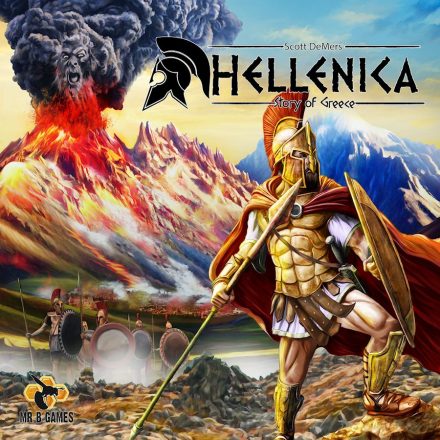
Hellenica: Story of Greece

An explosion of creativity and violence erupted in the Aegean Basin in 800 B.C. that defined ancient Greece. This combination of science, mythology, development, and war was led by powerful city-states like Athens, Sparta, Corinth, Troy, Byzantium, Corcyra, and Thebes. These states vied for control over their rivals and dominated the lesser states around them. In time, some of them became so well known that they are remembered even today.

Hellenica: Story of Greece is a 3.5X civilization game in which you harness the powers of one of seven beginning city-states to dominate the world around you. Your goal is to become the preeminent symbol of Greece for all posterity by completing a combination of secret and public goals. Will you be remembered as a warmonger or a peaceful philosopher? Great priest or apostate? Will you develop a devotion to the gods or focus on the advancement of your people?

Can you guide your civilization during these turbulent times? Will your vision of Hellenic civilization be remembered for all time, or will you merely be a stepping stone for another…?

Game Specifications:

  • 1 – 7 Players
  • 120 – 180 Minutes
  • Difficulty Weight 3.26

Hellboy: the Board Game

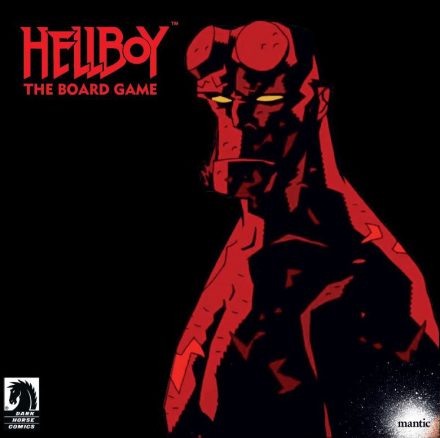
Hellboy: The Board Game is a co-operative experience in which players face off against some of the comic’s most famous foes. Up to four people take control of iconic BPRD members, such as Hellboy, Abe Sapien, and Roger the Homunculus, then explore gothic locations and uncover ancient artifacts.

Game Specifications:

  • 1 – 4 Players
  • 60 – 90 Minutes
  • Difficulty Weight 2.92

Hansa Teutonica: Big Box

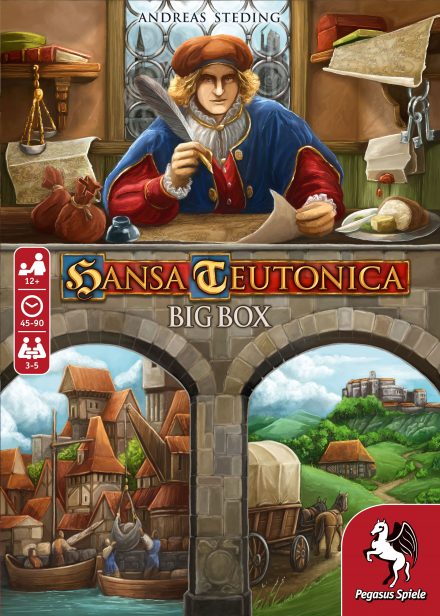
The multi-award-winning strategy game Hansa Teutonica is back in a Big Box edition including the base game and all expansions. In the game, players attempt to increase their standing as merchants in the Hanseatic League by gaining prestige points in various ways. For instance, they can try to establish a network of counting offices in new Hansa cities by occupying an entire trade route between two cities — but before that happens, player markers can also be displaced by other players. Players may also aim to develop their trading skills, improving their abilities throughout the course of play. With only two actions per turn and a variety of contested opportunities, every turn is equally quick and strategically demanding.

Game Specifications:

  • 2 – 5 Players
  • 45 – 90 Minutes
  • Difficulty Weight 3.11

Hallertau

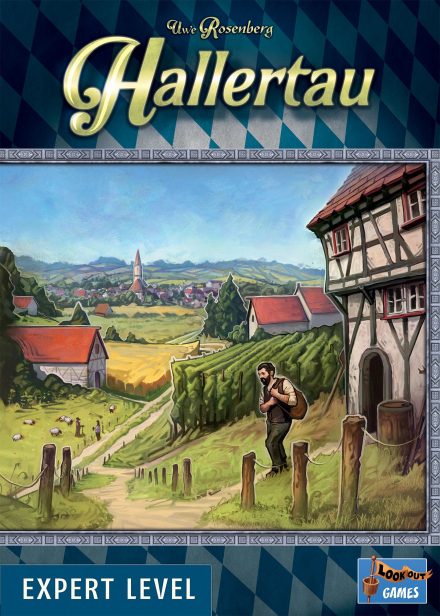
The Hallertau in Bavaria, Germany is the largest continuous hop-producing region in the world. It prides itself upon being the first in Middle Europe to cultivate hops. This game is set around 1850, when the Hallertau became what it is today.

As chief of a small Bavarian village in the Hallertau, your objective is to increase its wealth and prestige in the eyes of the world.

To achieve this, you will need to supply the local crafts folk with goods from agriculture and sheep breeding.

Place your workers, play your cards right, and let your village shine!

  • Progressive Worker Placement: Action spaces can be used multiple times, becoming more expensive in the process.
  • Two-Field Rotation System: Fields lose their potency over time so fallowing fields allows them to become increasingly effective.
  • Card Combos: You can play cards at any time; this timing—and the combination of cards—can be very powerful.
  • Sheep with an Expiration Date: Breeding sheep early comes with a lot of perks, but, eventually, sheep will die of natural causes.

Game Specifications:

  • 1 – 4 Players
  • 50 – 140 Minutes
  • Difficulty Weight 3.30

Hadrian’s Wall

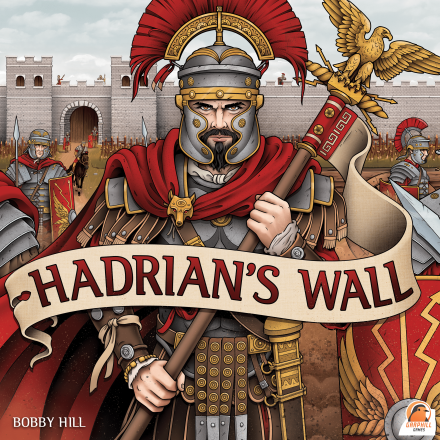
When visiting the North of Britannia in 122 AD, the Roman Emperor Hadrian Augustus witnessed the aftermath of war between his armies and the savage Picts. In a show of Roman might, he ordered a wall to be built that would separate the Pict tribes from the rest of England. Grand in its design, the wall stretched 80 Roman miles, from coast to coast. Hadrian’s Wall stood in service to the Roman Empire for nearly 300 years before its eventual decline. Today, Hadrian’s Wall is a UNESCO World Heritage Site and the remains of the forts, towers, and turrets can still be explored.

In Hadrian’s Wall, players take on the role of a Roman General placed in charge of the construction of a milecastle and bordering wall. Over six years (rounds), players will construct their fort and wall, man the defenses, and attract civilians by building services and providing entertainment — all while defending the honor of the Roman Empire from the warring Picts. The player who can accumulate the most renown, piety, valor and discipline, whilst avoiding disdain, will prove to the Emperor they are the model Roman citizen and be crowned Legatus Legionis!

Game Specifications:

  • 1 – 6 Players
  • 30 – 60 Minutes
  • Difficulty Weight 3.11

Gutenberg

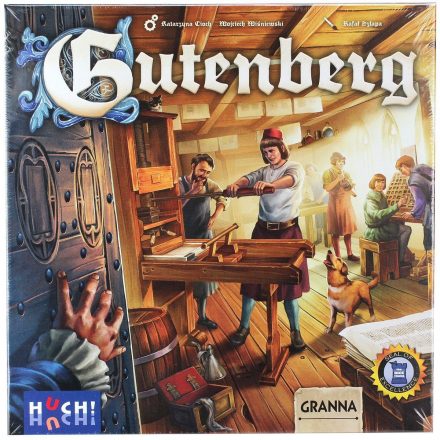
Gutenberg is a board game for 1-4 people in which players will play as the pioneers of printing in the 15th century. By carrying out orders, they will build their wealth and fame. By improving their printing workshops and gaining the support of patrons, they will develop their production capacity. The game will be won by a printer who boasts the greatest recognition and wealth.

By bidding for specific actions, players will develop their workshop, acquire new fonts, inks and decorations. The unique system of rotating gears allows you to combine bonuses and earn a large number of points.

The game is won by the player with the most points after six rounds.

Game Mechanics:

  • Auction/Bidding
  • Open Drafting
  • Worker Placement

Game Specifications:

  • 1 – 4 Players
  • 60 – 120 Minutes
  • Difficulty Weight 2.63

Grand Austria Hotel

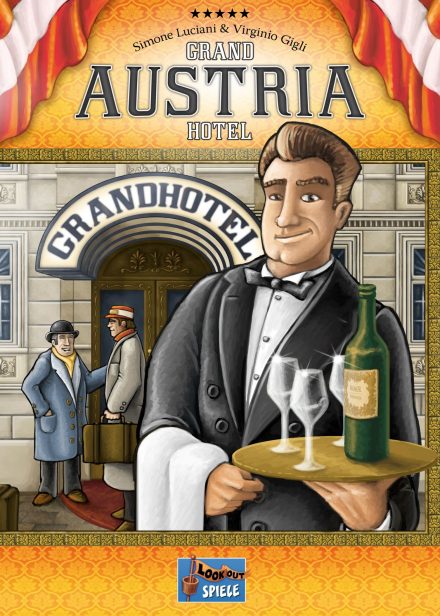
In the thick of the Viennese modern age, exquisite cafés are competing for customers. Inspiring artists, important politicians, and tourists from all over the world are populating Vienna and in need of a hotel room. This is your opportunity to turn your little café into a world famous hotel. Hire staff, fulfill the wishes of your guests, and gain the emperor’s favor. Only then will your café become the Grand Austria Hotel.

The start player rolls the dice, sorting them by the rolled number and placing them on the corresponding action spaces. On a turn, a player chooses one of the six actions and carries it out. The number of the available dice in the corresponding action spaces determines how much the player gets from the action. They then remove one of the dice and can carry out additional actions. With the different actions, a player can get the necessary drinks and dishes, prepare the rooms, or hire staff.

But no hotel can grow without guests. To choose wisely which guests to attract and to complete their orders brings some important bonus actions. The staff cards also have different advantages, but the game ends after seven rounds and no player can do everything they want, so whoever makes the right decisions and finds the best way to create bonus actions will win.

With 116 different cards and a new set-up in each game, Grand Austria Hotel provides a huge replay value. Each game stands on its own and demands new tactics and strategies.

Game Specifications:

  • 2 – 4 Players
  • 60 – 120 Minutes
  • Difficulty Weight 3.22

Glass Road

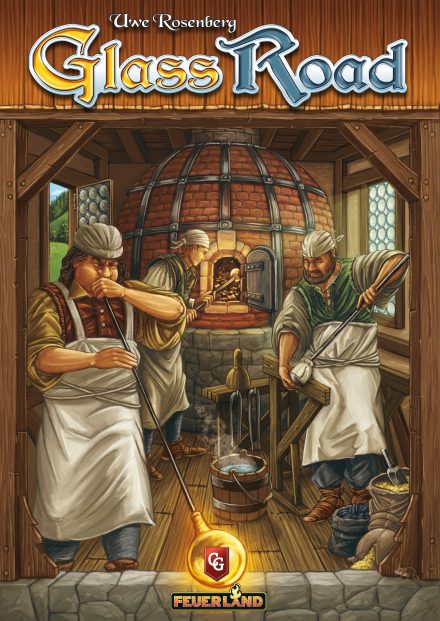
The game Glass Road commemorates the 700-year-old tradition of glass-making in the Bavarian Forest. (Today, the “Glass Road” is a route through the Bavarian forest that takes visitors to many of the old glass houses and museums of that region.) You must skillfully manage your glass and brick production in order to build the right structures that help you keep your business flowing. Cut the forest to keep the fires burning in the ovens, and spread and remove ponds, pits, and groves to supply yourself with the items you need. Fifteen specialists are there at your side to carry out your orders…

In more detail, the game consists of four building periods. Each player has an identical set of fifteen specialist cards, and each specialist comes with two abilities. At the beginning of each building period, you choose a hand of five specialists. If during this building period, you play a specialist that no other player has in hand, you may use both abilities on that card; if two or more players play the same specialist, each of them may use only one of the two abilities. Exploiting the abilities of these specialists lets you collect resources, lay out new landscape tiles (e.g., ponds and pits), and build a variety of buildings, which come in three types:

  • Processing buildings
  • “Immediate” buildings with a one-time effect
  • Buildings that provide bonus points at the end of the game for various accomplishments

Mastering the balance of knowing the best specialist card to play and being flexible about when you play it — together with assembling a clever combination of buildings — is the key to this game.

Game Specifications:

  • 1 – 4 Players
  • 20 – 80 Minutes
  • Difficulty Weight 2.96

Ginkgopolis

2212: Ginkgo Biloba, the oldest and strongest tree in the world, has become the symbol of a new method for building cities in symbiosis with nature. Humans have exhausted the resources that the Earth offered them, and humanity must now develop cities that maintain a delicate balance between resource production and consumption. Habitable space is scarce, however, and mankind must now face the challenge of building ever upwards. To develop this new type of city, you will gather a team of experts around you, and try to become the best urban planner for Ginkgopolis.

In Ginkgopolis, the city tiles come in three colors: yellow, which provides victory points; red, which provides resources; and blue, which provides new city tiles. Some tiles start in play, and they’re surrounded by letter markers that show where new tiles can be placed.

On a turn, each player chooses a card from his hand simultaneously. Players reveal these cards, adding new tiles to the border of the city in the appropriate location or placing tiles on top of existing tiles. Each card in your hand that you don’t play is passed on to your left-hand neighbor, so keep in mind how your play might set up theirs!

When you add a new tile to the city, you take a “power” card of the same color, and these cards provide you additional abilities during the game, allowing you to scale up your building and point-scoring efforts.

Game Specifications:

  • 1 – 5 Players
  • ~45 Minutes
  • Difficulty Weight 2.91

Ghost Stories

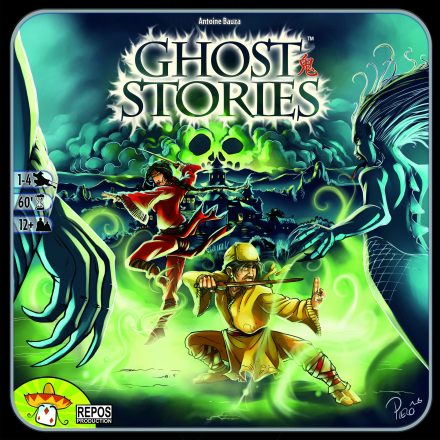
Ghost Stories is a cooperative game in which the players protect the village from incarnations of the lord of hell – Wu-Feng – and his legions of ghosts before they haunt a town and recover the ashes that will allow him to return to life. Each Player represents a Taoist monk working together with the others to fight off waves of ghosts.

The players, using teamwork, will have to exorcise the ghosts that appear during the course of the game. At the beginning of his turn, a player brings a ghost into play and places it on a free spot, and more than one can come in at the same time. The ghosts all have abilities of their own – some affecting the Taoists and their powers, some causing the active player to roll the curse die for a random effect, and others haunting the villager tiles and blocking that tile’s special action. On his turn, a Taoist can move on a tile in order to exorcise adjacent ghosts or to benefit from the villager living on the tile, providing it is not haunted. Each tile of the village allows the players to benefit from a different bonus. With the cemetery, for example, Taoists can bring a dead Taoist back to life, while the herbalist allows to recover spent Tao tokens, etc. It will also be possible to get traps or move ghosts or unhaunt other village tiles.

To exorcise a ghost, the Taoist rolls three Tao dice with different colors: red, blue, green, yellow, black, and white. If the result of the roll matches the color(s) of the ghost or incarnation of Wu-Feng, the exorcism succeeds. The white result is a wild color that can be used as any color. For example, to exorcise a green ghost with 3 resistance, you need to roll three green, three white, or a combination of both. If your die rolls fall short, you can also use Tao tokens that match the color in addition to your roll. You may choose to use these after your roll. Taoists gain these tokens by using certain village tiles or by exorcising certain ghosts. One of the Taoists has a power that allows him to receive such a token once per turn.

To win, the players must defeat the incarnation of Wu-Feng, a boss who arrives at the end of the game. There are also harder difficulty levels that add more incarnations of Wu-Feng, in which to win, you must defeat all of them.

There are many more ways to lose, however. The players lose if three of the village’s tiles are haunted, if the draw pile is emptied while the incarnation of Wu-Feng is still in play, or if all the priests are dead.

Game Specifications:

  • 1 – 4 Players
  • ~60 Minutes
  • Difficulty Weight 2.91