Tag: Action Drafting

Action drafting is a game mechanic where players compete to obtain an action from a shared pool of actions.

Rising Sun

Rising Sun

Rising Sun

The great and forgotten Kami have returned from the underworld, displeased with the affairs of the Empire’s present Shōgun. At the start of spring in the Great New Year, the Kami have gathered their sacred clans with one quest: reclaim the lands of Nippon and return them to their honorable, spiritual traditions. However, each clan is bound by their own proud traditions to a unique vision for this great return and must wage a powerful diplomatic war across eight provinces. Alliances must be forged, betrayal is inevitable, honorable standing rises and falls. Political mandates must be navigated and devastating war must be fought, each won by expert skill and cunning negotiation. And only one may stand victorious at the coming of winter. You, honorable Shōgun, lead one of these great clans. Do you have the strength of honor, virtue, and spirit, as well as the mastery of steel necessary to deliver on this ancient promise?

Rising Sun is a board game for 3 to 5 players set in legendary feudal Japan. Each player chooses a Clan and competes to lead theirs to victory by accumulating Victory Points over the course of the Seasons. Each Clan possesses a unique ability and differs in Seasonal Income, Starting Honor Rank, and Home Province.
Over the course of the game, players will forge and break alliances, choose political actions, worship the gods, customize their clans, and position their figures around Japan. In the process, Honor is a palpable element in Rising Sun: Having high Honor gives several advantages, while having low Honor may grant the allegiance of the darker elements of the world. But above all, Honor settles all disputes: Whenever there is a tie, the tied player with the highest Honor wins.

In Rising Sun, players are encouraged to use diplomacy, negotiation, and even bribery to further their cause. Players can make deals at any point in the game but no deals are truly binding.
Victory Points can be gained in several ways, from winning battles, to harvesting the right provinces, to playing to the Virtues accumulated by your Clan.

The game is played over the course of 4 rounds or Seasons: Spring, Summer, and then Autumn; when Winter comes, the game draws to a close and players calculate bonuses to decide who is the winner.
Each Season is divided into five phases:
1) Seasonal Setup because every Season has a certain Season deck with different cards,
2) Tea Ceremony in which players sit down and negotiate their Alliances for the Season,
3) Political Phase during which players will select Political Mandates to prepare their Clans and position their forces,
4) War Phase, during which players battle over several Provinces, and
5) Seasonal Cleanup.

As already mentioned, the start of the Winter Season signifies the end of the game. Peace falls over the land as it gets covered in white snow, and a new Emperor will rise under the power of the great Kami.

Game Mechanics:

  • Action Drafting
  • Area Control
  • Area Movement
  • Bluffing
  • Closed Drafting
  • Negotiation
  • Set Collection
  • Take That
  • Wargame

Game Specifications:

  • 3 – 5 Players
  • 90 – 120 Minutes
  • Difficulty Weight 3.29

Puerto Rico: 1897

Puerto Rico: 1897

Puerto Rico: 1897

Puerto Rico 1897 takes place the year after Puerto Rico achieved political autonomy and separated itself from the colonial Spanish government. In the game, you take on the role of an independent Puerto Rican farmer in this new era and compete against others to hire workers to grow, sell, and trade valuable crops. You will also be in charge of resurrecting parts of the country as you attempt to build vital city infrastructure. Your goal throughout the game is to acquire more wealth and prestige than your opponents and become the most prosperous farmer across the country.

Each player has their own small board with spaces for city buildings, plantations, and resources. Shared between the players are three ships, a trading house, and a supply of resources and doubloons.

The resource cycle of the game is that players grow crops that they exchange for points or doubloons. Doubloons can then be used to buy buildings, which allow players to produce more crops or give them other abilities. Buildings and plantations do not function unless they are staffed by workers.

During each round, players take turns selecting a role card from those on the table (such as “Trader” or “Builder”). When a role is chosen, every player gets to take the action associated with that role. The player who selected the role also receives a small privilege for doing so; for example, choosing the “Builder” role allows all players to construct a building, but the player who chose the role may do so at a discount on that turn. Unused roles gain a doubloon bonus at the end of each turn, and the next player who chooses that role gets to keep any doubloon bonus associated with it. This encourages players to make use of all the roles throughout a typical course of a game.

Puerto Rico 1897 uses a variable phase order mechanism in which a token is passed clockwise to the next player at the conclusion of a turn. The player with the token begins the round by choosing a role and taking the first action.

Players earn victory points for owning buildings, for shipping goods, and for occupied “large buildings”. Each player’s accumulated shipping chips are kept face down and come in denominations of one or five. This prevents other players from being able to determine the exact score of another player. Goods and doubloons are placed in clear view of other players, and the totals of each can always be requested by a player. As the game enters its later stages, the unknown quantity of shipping tokens and its denominations require players to consider their options before choosing a role that can end the game.

Game Mechanics:

  • Action Drafting
  • Economic
  • Tableau Building

Game Specifications:

  • 2 – 5 Players
  • 70 – 120 Minutes
  • Difficulty Weight 3.00

Grand Austria Hotel

Grand Austria Hotel

Grand Austria Hotel

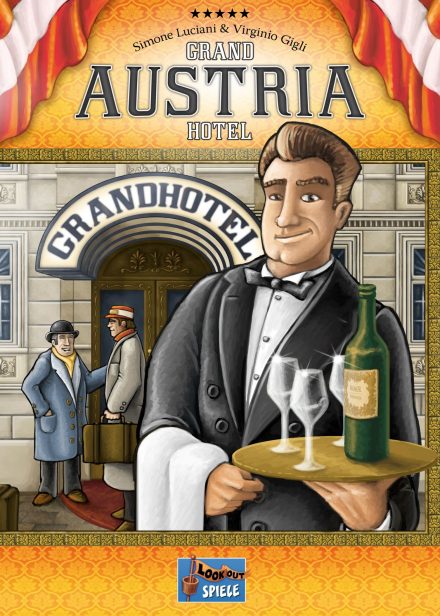
In the thick of the Viennese modern age, exquisite cafés are competing for customers. Inspiring artists, important politicians, and tourists from all over the world are populating Vienna and in need of a hotel room. This is your opportunity to turn your little café into a world famous hotel. Hire staff, fulfill the wishes of your guests, and gain the emperor’s favor. Only then will your café become the Grand Austria Hotel.

The start player rolls the dice, sorting them by the rolled number and placing them on the corresponding action spaces. On a turn, a player chooses one of the six actions and carries it out. The number of the available dice in the corresponding action spaces determines how much the player gets from the action. They then remove one of the dice and can carry out additional actions. With the different actions, a player can get the necessary drinks and dishes, prepare the rooms, or hire staff.

But no hotel can grow without guests. To choose wisely which guests to attract and to complete their orders brings some important bonus actions. The staff cards also have different advantages, but the game ends after seven rounds and no player can do everything they want, so whoever makes the right decisions and finds the best way to create bonus actions will win.

With 116 different cards and a new set-up in each game, Grand Austria Hotel provides a huge replay value. Each game stands on its own and demands new tactics and strategies.

Game Mechanics:

  • Action Drafting
  • Dice Drafting
  • Dice Rolling
  • Economic
  • Hand Management
  • Set Collection

Game Specifications:

  • 2 – 4 Players
  • 60 – 120 Minutes
  • Difficulty Weight 3.22

Gentes: Deluxified Edition

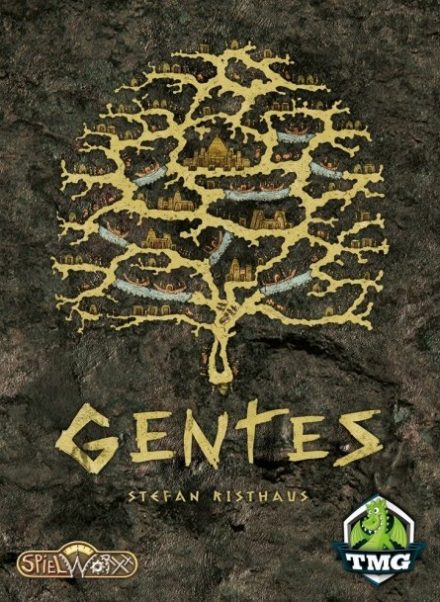
“Gentes” is the Latin plural word for greater groups of human beings (e.g., tribes, nations, people; singular: “gens”). In this game, players take the role of an ancient people who are attempting to develop by building monuments and colonizing or founding new cities in the Mediterranean sea.

The game is played in six rounds, each consisting of two phases: action phase, and tidying up. There are three eras — rounds 1-2, 3-4, 5-6 — with new monument cards entering the game at the beginning of rounds 1, 3 and 5. Each player has a personal player mat with a time track for action markers and sand timer markers. In the action phase of a round, the players take their turns in clockwise order, conducting one action per turn. Each action requires an action marker from the main board that is placed on the time track. Depending on the information on the action marker, you have to also pay some money or take sand timers that are placed on the time track. When you have no free spaces on your time track, you must pass for the remainder of the round. Therefore, the number of actions per player in a single round may vary significantly if, for example, you choose double sand timers instead of two single ones or take action markers that require more money but fewer sand timers. Single sand timers are dropped in the tidying up phase, while double sand timers are flipped to become single sand timer markers and stay for another round. The actions are:

Buy new cards from the common display
Build monuments (playing cards from your hand to your personal display for victory points and new options)
Train/Educate your people
Build/found cities
Take money
To play a card, you must meet the requirements printed on that card, such as having specific persons on your personal board (e.g., two priests and four soldiers). These requirements are why training — i.e., getting specific people — is important, but that is not that easy because there are six different types of people — three on the left and three on the right side of your personal player board — and you have only six spaces in total for the two types in the same line. If you have three merchants, for example, you move your marker for counting merchants three spaces toward the side of the soldiers and thus you have only three spaces left for soldiers. By educating a fourth soldier and moving your soldier marker forward to its fourth space, you automatically lose one merchant because that marker is pushed back to its second space.

It is crucial to generate additional actions by using the specific functions of monuments in your display and cities you have built. Cities are expensive, but they create benefits at the end of each round or provide new options for taking an action without acquiring an action marker, gaining only a sand timer marker instead.

Try to have a steady income to avoid wasting actions to take money. Pay attention to the display of common cards, which is new in every single game, because the monument cards are shuffled randomly within the decks of eras I, II and III. Collect identical achievement symbols on the cards to benefit from the increasing victory points for a series of symbols. Build cities to enlarge your options!

Game Specifications:

  • 1 – 4 Players
  • 75 – 120 Minutes
  • Difficulty Weight 3.25

Orichalcum

Orichalcum

Orichalcum

Orichalque is a tense and fast-pace strategy game – similar to a short 4X. Each player has their own Island board to explore and develop. On each turn, they choose a set of one Exploration tile and one Action : recruit hoplites, produce precious orichalcum (a legendary metal from Greek mythology), construct buildings granting powerful bonuses, or try to get rid of Monsters infesting your island (and preventing you to build new building).

To prevail, you will need to erect majestic temples, forge orichalcum tokens or win the favors of titans (by creating areas of their favorite landscapes. The first to get to 5 victory points while clearing their Island of all Monsters wins the game.

Game Mechanics:

  • Action Drafting
  • Dice Rolling
  • Racing
  • Tile Placement

Game Specifications:

  • 2 – 4 Players
  • 45 – 60 Minutes
  • Difficulty Weight 2.57

Dice Hospital

In Dice Hospital, a worker placement game, players must treat as many patients as possible to appease the local authorities! Players use their hospital staff to treat patients on their personal hospital player boards. However, players may also call in specialist staff to react to certain situations that arise to score more points with the authorities! The game uses worker placement mechanics for the staff, dice as the patients where low scores indicate low health and a personal player board of actions to treat patients. The player with the highest reputation wins the game!

Game Mechanics:

  • Action Drafting
  • Action Points
  • Dice Rolling
  • Modular Board
  • Solo / Solitaire Game
  • Worker Placement

Game Specifications:

  • 1 – 4 Players
  • 45 – 90 Minutes
  • Difficulty Weight 2.33