posts page

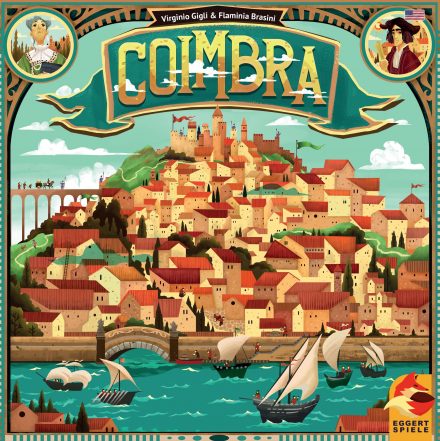
Coimbra

In the 15th and 16th century, Portugal is thriving under its leading role during the Age of Discovery. Nestled in the heart of Portugal, the city of Coimbra serves as a cultural center of the country. As the head of one of Coimbra’s oldest houses, you seek to earn prestige by deepening relationships with nearby monasteries or funding expeditions of the era. To reach this goal, you must vie for the favors of the city’s most influential citizens, even if you must offer a bit of coin or some protective detail.

Coimbra introduces an innovative new dice mechanism in which the dice players draft each round are used in multiple different ways and have an impact on many aspects of their decision making. While there are many paths to victory, players should always seek to optimize their opportunities with every roll of the dice. Combined with ever-changing synergies of the citizens, expeditions, and monasteries, no two games of Coimbra will ever be the same!

Game Mechanics:

  • Auction / Bidding
  • Open Drafting
  • Set Collection
  • Tech Trees / Tech Tracks
  • Variable Set-up
  • Worker Placement

Game Specifications:

  • 2 – 4 Players
  • 60 – 90 Minutes
  • Difficulty Weight 3.25

Code 3

Code 3 is a cooperative, story-driven, 80s-themed crime fighting game. Can you save your city from badly-named mob bosses, fear-inducing serial killers, a rising crime rate, and a police Chief that isn’t always your friend? These officers may have 99 problems, but crime ain’t one.

Code 3’s cooperative scenarios challenge players to complete goals and make choices before revealing the next part of a branching story arc. Of course, mob bosses aren’t the only thing hindering our officers, as 911 calls spread like wildfire about your city. If too many 911 calls go unanswered… the game is lost.

Customize your crime fighting duo by selecting two officers (out of hundreds of officer combinations), each with their own unique deck, which are then shuffled together to create your “Beat Partners” deck.

You can tailor your Beat Partners deck to answer 911 calls quickly, to investigate for witnesses and evidence, to complete scenario objectives, or even move your beat cops into position to help your allies. There are hundreds of character combinations that you can experiment with, and finding the best two cops (or canines!) is key to your team’s victory! Choices are everywhere!

Most importantly, Code 3 gives players the opportunity to handle things by the book… or play just outside the rules. However, if players choose to step outside the Police Department’s Code of Conduct then the Internal Affairs Division starts investigating them. Players then shuffle “IA Heat” cards into their deck, and if two are ever drawn on the same turn, those players must immediately proceed to a contentious “Internal Affairs Interview.” Unfortunately, this prevents players from hitting the street and handling those 911 calls. Your teammates can help you during the IA Interview by vouching for you… but at what cost? Are they willing to put their reputation on the line for you? Are they willing to risk their own IA Interview?

Code-3 is a sand box of 80’s cop action. Do you love rolling dice? Do you love pushing your luck? Do you love unraveling the story? The meta-game? Helping the team? Being in charge? And… do you do it by the book? Find out now!

Game Mechanics:

  • Cooperative
  • Dice Rolling
  • Storytelling
  • Team Based
  • Variable Player Powers

Game Specifications:

  • 2 – 4 Players
  • 45 – 120 Minutes
  • Difficulty Weight 3.00

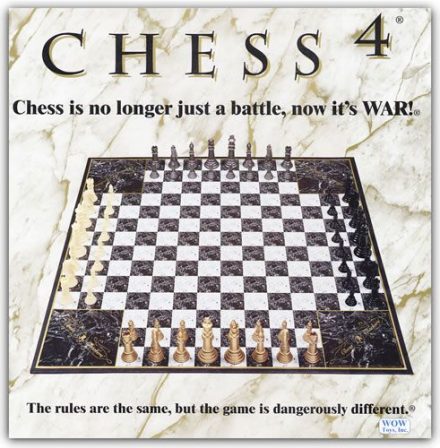
Chess 4

Four-Player Chess (Four-handed chess, Chess-4, and 4-Chess) is often credited to Capt Charles Verney, who was the first known to have documented the game in England in 1881. Four-player versions of chess probably have existed for hundreds of years prior to Verney in one form or another. Verney’s four-player board consists of three rows added to each side of a standard 2-player board, and four complete sets of chessmen in four different colors. Modern four-player boards and colored pieces are available from several manufacturers.

In Verney’s version (1881), 4 player chess was a partnership game, and the object was to checkmate both opposing partners at the same time. In modern variants, four player games can range from partners, to cutthroat (every player for himself), to temporary alliances at will.

Starting configuration affects fairness (bias). The standard 2-player configuration of queen facing queen is biased in four player chess because there is only one axis of symmetry. Four player chess requires two axes of symmetry to be fair (unbiased). To avoid bias, Verney recommended a staring configuration of all queens on light (or all on dark) squares. Another unbiased starting configuration is all queens on the right (or all on the left) of the king.

For the most part, four player chess follows (or can follow) all the normal rules of two-player chess. Verney had special rules for partnership playing, disallowed castling, and pawns had to make it to the enemies last rank in order to be exchanged for another piece. Pawns could also march up and back down the board. Verney also had checkmate as the ultimate move.

In modern variations of four-player chess, partnering may not be required, but allowable, castling can be allowed, and actual capturing of a king a required move to eliminate a player. The Chess Federation does not recognize four-player chess in any form, and there are no official rules, so players are free to experiment with variations and make their own rules.

Game Mechanics:

  • Abstract Strategy
  • Grid Movement
  • Player Elimination

Game Specifications:

  • 2 – 4 Players
  • ~45 Minutes
  • Difficulty Weight 2.89

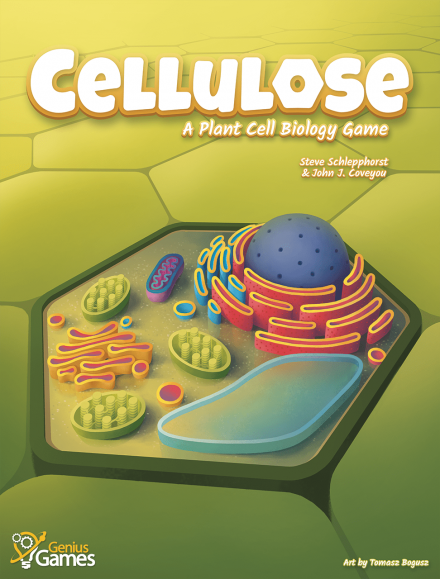
Cellulose: A Plant Cell Biology Game

Cellulose: A Plant Cell Biology Game is a worker placement game that puts 1-5 players inside a plant cell, where they will compete over limited resources in order to undergo photosynthesis, produce carbohydrates, and build the cell wall. With everyone vying for the same actions, players must time their use of proteins, hormones, and cell component cards in order to diversify their strategies and outplay the competition.

Cellulose is the standalone sequel to Cytosis (2017). It has some of the same DNA, but Cellulose expands familiar game systems, allowing players greater control over available resources, strategic paths, and even game length.

Game Mechanics:

  • Area Majority / Influence
  • Set Collection
  • Solo / Solitaire Play
  • Tech Trees / Tech Tracks
  • Worker Placement

Game Specifications:

  • 1 – 5 Players
  • 45 – 90 Minutes
  • Difficulty Weight 2.55

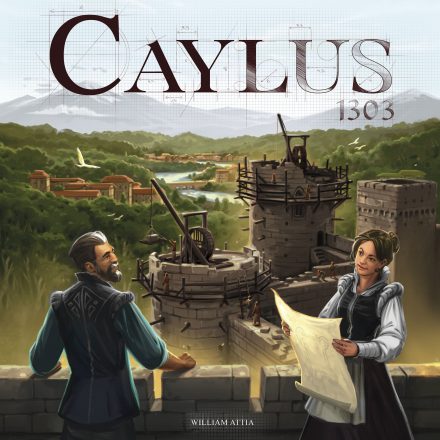
Caylus 1303

A classic game is back! As one of the first worker placement games, Caylus stands among the true board game classics of the 2000s. The original designers’ team, together with the Space Cowboys, have now created a revamped version!

The mechanisms of Caylus 1303 have been streamlined and modernized for an intense and shorter game. Don’t be fooled, though, as the game has kept both its depth and ease of play while a lot of new features have been added:

  • Variability of the starting position for a virtual infinity of possibilities. No more pre-set strategies!
  • Characters with special abilities, with a wavering loyalty, offer their services to the players.
  • And of course, brand new graphics!

The King calls you again, so it’s time to go back to Caylus!

Game Mechanics:

  • Open Drafting
  • Take That
  • Tile Placement
  • Variable Player Powers
  • Variable Set-up
  • Worker Placement

Game Specifications:

  • 2 – 5 Players
  • 60 – 90 Minutes
  • Difficulty Weight 2.88

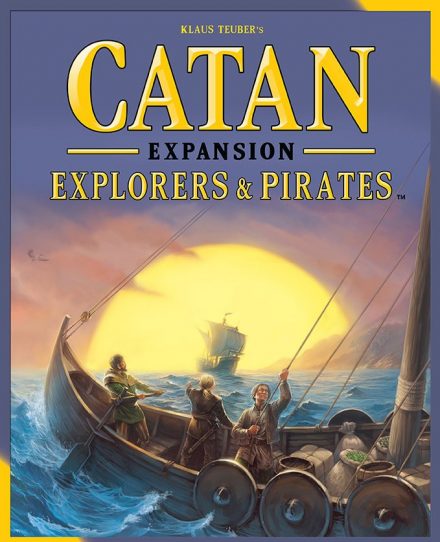
Catan: Explorers & Pirates

Catan: Explorers & Pirates is the fourth major expansion for The Settlers of Catan (following SeafarersCities & Knights and Traders & Barbarians) and it includes five scenarios and three missions; some of the scenarios make use of the missions while others do not.

Catan: Explorers & Pirates differs from the Catan base game in three main ways. First, instead of having only a single island in the game on which players build and compete for resources, three islands are present – but the landscape of only one of these islands is known at the start of the game. Players start on this island, then build ships and bring settlers into play so that they can then travel to new lands. When a ship ends its movement on unexplored territory, that hex is revealed and a randomly-drawn number chip placed on it, with the player earning one resource as a reward – assuming the hex produces resources, that is. (The number of unknown tiles varies from 16 to 32, depending on the scenario.) A settler and ship can be transformed into a port settlement, from which roads and new ships can be built to enable further exploration.

Second, instead of using cities, Catan: Explorers & Pirates allows players to build port settlements for two corn and two ore, with a port settlement supplying one resource when the adjacent number is rolled at the start of a turn. Like cities, port settlements are worth two victory points (VPs), and the number of VPs required to win depends on the scenario.

Third, if a player receives no resources during the production roll (other than on a roll of 7), she receives one gold in compensation. Two gold can be traded with the bank for a resource of the player’s choice. Gold has other uses as well, such as helping you escape from pirates.

The five scenarios included in Catan: Explorers & Pirates are:

• Land Ho! Explore the seas of Catan and discover two new islands to expand your settlements. Once you’ve discovered an island, you must use ships to ferry settlers from one island to another and colonize distant lands. (Introductory scenario)

• Pirate Lairs! In this scenario, pirates prowl the seas along with your trading vessels. Pay tribute to the pirates or drive them off, then find and capture their lairs to earn gold and VPs! (One mission scenario)

• Fish for Catan! The people of Catan are short of food, so it’s time to take to the ocean to fish for meals. These are deep water fish, though, so first you must find their shoals before you can catch them! The Council of Catan will reward players with VPs for returning fish to the island, as well as for capturing pirate lairs. Just watch out for roaming pirates, as not only will they demand gold for tribute, they might also get to the fish before you do! (Two mission scenario)

• Spices for Catan! In this scenario, the Council of Catan wants you to find fish and spices for the people of Catan! As before, they reward the most industrious merchant captains with VPs. Obtaining spice will require you to become friends with the mysterious inhabitants of the Spice Islands, but in return they will not only trade you spices but teach you their knowledge of sailing or even pirate fighting techniques! (Two mission scenario)

• Explorers and Pirates! This lengthy and challenging scenario brings everything from the previous scenarios together! Explore new lands, capture pirate lairs, find fish, and befriend the inhabitants of the spice isles! (Three mission scenario)

Game Mechanics:

  • Dice Rolling
  • Hand Management
  • Negotiation
  • Network Building
  • Trading

Game Specifications:

  • 2 – 4 Players
  • 90 – 120 Minutes
  • Difficulty Weight 2.83

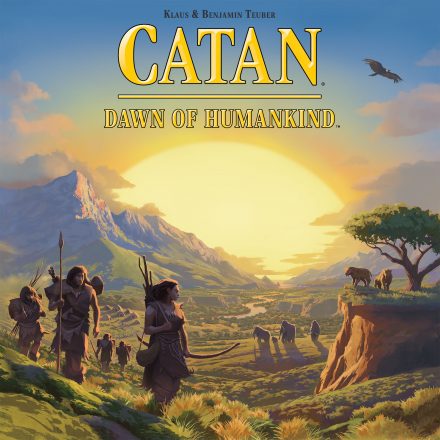
Catan: Dawn of Humankind

Guide the first humans on their journey as they migrate throughout the world while developing their technology and culture.

CATAN: Dawn of Humankind is a reboot of The Settlers of the Stone Age, with gameplay rooted in the original CATAN, while featuring new elements, strategies, and adventures to discover.

Game Mechanics:

  • Dice Rolling
  • Hexagon Grid
  • Resource to Move
  • Trading

Game Specifications:

  • 3 – 4 Players
  • 90 – 120 Minutes
  • Difficulty Weight 2.58

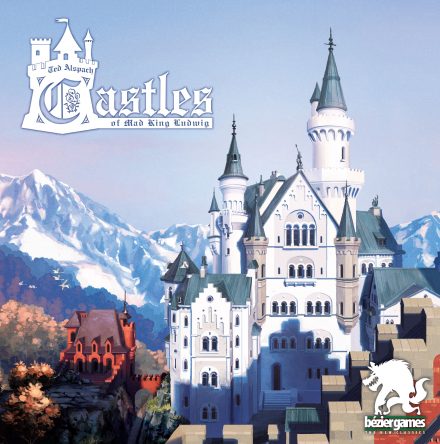
Castles of Mad King Ludwig

In the tile-laying game Castles of Mad King Ludwig, players are tasked with building an amazing, extravagant castle for King Ludwig II of Bavaria…one room at a time. You see, the King loves castles, having built Neuschwanstein (the castle that inspired the Disney theme park castles) and others, but now he’s commissioned you to build the biggest, best castle ever — subject, of course, to his ever-changing whims. Each player acts as a building contractor who is adding rooms to the castle he’s building while also selling his services to other players.

In the game, each player starts with a simple foyer. One player takes on the role of the Master Builder, and that player sets prices for a set of rooms that can be purchased by the other players, with him getting to pick from the leftovers after the other players have paid him for their rooms. When a room is added to a castle, the player who built it gains castle points based on the size and type of room constructed, as well as bonus points based on the location of the room. When a room is completed, with all entranceways leading to other rooms in the castle, the player receives one of seven special rewards.

After each purchasing round, a new player becomes the Master Builder who sets prices for a new set of rooms. After several rounds, the game ends, then additional points are awarded for achieving bonus goals, having the most popular rooms, and being the most responsive to the King’s demands, which change each game. Whoever ends up with the most castle points wins.

Game Mechanics:

  • Pattern Building
  • Set Collection
  • Tile Placement

Game Specifications:

  • 1 – 4 Players
  • ~90 Minutes
  • Difficulty Weight 2.65

The Castles of Burgundy

The Castles of Burgundy

The Castles of Burgundy

The game is set in the Burgundy region of High Medieval France. Each player takes on the role of an aristocrat, originally controlling a small princedom. While playing they aim to build settlements and powerful castles, practice trade along the river, exploit silver mines, and use the knowledge of travelers.

The game is about players taking settlement tiles from the game board and placing them into their princedom which is represented by the player board. Every tile has a function that starts when the tile is placed in the princedom. The princedom itself consists of several regions, each of which demands its own type of settlement tile.

The game is played in five phases, each consisting of five rounds. Each phase begins with the game board stocked with settlement tiles and goods tiles. At the beginning of each round all players roll their two dice, and the player who is currently first in turn order rolls a goods placement die. A goods tile is made available on the game board according to the roll of the goods die. During each round players take their turns in the current turn order. During his turn, a player may perform any two of the four possible types of actions: 1) take a settlement tile from the numbered depot on the game board corresponding to one of his dice and place it in the staging area on his player board, 2) take a settlement tile from the staging area of his player board to a space on his player board with a number matching one of his dice in the corresponding region for the type of tile and adjacent to a previously placed settlement tile, 3) deliver goods with a number matching one of his dice, or 4) take worker tokens which allow the player to adjust the roll of his dice. In addition to these actions a player may buy a settlement tile from the central depot on the game board and place it in the staging area on his player board. If an action triggers the award of victory points, those points are immediately recorded. Each settlement tile offers a benefit, additional actions, additional money, advancement on the turn order track, more goods tiles, die roll adjustment or victory points. Bonus victory points are awarded for filling a region with settlement tiles.

The game ends after the fifth phase is played to completion. Victory points are awarded for unused money and workers, and undelivered goods. Bonus victory points from certain settlement tiles are awarded at the end of the game.

The player with the most victory points wins.

Game Mechanics:

  • Dice Rolling
  • Grid Coverage
  • Pattern Building
  • Tile Placement
  • Worker Placement

Game Specifications:

  • 2 – 4 Players
  • 30 – 90 Minutes
  • Difficulty Weight 3.00

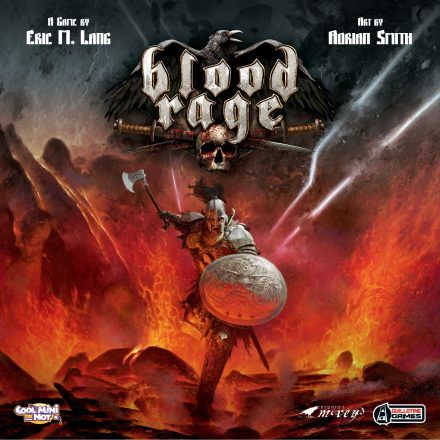
Blood Rage

“Life is Battle; Battle is Glory; Glory is ALL”

In Blood Rage, each player controls their own Viking clan’s warriors, leader, and ship. Ragnarök has come, and it’s the end of the world! It’s the Vikings’ last chance to go down in a blaze of glory and secure their place in Valhalla at Odin’s side! For a Viking there are many pathways to glory. You can invade and pillage the land for its rewards, crush your opponents in epic battles, fulfill quests, increase your clan’s stats, or even die gloriously either in battle or from Ragnarök, the ultimate inescapable doom.

Most player strategies are guided by the cards drafted at the beginning of each of the three game rounds (or Ages). These “Gods’ Gifts” grant you numerous boons for your clan including: increased Viking strength and devious battle strategies, upgrades to your clan, or even the aid of legendary creatures from Norse mythology. They may also include various quests, from dominating specific provinces, to having lots of your Vikings sent to Valhalla. Most of these cards are aligned with one of the Norse gods, hinting at the kind of strategy they support. For example, Thor gives more glory for victory in battle, Heimdall grants you foresight and surprises, Tyr strengthens you in battle, while the trickster Loki actually rewards you for losing battles, or punishes the winner.

Players must choose their strategies carefully during the draft phase, but also be ready to adapt and react to their opponents’ strategies as the action phase unfolds. Battles are decided not only by the strength of the figures involved, but also by cards played in secret. By observing your opponent’s actions and allegiances to specific gods, you may predict what card they are likely to play, and plan accordingly. Winning battles is not always the best course of action, as the right card can get you even more rewards by being crushed. The only losing strategy in Blood Rage is to shy away from battle and a glorious death!

Game Mechanics:

  • Area Majority / Influence
  • Closed Drafting
  • Hand Management
  • Memory
  • Open Drafting
  • Take That

Game Specifications:

  • 2 – 4 Players
  • 60 – 90 Minutes
  • Difficulty Weight 2.88