Tag: Auction/Bidding

Auction and Bidding games typically have players place bids on in-game items and advantages to improve their position within the game.

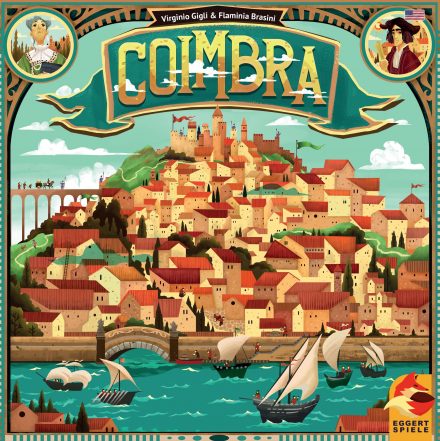
Coimbra

In the 15th and 16th century, Portugal is thriving under its leading role during the Age of Discovery. Nestled in the heart of Portugal, the city of Coimbra serves as a cultural center of the country. As the head of one of Coimbra’s oldest houses, you seek to earn prestige by deepening relationships with nearby monasteries or funding expeditions of the era. To reach this goal, you must vie for the favors of the city’s most influential citizens, even if you must offer a bit of coin or some protective detail.

Coimbra introduces an innovative new dice mechanism in which the dice players draft each round are used in multiple different ways and have an impact on many aspects of their decision making. While there are many paths to victory, players should always seek to optimize their opportunities with every roll of the dice. Combined with ever-changing synergies of the citizens, expeditions, and monasteries, no two games of Coimbra will ever be the same!

Game Mechanics:

  • Auction / Bidding
  • Open Drafting
  • Set Collection
  • Tech Trees / Tech Tracks
  • Variable Set-up
  • Worker Placement

Game Specifications:

  • 2 – 4 Players
  • 60 – 90 Minutes
  • Difficulty Weight 3.25

Stockpile

Stockpile

Stockpile

Stockpile is an economic board game that combines the traditional stockholding strategy of buy low, sell high with several additional mechanisms to create a fast-paced, engaging and interactive experience.

In Stockpile, players act as stock market investors at the end of the 20th century hoping to strike it rich, and the investor with the most money at the end of the game is the winner. Stockpile centers on the idea that nobody knows everything about the stock market, but everyone does know something. In the game, this philosophy manifests in two ways: insider information and the stockpile.

First, players are given insider information each round. This information dictates how a stock’s value will change at the end of the round. By privately learning if a stock is going to move up or down, each player has a chance to act ahead of the market by buying or selling at the right time.

Second, players purchase their stocks by bidding on piles of cards called stockpiles. These stockpiles will contain a mixture of face-up and face-down cards placed by other players in the game. In this way, nobody will know all of the cards in the stockpiles. Not all cards are good either. Trading fees can poison the piles by making players pay more than they bid. By putting stocks and other cards up for auction, Stockpile catalyzes player interaction, especially when potential profits from insider information are on the line.

Both of these mechanisms are combined with some stock market elements to make players consider multiple factors when selling a stock. Do you hold onto a stock in hopes of catching a lucrative stock split or do you sell now to avoid the potential company bankruptcy? Can you hold onto your stock until the end of the game to become the majority shareholder, or do you need the liquidity of cash now for future bidding? Do you risk it all by investing heavily into one company, or do you mitigate your risk by diversifying your portfolio?

In the end, everyone knows something about the stock market, so it all comes down to strategy execution. Will you be able to navigate the movements of the stock market with certainty? Or will your investments go under from poor predictions?

Game Mechanics:

  • Auction/Bidding
  • Economic
  • Open Drafting
  • Stock Holding

Game Specifications:

  • 2 – 5 Players
  • ~45 Minutes
  • Difficulty Weight 2.11

Railroad Rivals

Railroad Rivals

Railroad Rivals

While playing Railroad Rivals, you connect cities via one of the twelve great railroads that stretched across the United States, while simultaneously building your stock portfolio. You then use those railroads to make deliveries that drive up the price of your stocks. At the end of the game, the player who has run the most profitable railroad while also owning the most valuable stocks becomes the greatest of all of the railroad rivals!

In more detail, Railroad Rivals is a tile-drafting and -laying game in which you build a railroad empire that stretches across America…and across your table. Each turn you draft one new city tile and one new railroad stock tile. You then lay one of your city tiles next to a city tile that is already on the table to create a link between the two cities. The matching edges must both have the same railroad on them. Each newly laid city gets one or more randomly drawn colored cubes placed on it that represent the goods that can be delivered from that city. After all players have laid their city tile, you deliver one goods cube using one of that city’s railroad links. This gives you points and raises the value of that railroad stock.

At the end of the game, your score is the total of all of the points that you received from deliveries, from other players using your railroad links, and from the value of all of your railroad stock tiles.

Game Mechanics:

  • Auction/Bidding
  • Open Drafting
  • Tile Placement

Game Specifications:

  • 1 – 5 Players
  • 30 – 60 Minutes
  • Difficulty Weight 2.07

Raccoon Tycoon

Raccoon Tycoon

Raccoon Tycoon

Astoria is a land bustling with productivity and growth! New towns, factories, and railroads are springing up across the land. A few savvy business tycoons (you and your opponents) are determined to make your fortunes on the crest of this wave. These tycoons start out as the producers of the key commodities: wheat to feed the growing towns and factories, wood and iron to build them, coal to fuel the trains and factories, and manufactured goods and luxuries to fill the insatiable demand of the animals of Astoria.

Cornering the market for the most valuable commodities can create small fortunes that can be invested in the new businesses, turning them into huge fortunes. The sky is the limit during this Gilded Age!

In Raccoon Tycoon, players try to produce the most valuable commodities in an ever-changing marketplace. They then use those commodities to build towns, or sell them at the best price to secure great profits that can be used to win auctions for the all-important railroads. The profits may also be used to buy powerful buildings that give the players power-ups or bonuses in production. Owning the best towns and railroads determines victory. There can be only one “top dog” in Astoria. Is it you?

Game Mechanics:

  • Auction/Bidding
  • Economic
  • Set Collection

Game Specifications:

  • 2 – 5 Players
  • 60 – 90 Minutes
  • Difficulty Weight 2.10

Ra

Ra

Ra

Ra is an auction and set-collection game with an Ancient Egyptian theme. Each turn players are able to purchase lots of tiles with their bidding tiles (suns). Once a player has used up his or her suns, the other players continue until they do likewise, which may set up a situation with a single uncontested player bidding on tiles before the end of the round occurs. Tension builds because the round may end before all players have had a chance to win their three lots for the epoch. The various tiles either give immediate points, prevent negative points for not having certain types at the end of the round (epoch), or give points after the final round. The game lasts for three “epochs” (rounds). The game offers a short learning curve, and experienced players find it both fast-moving and a quick play.

Game Mechanics:

  • Auction/Bidding
  • Push Your Luck
  • Set Collection

Game Specifications:

  • 2 – 5 Players
  • 45 – 60 Minutes
  • Difficulty Weight 2.34

Picture Perfect

Picture Perfect

Picture Perfect

How do you take the perfect picture of a group of people if you only have one try? Each character has different wishes. Some want to be at the front of the picture; some want to stand next to another; and some really don’t want to be next to that one particular person by any means. Do your best to make everyone happy – even if you don’t actually know all the characters’ preferences…

In Picture Perfect, first released as Der Perfekte Moment, you need to arrange fourteen characters to take the perfect photograph. Each of them has three specific desires that you want to fulfill. Unfortunately, these desires are hidden in envelopes.

During the game, the players try to take a look inside these envelopes to figure out how to place the characters correctly. To do so, they trade their information with others — or maybe try to hide it…

Whoever earns the most points at the end of the game has fulfilled the most desires and becomes the master photographer.

Game Mechanics:

  • Auction/Bidding
  • Deduction
  • Memory
  • Negotiation
  • Puzzle
  • Tile Placement

Game Specifications:

  • 2 – 6 Players
  • 50 – 90 Minutes
  • Difficulty Weight 1.86

Papillon

Papillon

Papillon

A butterfly garden requires vision and a caring hand. Spring has arrived, and the world is in bloom. As your garden grows, caterpillars will congregate and morph into beautiful butterflies eager for nectar.

Papillon is a tile-drafting, tableau-building, and area majority game for 2-4 players. Over 8 rounds, you will bid for flower tiles to build your garden, attract butterflies to flowers with valuable nectar, and of course, every garden looks better with a gnome. Collect the most nectar at the end of the game and you’ll win!

Game Mechanics:

  • Abstract Strategy
  • Area Control
  • Auction/Bidding
  • Open Drafting
  • Tile Placement

Game Specifications:

  • 2 – 4 Players
  • 30 – 45 Minutes
  • Difficulty Weight 2.06

Pan Am

Pan Am

Pan Am

In Pan Am, players compete with Pan American Airways and others to build an air-travel empire. Outbid rivals for lucrative landing rights, buy planes with longer range to reach the far corners of the world, and use insider connections to advance your interests. As you bump up against the ever-growing Pan Am, you can sell your routes to the company to earn a tidy profit, with you then using that money to invest in other growth or to purchase Pan Am stock for what’s sure to be a big payout down the road.

Pan Am is a game of global strategy that spans four decades of industry-changing historic events.

Game Mechanics:

  • Auction/Bidding
  • Economic
  • Stock Holding
  • Worker Placement

Game Specifications:

  • 2 – 4 Players
  • ~60 Minutes
  • Difficulty Weight 2.46

Nightmare Productions

Nightmare Productions

Nightmare Productions

Reiner Knizia’s auction game about producing movies. In four rounds, players bid on chips representing genuine directors, actors, camera, effects, music, guest stars and agents (or in Nightmare Productions edition: creatures, locations, directors, musical conductors, cameos, and contractors). These all get placed on players’ film-strips to complete the movie production. So one movie might need 2 actors (in editions prior to Nightmare Productions), but no music or effects and so on. As films are completed, the points value is marked and another film-strip taken. There are two parties (in Nightmare Productions edition: horror cons) each round where players get to pick from offers without paying anything. There are bonus points for first films completed and best films, best directors (in Nightmare Productions edition: best creatures), even worst film.

The auction is a basic rising offer with passing until one winning bid remains. Players pay into the pot with contracts (in Nightmare Productions edition: money), and the rest of the players share the pot each turn. So it’s a closed economy with players trying to time to bid on what they really need to complete films.

Game Mechanics:

  • Auction/Bidding

Game Specifications:

  • 2 – 5 Players
  • ~60 Minutes
  • Difficulty Weight 2.11

Montana: Heritage Edition

Montana: Heritage Edition

Montana: Heritage Edition

Halfway through the 19th century, the first permanent settlements appeared in Montana. After this, many fortune seekers traveled to this region with their caravans in search of work in order to build a better future for themselves — and there is an abundance of work as in the mountains precious metals are to be found and on the fields a lot of manpower is required. Meanwhile, the number of settlements is growing and the demand for goods is rising. Recruit the right workers, deliver goods on time, and choose your settlements tactically. Only then you will have the biggest chance of winning Montana.

In more detail, on each turn players choose one of these three actions:

  • Recruit: Use the spinner to get new workers.
  • Work: Send your workers to one of the different locations to get resources or money.
  • Build: Spend your resources to build new settlements.

The first player to build all of their settlements wins!

Game Mechanics:

  • Auction/Bidding
  • City Building
  • Racing
  • Set Collection
  • Worker Placement

Game Specifications:

  • 2 – 4 Players
  • ~45 Minutes
  • Difficulty Weight 2.28