posts page

Heroes of Normandie: Big Red One Edition

Heroes of Normandie: Big Red One Edition

Heroes of Normandie: Big Red One Edition

The time is summer 1944. The Sun shines on Normandy hedgerows. Gentle wind, fields of bright flowers, and in the background, the romantic staccato of machine gun fire in the morning. In these typical French countryside landscapes, thousands of men are about to fight. And die. Bravely like heroes, or cowardly like wussies. But only heroes really matter. Those you see in Hollywood Golden Age war movies. Here lies the inspiration for Heroes of Normandie; here is what the game has to offer: explosive and fast-paced battles; the pleasure of butchering your enemies through MG42 walls of lead; and the ability to crush Nazi bastards under tons of shells – basically, blood and guts.

A miniatures game without miniatures, Heroes of Normandie is a fast-paced WW2 strategy war game inspired by Hollywood war movies. A tactical scale board-game opposing two players and two armies, with the Germans on one side and the Americans on the other. Players use order tokens to determine initiative and to bluff. While a single six-sided die determines combat, action cards are played to spice things up. Secretly plan your attacks and outwit your opponent. Block the opposing strategy and surprise the enemies. Deploy your units and don’t turn back!

What’s new in the Big Red One edition:

  • 50-Card decks (instead of 70) with new Alternate Bonuses, for even faster gameplay and reduced setup time.
  • New and improved rule book
  • New scenarios
  • New and improved Aircraft system, available in Bloody Omaha
  • All new artwork for the Heroes
  • New Blast Templates
  • New Heroes
  • New Tactical Objectives
  • And last, but not least, Flamethrowers in the core box (instead of in expansions)!

Game Mechanics:

  • Dice Rolling
  • Grid Movement
  • Wargame

Game Specifications:

  • 2 Players
  • 30 – 60 Minutes
  • Difficulty Weight 3.50

Great Western Trail: Argentina

Great Western Trail: Argentina

Great Western Trail: Argentina

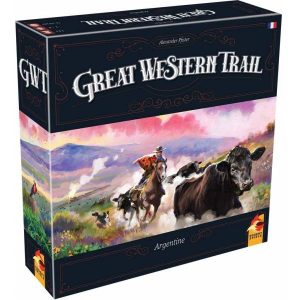
In Great Western Trail: Argentina, you own a vast estancia in Argentina at the end of the 19th century, and you will need to travel the plains of the Pampas with your cattle to deliver them to the main train station in Buenos Aires.

Great Western Trail: Argentina features gameplay elements similar to Great Western Trail such as deck management, the rondel mechanism, and the ability to upgrade your player board, along with twists on these elements and new features.

The player board features a new type of worker — farmers — and different paths await on the game board to confront you with more choices. Will you take the road with buildings or a path past farmers? Maybe you’ll have the chance to use your cows — well, the strength on your cow cards — to help farmers, getting them on your side and adding grain, a new type of resource, to your income, with grain being used for boat and city tiles.

Perhaps you can unlock shortcuts that allow you to deliver your herd to Buenos Aires more quickly. Sure, you’ll forfeit the use of action buildings, but maybe you can catch others unaware, with the ships leaving before they deliver. The timing of reaching the central train station to deliver your herd has never been so crucial, and valuable bonuses await on the city’s port tiles.

Money is easier to get in Great Western Trail: Argentina, but you have more to manage in terms of action options, shortcuts, and cards (including the new exhaustion cards), so the challenges won’t let up.

Great Western Trail: Argentina also includes a solitaire challenge in which Pedro is waiting for you to try to beat his score.

Game Mechanics:

  • Economic
  • Hand Management
  • Set Collection
  • Tableau Building

Game Specifications:

  • 1 – 4 Players
  • 75 – 120 Minutes
  • Difficulty Weight 3.83

Great Western Trail

Great Western Trail

Great Western Trail

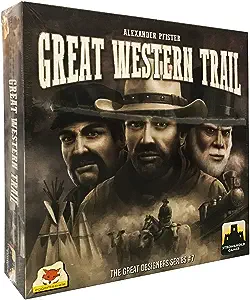
America in the 19th century: You are a rancher and repeatedly herd your cattle from Texas to Kansas City, where you send them off by train. This earns you money and victory points. Needless to say, each time you arrive in Kansas City, you want to have your most valuable cattle in tow. However, the “Great Western Trail” not only requires that you keep your herd in good shape, but also that you wisely use the various buildings along the trail. Also, it might be a good idea to hire capable staff: cowboys to improve your herd, craftsmen to build your very own buildings, or engineers for the important railroad line.

If you cleverly manage your herd and navigate the opportunities and pitfalls of Great Western Trail, you surely will gain the most victory points and win the game.

Game Mechanics:

  • Deck Building
  • Economic
  • Hand Management
  • Set Collection
  • Tableau Building

Game Specifications:

  • 2 – 4 Players
  • 75 – 150 Minutes
  • Difficulty Weight 3.71

The Great Wall

The Great Wall

The Great Wall

The Great Wall is a new asymmetric worker/soldier placement game with engine building themes and a twist in form of a constantly attacking AI (Mongolian Horde) that requires players to sometimes cooperate in order to defeat it. This is a new major board game from Awaken Realms.

Players will control ancient clans in China trying to defend against invading Mongolian hordes and build a Great Wall. While every player will want to win (by earning VP = Honor) they also need to sometimes cooperate to defend against the hordes. Each clan will be asymmetric through its chosen Leader (resource production/starting resources/starting workers and units) and this asymmetry will increase as the game progresses (players will hire Advisors with unique skills, often creating unique engines).

In The Great Wall, the players take the role of Generals defending the Wall against the Mongol Horde. The game is played over a series of turns called Years, each divided into 4 parts called Seasons.

During Spring, new barbaric hordes invade the fields in front of the Great Wall and prepare to launch their assault. Summer is the time when generals prepare for the assault and mobilize their forces. During Fall, players take their turns, playing Command cards, resolving their effects and Activating Locations to gain various benefits. In Winter, the last layer of Defense is activated, then, the hordes try to assault the Walls.

During the course of the game, players will create their own unique engines based on their clan strength as well as interact with other players during all phases of the game, trying to get the most Honor points, which can be gained in a lot of different ways.

At the end of the game, the player with the most Honor wins.

Game Mechanics:

  • Area Control
  • Cooperative
  • Economic
  • Worker Placement

Game Specifications:

  • 1 – 4 Players
  • 120 – 180 Minutes
  • Difficulty Weight 3.85

Golem

Golem

Golem

Golem is an engine-building game by Simone Luciani, Virginio Gigli and Flaminia Brasini, the same team that brought you Grand Austria Hotel and Lorenzo il Magnifico.

The game is based on the 16th-century legend of the Golem of Prague, an anthropomorphic creature that Rabbi Loew animated from a clay statue to protect his people. In the game, players take on the role of rabbis who create and grow these powerful creatures that will be moved around the neighborhoods of Prague under the control of students. Be careful, because if a golem becomes too powerful, it will destroy everything it encounters on its way. Players can also kill their Golems in order to get bonuses.

Players also create powerful artifacts and acquire knowledge by collecting ancient books.

The game is divided into four rounds, and each round is composed of 7 phases:

  1. Refresh
  2. Golem Movement
  3. Actions (2 marble actions and 1 rabbi action)
  4. Turn Order
  5. Influence Character
  6. Income and Development
  7. Golem Control

At the beginning of each round, the players will shuffle the colored marbles into the 3D synagogue that will split them into five lines corresponding to the five main actions available in the game:

  • Work: By paying Knowledge, you can activate the Golem placed in the city of Prague and get bonuses.
  • Golem: Obtain clay to create new golems and upgrade the developments on your personal board.
  • Artifact: Obtain coins and buy gold to build artifacts that offer permanent bonuses in the game and upgrade developments on your personal board.
  • Spells: Obtain Knowledge and perform spells (with a scoring for book collection) and upgrade developments on your personal board.
  • Mirror: Perform one action of your choice by paying 1 coin.

The number of marbles available in the corresponding action line determines how much the player gets from the action. When you choose an action, you collect one marble of your choice in the corresponding line and depending on the color of the marble you chose, you also move your student forward on one of the districts of Prague.

It’s important to advance your students on those tracks to be able to keep your golems under control. At the end of the round, knowledge can also be used to control a golem that surpassed its students, but if one of these creatures is uncontrolled, it may become dangerous and destroy the neighborhood, after which you will have to destroy and bury it!

The marble color also matters, because at the end of the round, if you get the correct combination of two colors, you receive the favor of one of the powerful Prague characters, which will differ each round.

At the end of the fourth round, players score points for active or buried golems, artifacts, books, development on their personal board, and collected goal cards.

Game Mechanics:

  • Action Drafting
  • Set Collection
  • Worker Placement

Game Specifications:

  • 1 – 4 Players
  • 90 – 120 Minutes
  • Difficulty Weight 3.92

Flotilla

Flotilla

Flotilla

In 1954, with an explosion over a hundred thousand times more powerful than even the wildest estimates, the Castle Bravo nuclear test obliterated the Bikini Atoll, and ruptured the Earth down to its mantle.

As water levels rose in the aftermath, the remnants of humanity fled their homes and took to the sea. World leadership came together to build a massive Flotilla, mankind’s last bastion of civilization.

Now, ten years after the disaster, the Flotilla is home to the very last of us.

Flotilla features two distinct and interwoven modes of gameplay, as you try to outpace your opponents in bringing prosperity to humanity’s new home. You begin the game as a “Sinkside” Fleet Commander, commissioned by world leaders to explore the new face of the ocean, scour the depths for resources, and rescue any survivors you come across. At any point in the game, you may choose to turn “Skyside,” by selling your skiffs, and leaving your seafaring life behind to now grow the Flotilla itself.

The choice of if or when to switch from a “Sinkside” explorer to a “Skyside” settler defines the very core experience of Flotilla. They represent two similar but distinct game experiences, utilizing the same game components, seamlessly intertwined among all players. If you switch, you’ll flip over all of your accumulated game components, watching your crew grow into new roles with new art for the same characters, while finding entirely new uses for your ocean tiles and resources, and beginning to trade with the “Sinkside” players as you go after new objectives. As players turn “Skyside,” different niches are filled, forever changing the game’s economy. Mastering this ebb and flow will be critical if you’re to shape the new face of humanity!

As a “Sinksider,” you will explore the ocean with your skiffs, pulling some of the 92 hexagon-shaped ocean tiles out of a bag, and arranging them to help you effectively collect resources, discover valuable artifacts from the sunken civilization, all while trying to avoid toxic radiation left from the disaster. You’ll dive for supplies, rolling a pool of custom dive dice that vary based on the depth level of your skiffs. You’ll also carefully manage your resources, trading them on the open market for the currency you can use to buy more skiffs and outposts, or stockpiling them for when you turn “Skyside.”

As a “Skysider,” you will use your resources to build an expansive network of watercraft and docks, using the “Skyside” of your ocean tiles. Your divers will also have new jobs as researchers, rolling custom, multicolor Research dice, to discover new technologies that allow the Flotilla to manage a growing population. You’ll also build Sonar stations, making life a little easier for the “Sinksiders” still out exploring the unknown, while earning quite a few points for yourself.

On both sides, you’ll also grow your relationships with the four different governing guilds, each giving you unique bonuses and more powerful crew. The players with the strongest relationships will also earn valuable points at the end of the game!

The components in Flotilla are unique, immersive, and interconnected. Your skiffs will be able to actually carry up to four resource barrels, and come in a unique shape for each player color. Artifact tokens slot into matching spaces in a double-layered hub board and art on the ocean tiles lines up to create a unique layout for your growing Flotilla each time you play.

In Flotilla, you’ll find significant strategic depth and variety, while giving players the freedom to tell their own story. Will you build the Flotilla by being the first to go Skyside, or stay Sinkside for the whole game, becoming the most powerful seafarer of them all?

Game Mechanics:

  • Deck Building
  • Dice Rolling
  • Economic
  • Grid Movement
  • Hand Management
  • Pick-Up and Deliver
  • Tile Placement

Game Specifications:

  • 3 – 5 Players
  • 90 – 150 Minutes
  • Difficulty Weight 3.86

Fief France

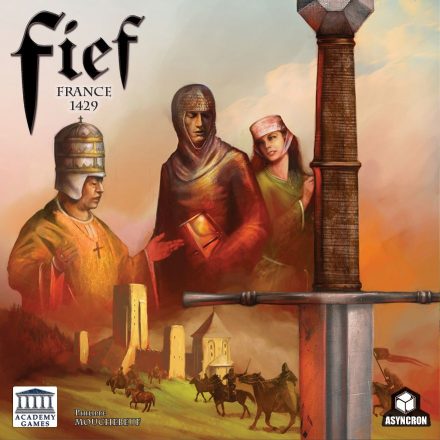
FIEF: France is a game of dynastic ambition in which players assume the roles of nobles in the 15th century kingdom of France. Each player strives to become the most powerful ruling force in the kingdom by gaining control of Fiefs and Bishoprics. In turn, they acquire Royal and Ecclesiastical (church) titles which give their families influence to elect the next Pope and King. Players strengthen their positions by negotiating marriage alliances between their families, setting the stage for love, treachery, and deception!

FIEF is a classic game and this edition includes a new board (FIEF France: Gameboard)!

The game board represents the Kingdom of France in the Middle Ages. Villages have square outlines that are connected by roads that allow Lord and Troop movement. The villages are grouped into eight colored background areas that represent individual Fiefs, which are domains given to Lords to preside over. Fiefs have different colored backgrounds. Each village also belongs to one of five church Bishoprics; each Bishopric is outlined with a heavy border line and is numbered between 1-5 along the edge of the board inside a Bishop’s Mitre. Bishoprics include several different Fiefs’ villages.

Each player controls up to four family members, comprised of male and female nobles. These family members will rise in power by gaining Royal and Ecclesiastic Titles.

In FIEF France edition, a player may attempt to gain control of all the villages in a Fief to gain the Royal Title of Baron, Earl, or Duke. For each Fief a player controls, they gain 1 VP. These Titled Lords may now take part in the election for the next King. They may even be a candidate to become King, thus bringing 1 VP and more power to the family! Other members of your family may follow the calling of the Church to gain the Ecclesiastical Titles of Bishop and then Cardinal. These titles allow you to Tithe Bishoprics, taking the Church’s (i.e. “your”) fair share of income from other Fief Lords! The highest goal your clerical family member can attain is to be elected Pope, bringing 1 VP and special privileges to your family!

You win the game as soon as you have 3 VPs. This is easier said than done and you may need to form alliances with other players through diplomacy and marriage to attain your goal. When one of your family members marries a noble of another family, the two of you become allied. You now win the game together with 4 VPs and cannot win alone, unless your marriage is annulled by the Pope or your spouse is “mysteriously” murdered or dies by some other foul means!

In addition to being wary of your fellow players, you draw event cards that can quickly change your destiny. Bounty Event cards are beneficial to the Player and include “Good Harvest”, “Good Weather”, and “Added Taxes” cards. But some cards are Disaster Cards that can randomly affect all players in specific Bishoprics. These include “The Plague”, “Heavy Rain”, “Famine”, and “Peasant Uprising”!

Income can be increased by players imposing church tithes on their opponent’s villages or taxing their own Fiefs. Players may purchase new Fief titles, improve their village incomes with mills, and fortify their cities.

Players will also need to protect their land and castles. Men-at-Arms and Knights can be purchased, as well as Archers and Bombards. If you feel that other players are not running their Fiefs as well as you can, you may try to invade their territories! But you must risk one of your family members to lead the troops into possible battle, where they might be killed or taken prisoner. If two opposing armies are in the same village square, a Battle may be initiated. The players assess the size and strength of their armies, which determine the number of Battle Dice each may roll. Each “f” rolled is a hit. Men-at-Arms are defeated with one hit, while Knights require three hits to be removed from the battle.

-description from publisher

Fief is a classic French-language game and is being re-introduced by Academy Games in English with updated rules, new units, a new and larger consolidated map, and more. This edition also includes additional components, which enhances game play.

The game board represents a portion of the Kingdom of France in the Middle Ages. Villages have square outlines that are connected by roads that allow Lord and Troop movement. The villages are grouped into eight colored background areas that represent individual Fiefs, which are domains given to Lords to preside over. Fiefs have different colored backgrounds and Bishoprics have heavy bordered outlines that include several different Fiefs. Each village also belongs to one of five church Bishoprics; each Bishopric is outlined with a heavy border line and is numbered between 1-5 along the edge of the board inside a Bishop’s Mitre.

Each player controls up to four family members, comprised of male and female nobles. These family members will rise in power by gaining Royal and Ecclesiastic Titles.

In Fief: France 1429, a player may attempt to gain control of all the villages in a Fief to gain the Royal Title of Baron, Earl or Duke. For each Fief a player controls, he gains 1 VP. These Titled Lords may now take part in the election for the next King. They may even be a candidate to become King, thus bringing 1 VP and more power to the family! Other members of your family may follow the calling of the Church to gain the Ecclesiastical Titles of Bishop and then Cardinal. These titles allow you to Tithe Bishoprics, taking the Church’s (i.e. “your”) fair share of income from other Fief Lords! The highest goal your clerical family member can attain is to be elected Pope, bringing 1 VP and special privileges to your family!

You win the game as soon as you have 3 VPs. This is easier said than done and you may need to form alliances with other players through diplomacy and marriage to obtain your goal. When one of your family members marries a noble of another family, the two of you become allied. You now win the game together with 4 VPs and cannot win alone, unless your marriage is annulled by the Pope or your spouse is “mysteriously” murdered or dies of some other foul means!

In addition to being wary of your fellow players, you may draw event cards that can quickly change your destiny. Bounty Event cards are beneficial to the Player and include “Good Harvest”, “Good Weather” and “Added Taxes” cards. But some cards are Disaster Cards that can randomly effect all players in specific Bishoprics. These include “The Plague”, “Heavy Rain”, “Famine”, and “Peasant Uprisings”!

Income can be increased by players imposing church tithes on their opponent’s villages or taxing their own Fiefs. Players may purchase new Fief titles, improve their village incomes with mills, and fortify their cities.

Players will also need to protect their land and castles. Men at Arms and Knights can be purchased, as well as Siege Engines. If you feel that other players are not running their Fiefs as well as you can, you may try to invade their territories! But you must risk one of your family members to lead the troops into possible battle, where they might be killed or taken prisoner. If two opposing armies are in the same village square, a Battle may be initiated. The players assess the size and strength of their armies, which determine the number of Battle Dice each may roll. Each “f” rolled is a hit. Men at Arms are defeated with one hit, while Knights require three hits to be removed from the battle.

Game Mechanics:

  • Area Control
  • Dice Rolling
  • Negotiation
  • Team Based
  • Trading
  • Wargame

Game Specifications:

  • 3 – 6 Players
  • 60 – 180 Minutes
  • Difficulty Weight 3.92

Fall of the Mountain King

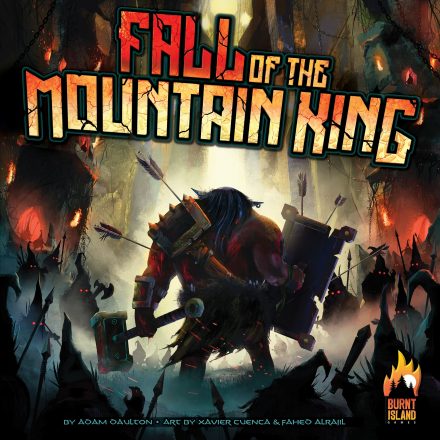
The gnome attack was sudden and relentless. They swarmed our tunnels, defiling our mountain home and driving us from our ancestral caverns. Trolls from every clan rushed to the heart of the mountain to defend our Great Halls. We’ve lost track of how long we’ve been beating back the endless waves of invaders. Soon, it will be time for a final stand. Will we rise up like champions, or be driven out to the wilderness to fight for survival? Sharpen your blades, brothers and sisters! Raise your hammers! If we trolls must fall, we’ll fall fighting like kings!

Game Mechanics:

  • Action Points
  • Area Control
  • Closed Drafting

Game Specifications:

  • 1 – 5 Players
  • 60 – 90 Minutes
  • Difficulty Weight 3.50

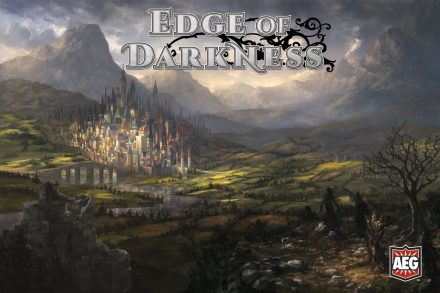
Edge of Darkness

Edge of Darkness is the third Card Crafting Game from Alderac Entertainment Group designed by John D. Clair. Edge of Darkness combines Card Crafting, Worker Placement, shared deck-building, and a whole new Threat Challenge system in a medium-weight euro-style board game of 60 to 120 minutes for 1 to 4 players.

Players are the heads of powerful guilds in the City. Each Guild vies with the others to become the leaders of the City in a desperate struggle against great evil. But the Guilds must also work together because the dangers facing the city can harm them all.

The Guilds exert their control in the city by sending agents to various locations where they can generate resources or abilities and enable the Guild to take actions. Guilds grow in power as they maneuver their agents and loyalists into positions of importance in the districts and organizations of the City. Over time the Guilds can seek to create synergies between the places their agents have been assigned and the tendrils of influence the Guilds have connected to the City’s infrastructure.

To win a Guild must have the most power in the city when the game ends. Power is gained having the allegiance of important citizens and nobles, by accumulating wealth, and by undertaking actions beneficial to the City such as defending it from external and internal threats.

Here are some highlights of the mechanics in the game:

  1. Card Crafting: Similar to the original card-crafting game, Mystic Vale, all cards are constructed of crafting slips which have game content on one third (1/3) of the slip and are transparent on the other two thirds (2/3). During the game players will construct cards, combining (sleeving) different effects onto one card (ideally in ways that make strategic sense). However, unlike Mystic Vale, the transparent cards are double-sided, and when you upgrade the “good” side of the cards (front), you also add strength to the “bad” side of the cards (back).
  2. Group deckbuilding using one shared deck: Rather than having your own deck, there is a central deck that all players draw from and discard to. Different players will have the allegiance of different cards in that deck. Using other players’ cards means you have to pay them. During the game you can claim allegiance of more cards in the deck by sleeving a slip into the card with your color and seal.
  3. Card-driven worker placement: While your actions are card-driven, most costs in the game are in the form of opportunity cost. Advancements don’t have a cost, instead they require the use of workers to a greater or lesser degree depending on the power of the card. e.g. many effects require placing or pulling workers from different city locations as dictated by the card effects. Since you have a limited number of workers to use, you will constantly be choosing to forgo one useful thing in order to do another.
  4. Threat Tower: There is a Threat Tower which dictates when and whom Threats will attack. Cards leave the shared deck and enter the Threat Board, where they accumulate Threat Cubes on each player’s turn. These cubes are color-coded, and when a threshold number of cubes of a given color accumulate on a card, it attacks the City. If the color matches one of the players, it attacks that player. If the color is black, it attacks all players!
  5. Modular set upEdge of Darkness will come with 12 Locations. Each game you use only 10 of these Locations, which can be specifically selected or chosen randomly, making for a lot of variety from game-to-game in the types of challenges you will face and the strategies you will need to employ. These Locations are comprised of a Location Board and Crafting Slips. Location Boards may specify special rules for worker placement, or extend the basic rules with all new systems. For example, a combination of Location Boards can be used to assemble a party of heroes to take the fight to the Threat Tower and engage in a Monster Hunt!

Game Mechanics:

  • Deck Building
  • Open Drafting

Game Specifications:

  • 1 – 4 Players
  • 60 – 120 Minutes
  • Difficulty Weight 3.44

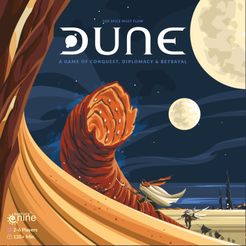
Dune

Imagine you can control the forces of a noble family, guild, or religious order on a barren planet which is the only source for the most valuable substance in the known universe.

Imagine you can rewrite the script for one of the most famous science fiction books of all time. Welcome to the acclaimed 40-year-old board game which allows you to recreate the incredible world of Frank Herbert’s DUNE.

In DUNE you will become the leader of one of six great factions. Each wishes to control the most valuable resource in the universe – melange, the mysterious spice only found at great cost on the planet DUNE. As Duke Leto Atreides says “All fades before melange. A handful of spice will buy a home on Tupile. It cannot be manufactured, it must be mined on Arrakis. It is unique and it has true geriatric properties.” And without melange space travel would be impossible. Only by ingesting the addictive drug can the Guild Steersman continue to experience visions of the future, enabling them to plot a safe path through hyperspace.

Who will control DUNE? Become one of the characters and their forces from the book and . . . You decide!

Game Mechanics:

  • Area Control
  • Area Movement
  • Auction/Bidding
  • Bluffing
  • Bribery
  • Negotiation
  • Take That
  • Wargame

Game Specifications:

  • 2 – 6 Players
  • 120 – 180 Minutes
  • Difficulty Weight 3.96