Tag: Tableau Building

Games with a Tableau Building mechanic require players to arrange a visible array of components to achieve specific results.

Nations

Nations

Nations

From the humble beginnings of civilization through the historical ages of progress, mankind has lived, fought, and built together in nations. Great nations protect and provide for their own, while fighting and competing against both other nations and nature itself. Nations must provide food and stability as the population increases. They must build a productive economy. And all the while, they must amaze the world with their great achievements to build up their heritage as the greatest nations in the history of mankind!

Nations is an intense historical board game for 1–5 players that takes 40 minutes per player to play. Players control the fate of nations from their humble start in prehistoric times until the beginning of World War I. The nations constantly compete against each other and must balance immediate needs, long-term growth, threats, and opportunities.

Gameplay introduction

Players choose a Nation and a difficulty to play at, similar to the Civilization computer games series. After the growth phase, 2 historical events are revealed, which the players will compete for during the round. Then players take a single small action each, in player order, as many times as they wish until all have passed. Actions are:

  • Buy a card
  • Deploy a worker
  • Hire an architect for a wonder
  • Special action provided by a card

Players each have individual boards that represent their Nation. There are many ways that players affect, compete, and indirectly interact with other players. But there is no map, no units to move around, and no direct attacks on other players.

When all have passed, there is production, new player order is determined (every position is competed for), the historical events happen, and if this is the last round of an age, the books are scored. At the start of a new round, most old cards are removed and new ones are put on the display.

Victory points are gained and lost during the game, and also awarded at the end of the game. The player with the most victory points is the winner.

Game Mechanics:

  • Civilization
  • Economic
  • Open Drafting
  • Tableau Building

Game Specifications:

  • 1 – 5 Players
  • 40 – 200 Minutes
  • Difficulty Weight 3.54

Millennium Blades

Millennium Blades

Millennium Blades

Millennium Blades is a CCG-Simulator — A game in which you play as a group of friends who play the fictional CCG “Millennium Blades”.

In this game you will build decks, play the meta, acquire valuable collections, crack open random boosters, and compete in tournaments for prizes and fame. The game takes you from Starter Deck to Regionals in about 2-3 hours.

Multiple games can also be chained together to form a Campaign, going from Regionals to Nationals in game 2 and from Nationals to Worlds in game 3, with each game introducing ever more powerful cards and higher stakes, but also resetting the power of the game so that each player has a fair chance to win each ‘season’ of the campaign.

The game draws heavily on Manga/Anime inspiration for its art, and parodies Magic: the Gathering, Yugioh, and many other collectible games.

At its heart, it’s a commodity trading game, except that instead of cubes or stocks, the things you’ll be buying, selling, and speculating on are trading cards that can be used throughout the game in periodic tournaments. By trading wisely, playing the market, working together with friends, building collections, and winning tournaments, you’ll secure points and become the Millennium Blades World Champion.

The game features a system of card pods, where you will play with about 400 of the base game’s 600 cards every game.

Game Mechanics:

  • Deck Building
  • Hand Management
  • Open Drafting
  • Set Collection
  • Tableau Building
  • Trading

Game Specifications:

  • 2 – 5 Players
  • 80 – 120 Minutes
  • Difficulty Weight 3.69

Imperium: Legends

Imperium: Legends

Imperium: Legends

Formidable adversaries are arrayed against you. Your people stand ready. History beckons.

In your hands lies the destiny of one of history’s great civilizations. Under constant threat of attack, you must conquer new lands, oversee dramatic scientific and cultural advances, and lead your people into the era of empire. Expand too rapidly, and unrest will bring your civilization to its knees; build up too slowly, however, and you might find yourself a mere footnote of history. As one of eight radically asymmetric civilizations, you will compete to become the most dominant empire the world has ever seen.

Game Mechanics:

  • Civilization
  • Deck Building
  • Hand Management
  • Move Through Deck
  • Tableau Building

Game Specifications:

  • 1 – 4 Players
  • 60 – 120 Minutes
  • Difficulty Weight 3.66

Imperium: Classics

Imperium: Classics

Imperium: Classics

Formidable adversaries are arrayed against you. Your people stand ready. History beckons.

In your hands lies the destiny of one of history’s great civilizations. Under constant threat of attack, you must conquer new lands, oversee dramatic scientific and cultural advances, and lead your people into the era of empire. Expand too rapidly, and unrest will bring your civilization to its knees; build up too slowly, however, and you might find yourself a mere footnote of history. As one of eight radically asymmetric civilizations, you will compete to become the most dominant empire the world has ever seen.

Imperium: Classics is a standalone game that contains the Carthaginian, Celt, Greek, Macedonian, Persian, Roman, Scythian, and Viking civilizations and an individual solo opponent behaving as each nation. It is also fully compatible with Imperium: Legends for players wanting to expand their pool of civilizations even further.

Game Mechanics:

  • Campaign
  • Civilization
  • Deck Building
  • Hand Management
  • Move Through Deck
  • Tableau Building
  • Take That

Game Specifications:

  • 1 – 4 Players
  • 60 – 120 Minutes
  • Difficulty Weight 3.48

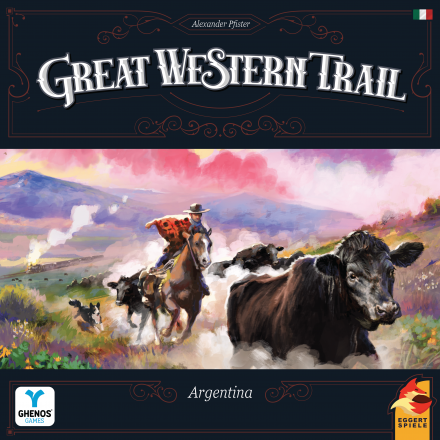
Great Western Trail: Argentina

In Great Western Trail: Argentina, you own a vast estancia in Argentina at the end of the 19th century, and you will need to travel the plains of the Pampas with your cattle to deliver them to the main train station in Buenos Aires.

Great Western Trail: Argentina features gameplay elements similar to Great Western Trail such as deck management, the rondel mechanism, and the ability to upgrade your player board, along with twists on these elements and new features.

The player board features a new type of worker — farmers — and different paths await on the game board to confront you with more choices. Will you take the road with buildings or a path past farmers? Maybe you’ll have the chance to use your cows — well, the strength on your cow cards — to help farmers, getting them on your side and adding grain, a new type of resource, to your income, with grain being used for boat and city tiles.

Perhaps you can unlock shortcuts that allow you to deliver your herd to Buenos Aires more quickly. Sure, you’ll forfeit the use of action buildings, but maybe you can catch others unaware, with the ships leaving before they deliver. The timing of reaching the central train station to deliver your herd has never been so crucial, and valuable bonuses await on the city’s port tiles.

Money is easier to get in Great Western Trail: Argentina, but you have more to manage in terms of action options, shortcuts, and cards (including the new exhaustion cards), so the challenges won’t let up.

Great Western Trail: Argentina also includes a solitaire challenge in which Pedro is waiting for you to try to beat his score.

Game Specifications:

  • 1 – 4 Players
  • 75 – 120 Minutes
  • Difficulty Weight 3.83

Great Western Trail

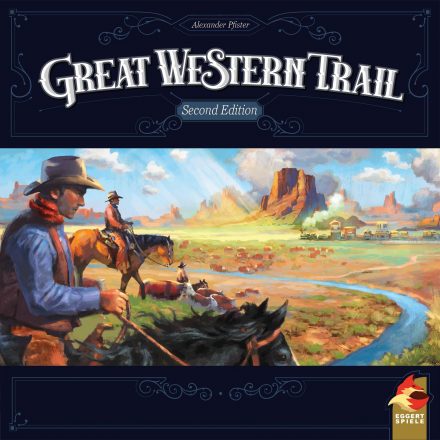
America in the 19th century: You are a rancher and repeatedly herd your cattle from Texas to Kansas City, where you send them off by train. This earns you money and victory points. Needless to say, each time you arrive in Kansas City, you want to have your most valuable cattle in tow. However, the “Great Western Trail” not only requires that you keep your herd in good shape, but also that you wisely use the various buildings along the trail. Also, it might be a good idea to hire capable staff: cowboys to improve your herd, craftsmen to build your very own buildings, or engineers for the important railroad line.

If you cleverly manage your herd and navigate the opportunities and pitfalls of Great Western Trail, you surely will gain the most victory points and win the game.

Game Specifications:

  • 2 – 4 Players
  • 75 – 150 Minutes
  • Difficulty Weight 3.71

Feast for Odin, A

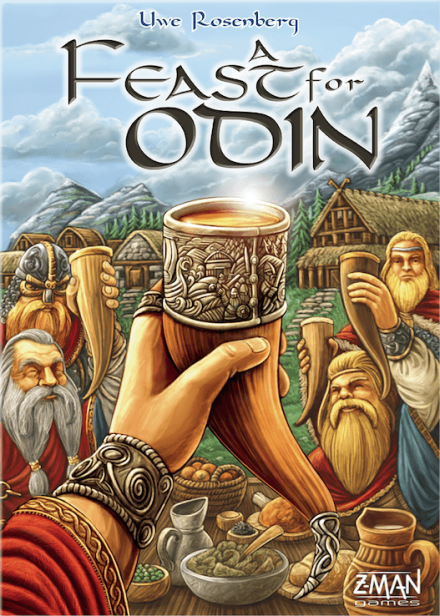
A Feast for Odin is a saga in the form of a board game. You are reliving the cultural achievements, mercantile expeditions, and pillages of those tribes we know as Viking today — a term that was used quite differently towards the end of the first millennium.

When the northerners went out for a raid, they used to say they headed out for a viking. Their Scandinavian ancestors, however, were much more than just pirates. They were explorers and founders of states. Leif Eriksson is said to be the first European in America, long before Columbus.
In what is known today as Normandy, the intruders were not called Vikings but Normans. One of them is the famous William the Conqueror who invaded England in 1066. He managed to do what the king of Norway failed to do only a few years prior: conquer the Throne of England. The reason why the people of these times became such strong seafarers is due to their unfortunate agricultural situation. Crop shortfalls caused great distress.

In this game, you will raid and explore new territories. You will also experience their day-to-day activities: collecting goods to achieve a financially secure position in society. In the end, the player whose possessions bear the greatest value will be declared the winner.

Game Specifications:

  • 1 – 4 Players
  • 30 – 120 Minutes
  • Difficulty Weight 3.85

Unfair

Unfair

Unfair

Build the city’s greatest theme park, whatever it takes!

Mix your favourite themes, from Pirate, Robot, Vampire, Jungle, Ninja, and Gangster. Build attractions and upgrade them to match blueprints, stack up towering rides, or simply make the most cash.

But watch out – your competitors may pay off the safety inspectors to close your rides or hire hooligans to vandalise your park! Build wisely and protect your park to make sure you come out on top!

Whatever happens, it’s bound to be Unfair.

Game Mechanics:

  • City Building
  • Economic
  • Hand Management
  • Open Drafting
  • Set Collection
  • Tableau Building
  • Take That

Game Specifications:

  • 2 – 5 Players
  • 50 – 125 Minutes
  • Difficulty Weight 2.71

Terraforming Mars: Ares Expedition

Terraforming Mars: Ares Expedition

Terraforming Mars: Ares Expedition

Terraforming Mars: Ares Expedition is an engine-building game in which players control interplanetary corporations with the goal of making Mars habitable (and profitable). You will do this by investing mega credits (MC) into project cards that will directly or indirectly contribute to the terraforming process. In order to win, you will want to accumulate a high terraform rating (TR) and as many victory points (VP) as you can. Players raise their TR by increasing global parameters: oceans, oxygen, and temperature. TR also determines each corporation’s basic income, and, at the end of the game TR counts as VP. Additional VP and production capabilities are awarded for building project cards and other actions taken during the game.

The game is played in rounds, and each round the players will choose one of five phases, which determines which activities will take place during that round. This means every round is different, but can consist of building new project cards, taking general and project-specific actions, producing income and resources (plants and heat), or researching to draw more project cards. Every player will take all the phases selected for the round, and will receive a special bonus during the phase that they selected. To speed up the game, within each phase, players can act simultaneously without waiting for each other!

The game board has tracks for oxygen, temperature, and terraform rating, as well as a place for all of the ocean tiles that will be flipped over the course of the game. The game ends when there is enough oxygen to breath (14%), oceans enough to allow Earth-like weather (9), and the temperature is well above freezing (+8°C). It will then be possible, if not comfortable, to live on the surface of Mars!

The winner is the player with the most VP at the end of the game.

Game Mechanics:

  • Hand Management
  • Set Collection
  • Tableau Building

Game Specifications:

  • 1 – 4 Players
  • 45 – 60 Minutes
  • Difficulty Weight 2.90

Terraforming Mars

Terraforming Mars

Terraforming Mars

In the 2400s, mankind begins to terraform the planet Mars. Giant corporations, sponsored by the World Government on Earth, initiate huge projects to raise the temperature, the oxygen level, and the ocean coverage until the environment is habitable. In Terraforming Mars, you play one of those corporations and work together in the terraforming process, but compete for getting victory points that are awarded not only for your contribution to the terraforming, but also for advancing human infrastructure throughout the solar system, and doing other commendable things.

The players acquire unique project cards (from over two hundred different ones) by buying them to their hand. The projects (cards) can represent anything from introducing plant life or animals, hurling asteroids at the surface, building cities, to mining the moons of Jupiter and establishing greenhouse gas industries to heat up the atmosphere. The cards can give you immediate bonuses, as well as increasing your production of different resources. Many cards also have requirements and they become playable when the temperature, oxygen, or ocean coverage increases enough. Buying cards is costly, so there is a balance between buying cards (3 megacredits per card) and actually playing them (which can cost anything between 0 to 41 megacredits, depending on the project). Standard Projects are always available to complement your cards.

Your basic income, as well as your basic score, is based on your Terraform Rating (starting at 20), which increases every time you raise one of the three global parameters (which are temperature, oxygen, and ocean coverage). However, your income is complemented with your production, and you also get VPs from many other sources.

Each player keeps track of their production and resources on their player boards, and the game uses six types of resources: MegaCredits, Steel, Titanium, Plants, Energy, and Heat. On the game board, you compete for the best places for your city tiles, ocean tiles, and greenery tiles. You also compete for different Milestones and Awards worth many VPs. Each round is called a generation (guess why) and consists of the following phases:

1) Player order shifts clockwise.
2) Research phase: All players buy cards from four privately drawn.
3) Action phase: Players take turns doing 1-2 actions from these options: Playing a card, claiming a Milestone, funding an Award, using a Standard project, converting plant into greenery tiles (and raising oxygen), converting heat into a temperature raise, and using the action of a card in play. The turn continues around the table (sometimes several laps) until all players have passed.
4) Production phase: Players get resources according to their terraform rating and production parameters.

When the three global parameters (temperature, oxygen, ocean) have all reached their goal, the terraforming is complete, and the game ends after that generation. Count your Terraform Rating and other VPs to determine the winning corporation!

Game Mechanics:

  • Closed Drafting
  • Economic
  • Hand Management
  • Set Collection
  • Tableau Building
  • Take That
  • Tile Placement

Game Specifications:

  • 1 – 5 Players
  • ~120 Minutes
  • Difficulty Weight 3.25