Tag: Closed Economy Auction

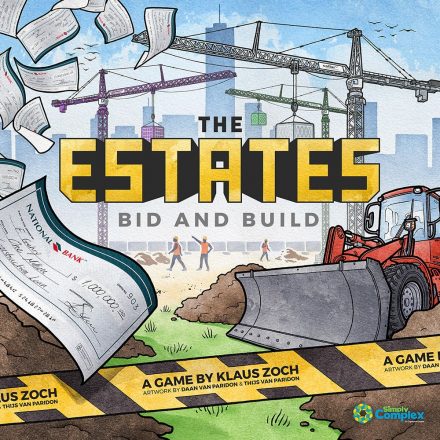
Estates, the

The City Council recently approved the zoning map for a new urban development — The Estates — featuring high-end infrastructure and a modern atmosphere for its citizens. Soon after, the banks awarded millions of dollars in loans to six real estate investment firms to help develop this new area. The zoning map for The Estates calls for two rows of four buildings each, located between the River and Main Street. The meadows on the other side of the River are to remain a recreational area for the City.

But, with hopes of larger profits, investors and building tycoons entirely ignore the City Council’s demands and begin developing three rows of buildings instead. The Mayor catches wind of the potential for profit and begins planning a new mansion in The Estates, which would double the value of one of the building rows! With some sketchy building permits, investors begin developing buildings on the other side of the River, beyond the designated building zone. However, the City Council takes rigorous steps to put an end to the racketeering with an ultimatum: As soon as the first two rows are completed, the buildings in the uncompleted row will be torn down, resulting in a huge loss for all who invested there. At the end of the day, the investor with the highest-valued buildings will come out on top.

The players take on the role of investors seeking to make the most money by developing buildings in The Estates. Players will bid for the various building pieces and place them in The Estates to their benefit. All buildings in completed rows score positive points, while all buildings in incomplete rows score negative points. It is possible to have zero completed rows of buildings.

A game of The Estates lasts around 40 minutes and can be played in several rounds to experience a shifting economy.

Game Mechanics:

  • Auction / Bidding
  • Auction: Once Around
  • Closed Economy Auction
  • Investment
  • Square Grid
  • Take That
  • Turn Order: Progressive

Game Specifications:

  • 2 – 5 Players
  • 40 – 60 Minutes
  • Difficulty Weight 2.31

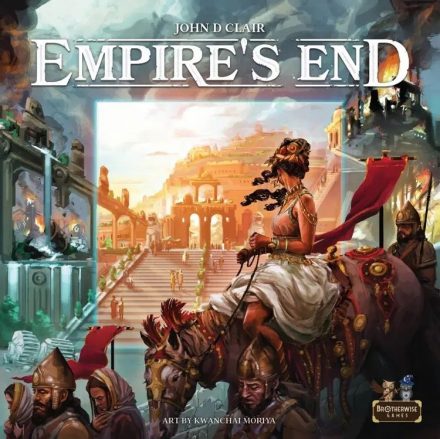
Empire’s End

You lead a grand civilization at the height of its influence, but can you save it from collapse? In Empire’s End, 2-4 players compete to keep calamity at bay. Empire’s End marries the intuitive and elegant mechanism of reverse-bidding with engine-building, long-term planning, and strategic depth. The result is a game with a quick tempo, abundant tension, and multiple challenging paths to victory.

Players begin with a civilization at the height of its power. Play proceeds through a series of phases, varying as you progress through the game. During the Disaster phase, players face a common threat such as famine, a flood, or barbarians. The player who ends the bidding must take the disaster, which devastates one of their territories.

With each disaster that befalls an empire, its people grow in wisdom and resilience. In the style of the modern classic game No Thanks, resources bid by all players will end up in the hands of the player who ultimately takes the disaster card. That player also gains a new ability, an innovation that reflects their empire’s ability to adapt in the face of challenging times.

Each turn, players move along a progress track that dictates whether they will face a disaster or another type of phase. Players can gain new resources during Production phases, rebuild lost territories during Industry phases, and challenge one another during Military phases. At the end of the progress track, the game is concluded and the winner is the civilization with the greatest number of victory points. Intact territories contribute points, but innovations and military successes can provide alternative ways to win.

Game Mechanics:

  • Auction / Bidding
  • Auction Compensation
  • Auction: Multiple Lot
  • Auction: Turn Order Until Pass
  • Closed Economy Auction
  • Constrained Bidding
  • End Game Bonuses
  • Events
  • Hand Management
  • Income
  • Increase Value of Unchosen Resources
  • Turn Order: Auction

Game Specifications:

  • 2 – 4 Players
  • 45 – 60 Minutes
  • Difficulty Weight 2.40