Tag: Action Points

Action Points are a mechanic typically used in turn-based games. Players receive a number of action points and use those points to perform different actions on their turns. This is a common mechanic in games.

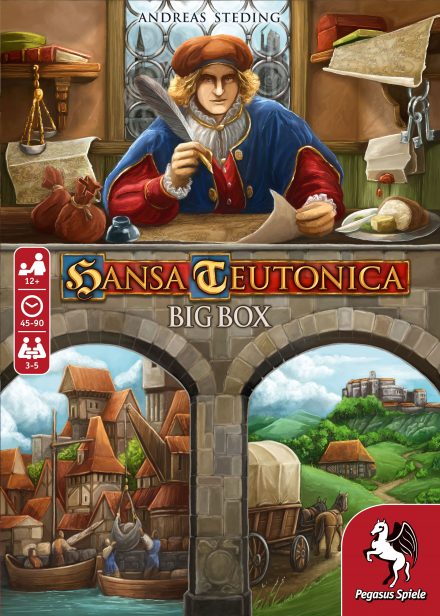
Hansa Teutonica: Big Box

Hansa Teutonica: Big Box

Hansa Teutonica: Big Box

The multi-award-winning strategy game Hansa Teutonica is back in a Big Box edition including the base game and all expansions. In the game, players attempt to increase their standing as merchants in the Hanseatic League by gaining prestige points in various ways. For instance, they can try to establish a network of counting offices in new Hansa cities by occupying an entire trade route between two cities — but before that happens, player markers can also be displaced by other players. Players may also aim to develop their trading skills, improving their abilities throughout the course of play. With only two actions per turn and a variety of contested opportunities, every turn is equally quick and strategically demanding.

Game Mechanics:

  • Action Points
  • Area Control
  • Network Building

Game Specifications:

  • 2 – 5 Players
  • 45 – 90 Minutes
  • Difficulty Weight 3.11

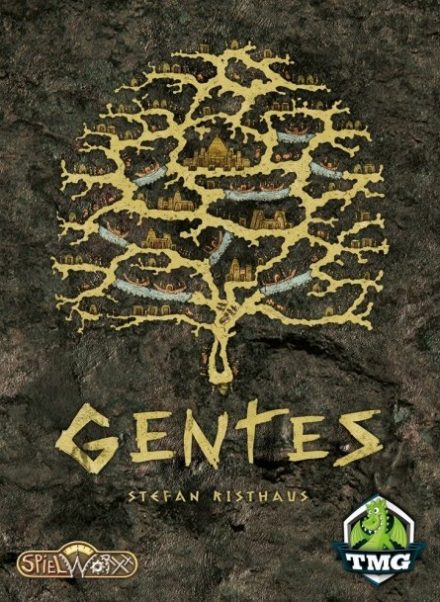
Gentes: Deluxified Edition

Gentes: Deluxified Edition

Gentes: Deluxified Edition

“Gentes” is the Latin plural word for greater groups of human beings (e.g., tribes, nations, people; singular: “gens”). In this game, players take the role of an ancient people who are attempting to develop by building monuments and colonizing or founding new cities in the Mediterranean sea.

The game is played in six rounds, each consisting of two phases: action phase, and tidying up. There are three eras — rounds 1-2, 3-4, 5-6 — with new monument cards entering the game at the beginning of rounds 1, 3 and 5. Each player has a personal player mat with a time track for action markers and sand timer markers. In the action phase of a round, the players take their turns in clockwise order, conducting one action per turn. Each action requires an action marker from the main board that is placed on the time track. Depending on the information on the action marker, you have to also pay some money or take sand timers that are placed on the time track. When you have no free spaces on your time track, you must pass for the remainder of the round. Therefore, the number of actions per player in a single round may vary significantly if, for example, you choose double sand timers instead of two single ones or take action markers that require more money but fewer sand timers. Single sand timers are dropped in the tidying up phase, while double sand timers are flipped to become single sand timer markers and stay for another round. The actions are:

Buy new cards from the common display
Build monuments (playing cards from your hand to your personal display for victory points and new options)
Train/Educate your people
Build/found cities
Take money
To play a card, you must meet the requirements printed on that card, such as having specific persons on your personal board (e.g., two priests and four soldiers). These requirements are why training — i.e., getting specific people — is important, but that is not that easy because there are six different types of people — three on the left and three on the right side of your personal player board — and you have only six spaces in total for the two types in the same line. If you have three merchants, for example, you move your marker for counting merchants three spaces toward the side of the soldiers and thus you have only three spaces left for soldiers. By educating a fourth soldier and moving your soldier marker forward to its fourth space, you automatically lose one merchant because that marker is pushed back to its second space.

It is crucial to generate additional actions by using the specific functions of monuments in your display and cities you have built. Cities are expensive, but they create benefits at the end of each round or provide new options for taking an action without acquiring an action marker, gaining only a sand timer marker instead.

Try to have a steady income to avoid wasting actions to take money. Pay attention to the display of common cards, which is new in every single game, because the monument cards are shuffled randomly within the decks of eras I, II and III. Collect identical achievement symbols on the cards to benefit from the increasing victory points for a series of symbols. Build cities to enlarge your options!

Game Mechanics:

  • Action Points
  • Civilization
  • Open Drafting

Game Specifications:

  • 1 – 4 Players
  • 75 – 120 Minutes
  • Difficulty Weight 3.26

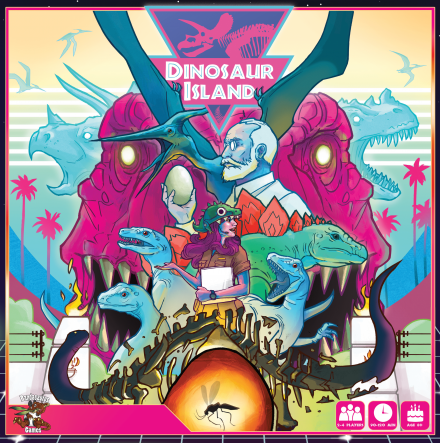
Dinosaur Island

In Dinosaur Island, players will have to collect DNA, research the DNA sequences of extinct dinosaur species, and then combine the ancient DNA in the correct sequence to bring these prehistoric creatures back to life. Dino cooking! All players will compete to build the most thrilling park each season, and then work to attract (and keep alive!) the most visitors each season that the park opens.

Do you go big and create a pack of Velociraptors? They’ll definitely excite potential visitors, but you’d better make a large enough enclosure for them. And maybe hire some (read: a lot of) security. Or they WILL break out and start eating your visitors, and we all know how that ends. You could play it safe and grow a bunch of herbivores, but then you aren’t going to have the most exciting park in the world (sad face). So maybe buy a roller coaster or two to attract visitors to your park the good old-fashioned way?

Game Mechanics:

  • Action Points
  • Dice Rolling
  • Economic
  • Set Collection
  • Tile Placement
  • Worker Placement

Game Specifications:

  • 1 – 4 Players
  • 90 – 120 Minutes
  • Difficulty Weight 3.05

Zombie 15′

Zombie 15′

Zombie 15′

In an apocalyptic world in which everyone over the age of 18 has turned into a bloodthirsty, flesh-hungry zombie and most youngsters have been served as meat to quell their elders’ appetite, a small team of kids and teenagers tries to survive on their own. As part of that small group of survivors, you must unite to escape the relentless horde of undead. Run across town to find shelter or food, hold a strategic position, meet with new survivors, and discover the truth about this terrible and mysterious disease!

Zombie 15′ is a frantic, scenario-based survival game in which time is scarce and cooperation is key. The game features easy rules but real choices to be made as quickly as possible if you don’t want to get overwhelmed by zombies!

Zombie 15′ features a team of 15-year-old teenagers; a 15-minute soundtrack to give each game its tempo; a 15-scenario, progressive campaign; and much more than just 15 zombies…

Game Mechanics:

  • Action Points
  • Cooperative
  • Grid Movement

Game Specifications:

  • 2 – 4 Players
  • ~15 Minutes
  • Difficulty Weight 2.22

Zombicide: Night of the Living Dead

Zombicide: Night of the Living Dead

Zombicide: Night of the Living Dead

Night of the Living Dead: A Zombicide Game is a standalone game in the Zombicide franchise based on the George A. Romero movie of the same name.

In Night of the Living Dead: A Zombicide Game, players take on the role of the movie’s main characters, holed up in an isolated house while the dead come to life all around them. The original movie sees the few survivors hunkering for safety in the house as the ghouls (as they’re called in the film) pose a continuous threat from outside. It’s a tense psychological thriller full of gritty moods and dark themes, but the game lets the survivors take the fight to the hordes of the undead. The game uses standard Zombicide mechanics.

There are two variants included in the game: Romero – where the characters have the attributes from the original movie and Zombicide: where the movie characters have had their attributes amped up to meet the Zombicide world – but always have the chance of regressing to their original Romero character.

Game Mechanics:

  • Action Points
  • Campaign
  • Cooperative
  • Dice Rolling

Game Specifications:

  • 1 – 6 Players
  • ~60 Minutes
  • Difficulty Weight 2.43

Zombicide: 2nd Edition

Zombicide: 2nd Edition

Zombicide: 2nd Edition

Zombicide, the board game, has taken the world by storm with over two million copies sold since its release in 2012 and spawning a cult franchise of cooperative zombie slaying all over the world. In Zombicide, zombies are controlled by the game, while players take on the role of survivors who must co-operate in order to survive and thrive in a world overrun by the bloodthirsty undead. Find guns and gear to take the fight to the zombies through 25 different scenarios linked by a branching story as you pick your way through an infested city.

Zombicide (2nd Edition) features refined and streamlined rules, including updates to target priority for ranged attacks, interactions with doors, and vehicle mechanisms. A new dark zone feature, a zone that hides zombies from survivor’s attacks, has been added as well. Zombicide (2nd Edition) will include new components and miniatures as well, including plastic dashboards and new child survivors. Returning players will be able to use their existing collection from previous Zombicide releases as well.

Game Mechanics:

  • Action Points
  • Campaign
  • Cooperative
  • Dice Rolling

Game Specifications:

  • 1 – 6 Players
  • ~60 Minutes
  • Difficulty Weight 2.46

Zombicide

Zombicide

Zombicide

Zombicide is a collaborative game in which players take the role of a survivor – each with unique abilities – and harness both their skills and the power of teamwork against the hordes of unthinking undead! Zombies are predictable, stupid but deadly, controlled by simple rules and a deck of cards. Unfortunately for you, there are a LOT more zombies than you have bullets.

Find weapons, kill zombies. The more zombies you kill, the more skilled you get; the more skilled you get, the more zombies appear. The only way out is zombicide!

Play ten scenarios on different maps made from the included modular map tiles, download new scenarios from the designer’s website, or create your own!

Game Mechanics:

  • Action Points
  • Campaign
  • Cooperative
  • Dice Rolling
  • Grid Movement
  • Hand Managment
  • Player Elimination

Game Specifications:

  • 1 – 6 Players
  • ~60 Minutes
  • Difficulty Weight 2.54

World of Warcraft: Wrath of the Lich King

World of Warcraft: Wrath of the Lich King

World of Warcraft: Wrath of the Lich King

In World of Warcraft: Wrath of the Lich King, players journey to the frozen continent of Northrend to face the armies of the Lich King. This “Pandemic System” game showcases familiar mechanisms and gameplay, now tweaked to embrace the setting of the Wrath of the Lich King. Forts, temples, battlegrounds, and more populate the game board as you and your fellow heroes journey across the cold landscape. Along the way, you’ll set up strongholds, complete quests, and do battle with legions of undead.

In more detail, players team up as legendary heroes from across Azeroth, each with their own unique abilities to help in and out of combat. Heroes such as Thrall, Warchief of the Horde; Varian Wrynn, King of Stormwind; Sylvanas Windrunner, Banshee Queen of the Forsaken; and many more are at your fingertips. As the Scourge grows, more undead will populate the board. Throw dice as you enter into battle against the hordes of ghouls and ferocious abominations, using hero cards to add power to your attacks, block incoming assaults, heal wounds, take mounts to far off spaces, and so much more.

As you fight your way to the Lich King, all manner of dark magic and terrible creatures under his control need to be neutralized. This comes in the form of quests, a brand-new mechanism that can be completed as a team through a combination of dice rolls and the hero cards at your disposal. However, each quest comes with its own dangers and hindrances. Complete these quests to move closer to the final assault on Icecrown Citadel, where the Lich King himself resides.

Game Mechanics:

  • Action Points
  • Cooperative
  • Hand Management
  • Set Collection
  • Trading

Game Specifications:

  • 1 – 5 Players
  • 45 – 60 Minutes
  • Difficulty Weight 2.18

Wonder Book

Wonder Book

Wonder Book

Oniria — the world of an ancient dragon civilization. Tales describe the land as an idyllic paradise filled with marvelous dragon-made wonders and surrounded by a flourishing wilderness. The only portal to that world is the Wonder Book, an ancient tome locked away in an abandoned tower. It sleeps, covered in dust, awaiting the one thing it desires most: you.

Wonder Book is a pop-up game for 1-4 players in which each player takes the role of a teenage kid in a group of adventurous friends. This is a co-operative game in which you all win or lose as a team.

The game is split into six consecutive scenarios (“chapters”), each composed of a specific deck of pre-sorted cards that contain the rules, the story, and the challenges you have to face. Each chapter has you explore a new part of the interactive 3D cardboard pop-up book and reveals more about the world in which your adventure is set.

Starting with the first card of the chapter deck, the story unfolds until you reach a goal card. These cards show a goal that must be achieved to proceed and explain how the players’ and enemies’ turns take place. Each hero can perform three actions per turn, including moving and fighting, using their individual skills, collecting sparks of magic (used to perform special actions), and interacting with cards and pop-ups. Once all heroes have taken their turn, a Wyrm card determines how the enemies will respond by moving, attacking, spawning, or doing something unexpected.

The basic mechanisms are easy to grasp, but the game keeps changing as each scenario offers different things to do. You will find yourself exploring, fighting bosses, solving riddles, playing little minigames, looking for clues…anything is possible during the story!

Game Mechanics:

  • Action Points
  • Campaign
  • Cooperative
  • Dice Rolling
  • Move Through Deck
  • Narrative Choice

Game Specifications:

  • 1 – 4 Players
  • 60 – 90 Minutes
  • Difficulty Weight 2.11

Wise Guys

Wise Guys

Wise Guys

Wise Guys is a quick-to-learn, cutthroat, area-control board game in which you play as one of four rival gangs seeking to strike it rich as “Rum Runners” on the rough streets of Chicago at the height of the roaring 20s.

Each turn, players wheel, deal, talk, and fight to control locations where they buy and sell alcohol, help politicians get elected, and get help in return or double-cross rival gangs. Negotiate, threaten, and ally with rival gangs when it serves your needs, but be wary of the inevitable knife in the back…

Over six rounds, players take turns driving to locations in the city represented by the grid of cards at the center of the board. Different locations provide access to materials, cash, or clout that the player’s gang members can “acquire” through trade, earning profit from property within their territory or by exploiting parts of the city under the control of a rival gang. All players must maintain a certain discretion as selling too much in one round will draw unwanted attention or else saturate the city in liquor — and your fellow mafioso won’t be too happy about lost profits.

The gang with the most cash at the end of the game wins.

Game Mechanics:

  • Action Points
  • Area Control
  • Dice Rolling
  • Negotiation
  • Trading
  • Worker Placement

Game Specifications:

  • 3 – 4 Players
  • ~90 Minutes
  • Difficulty Weight 2.00